
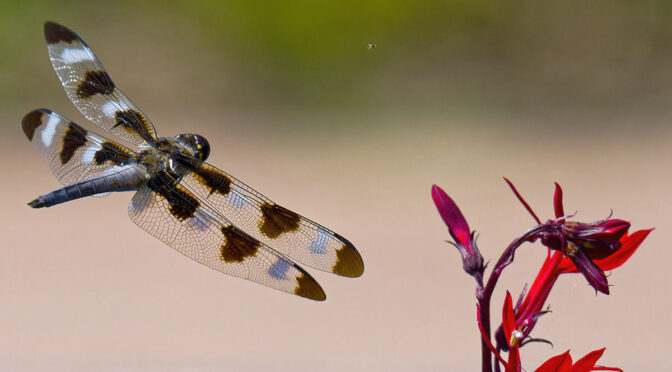
Like most photographers, I’m always looking for ‘that one shot’ when I’m out with my camera gear to help evaluate the success of a photographic session.
NOTE: Click on images to enlarge. To view this article in a range of other languages click on the Canadian flag in the upper right corner.
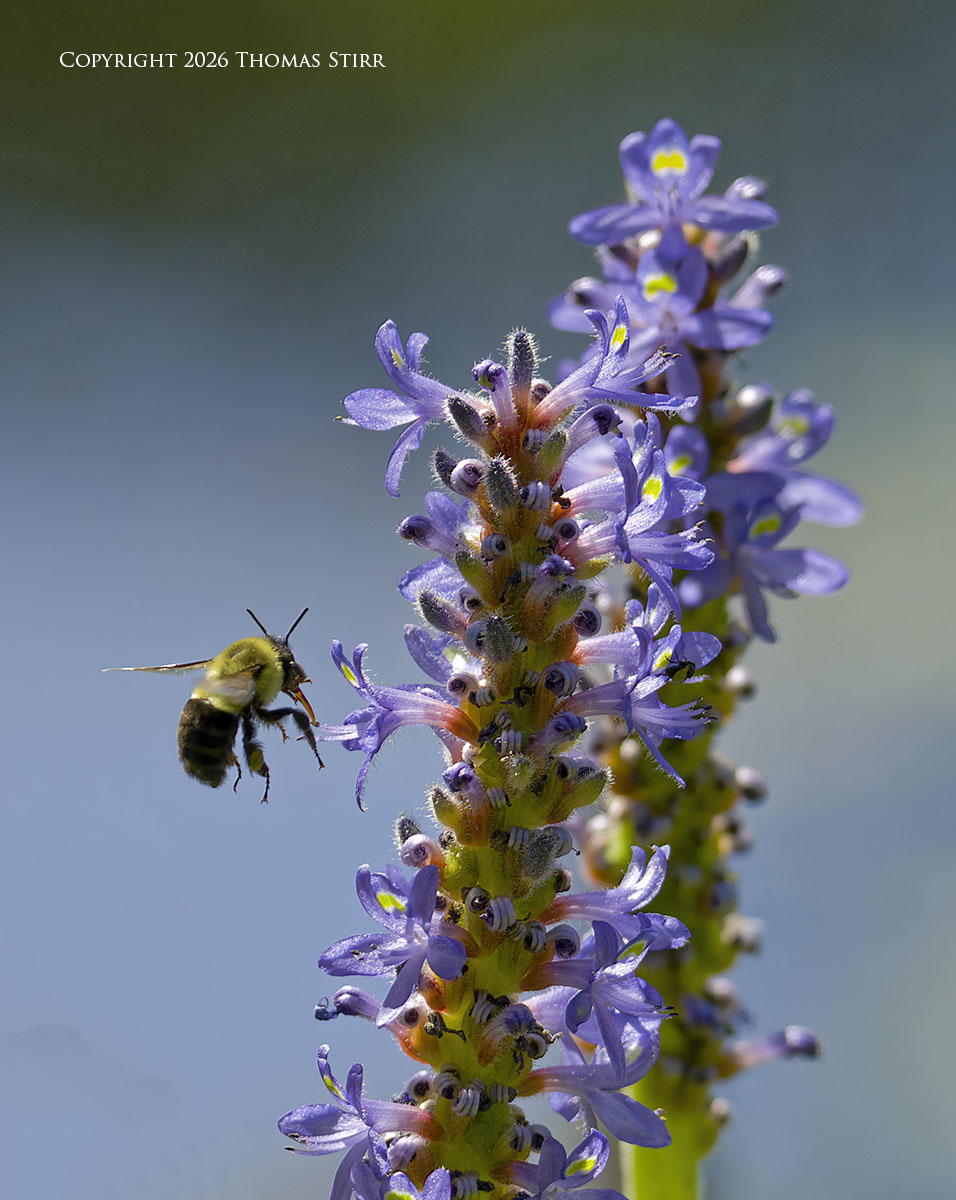
Earlier this week I went to the Royal Botanical Gardens (RBG) with a friend with the specific goal of photographing some dragonflies… hopefully in flight. The dragonflies weren’t exactly plentiful so I resorted to photographing a few bees in flight when first arriving at the location.
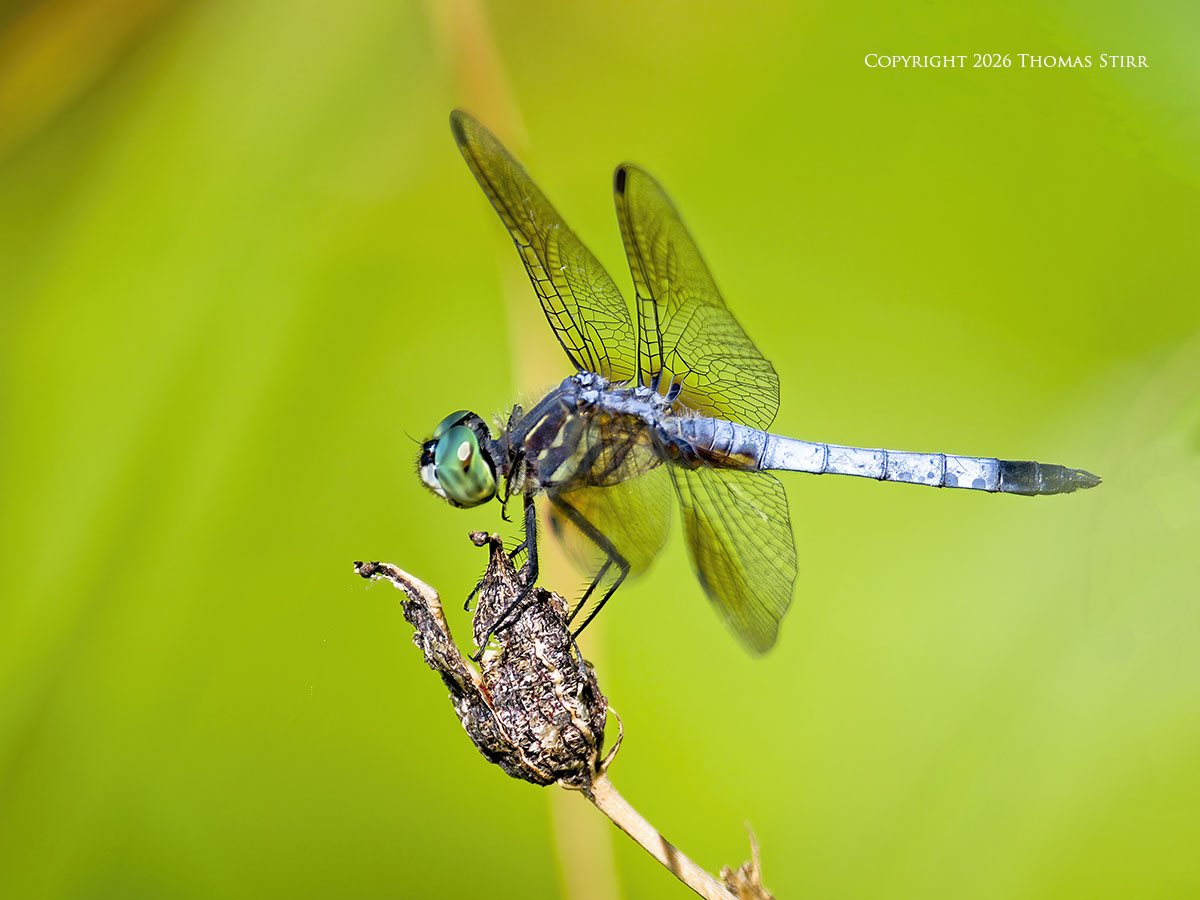
A few dragonflies did eventually show up at the usual spots at the RBG. They weren’t as active as they normally are so I didn’t have too many opportunities to photograph them in flight.
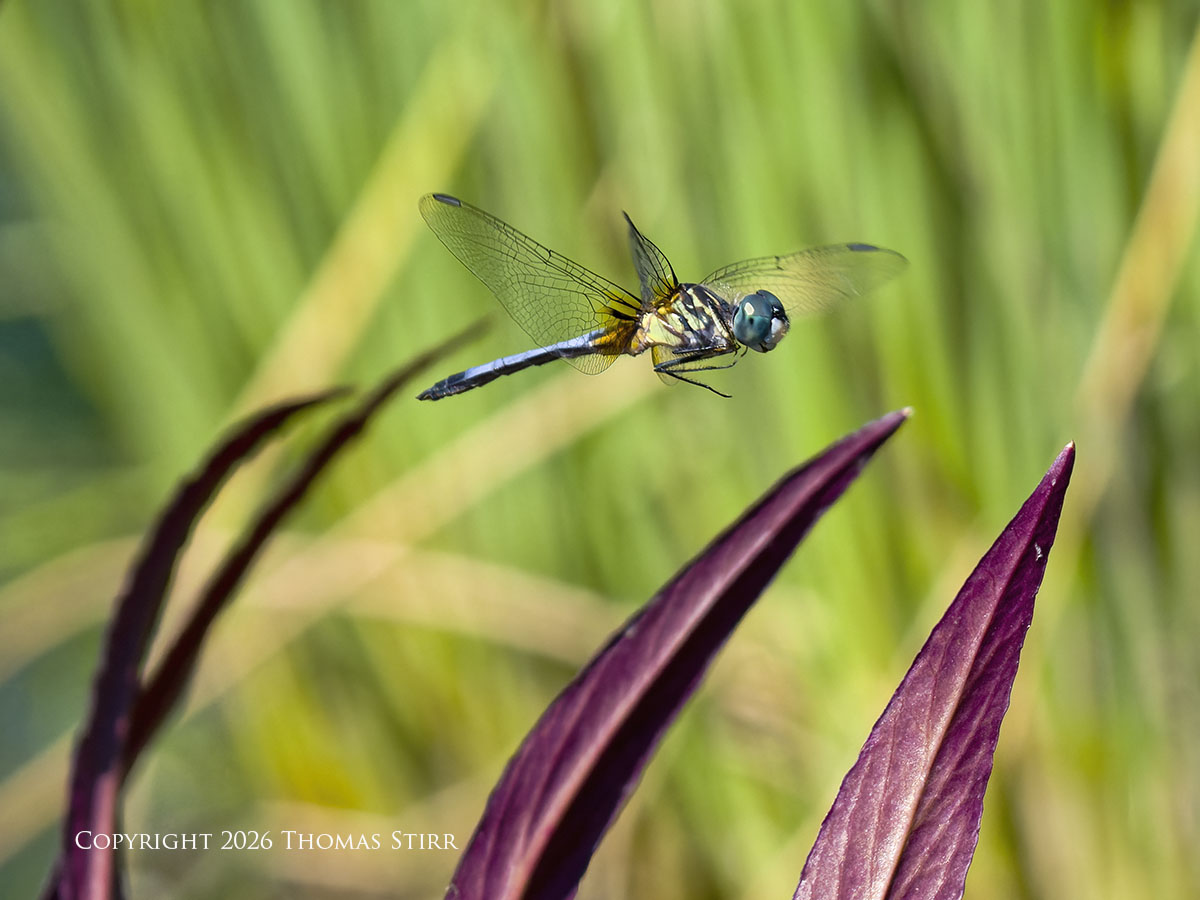
Whenever I attempt to photograph dragonflies, patience is always a requirement. So I moved around the wild pond a bit looking for opportunities… without much luck. I then decided to go back to the two formal lily ponds.
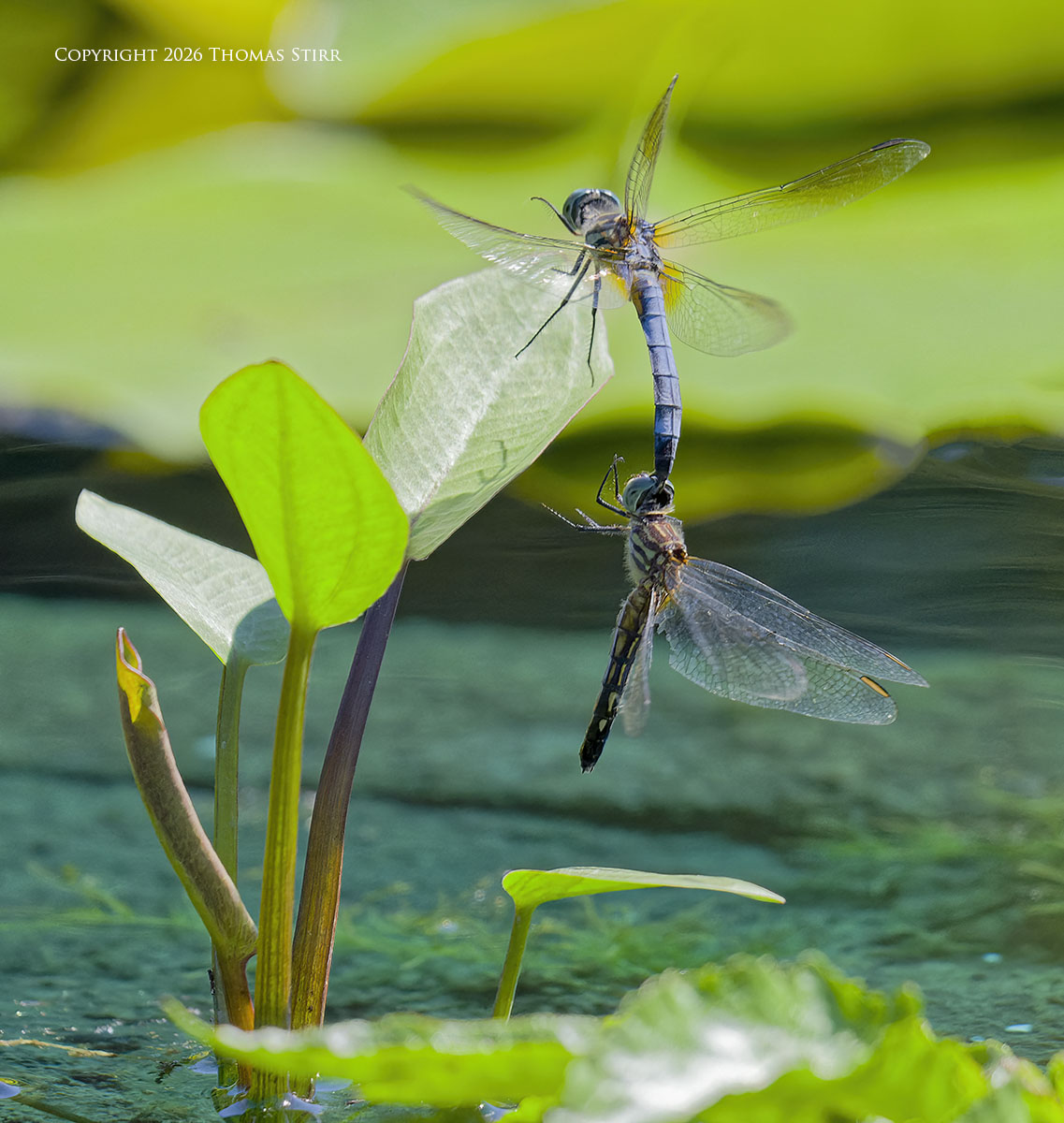
I managed to capture a handheld image of two dragonflies in flight while in a joined aerial coordination. This typically happens in advance of formal mating. This image was certainly worth the time to process it… but I wasn’t sure if this was ‘that one shot’ I was hoping to capture.
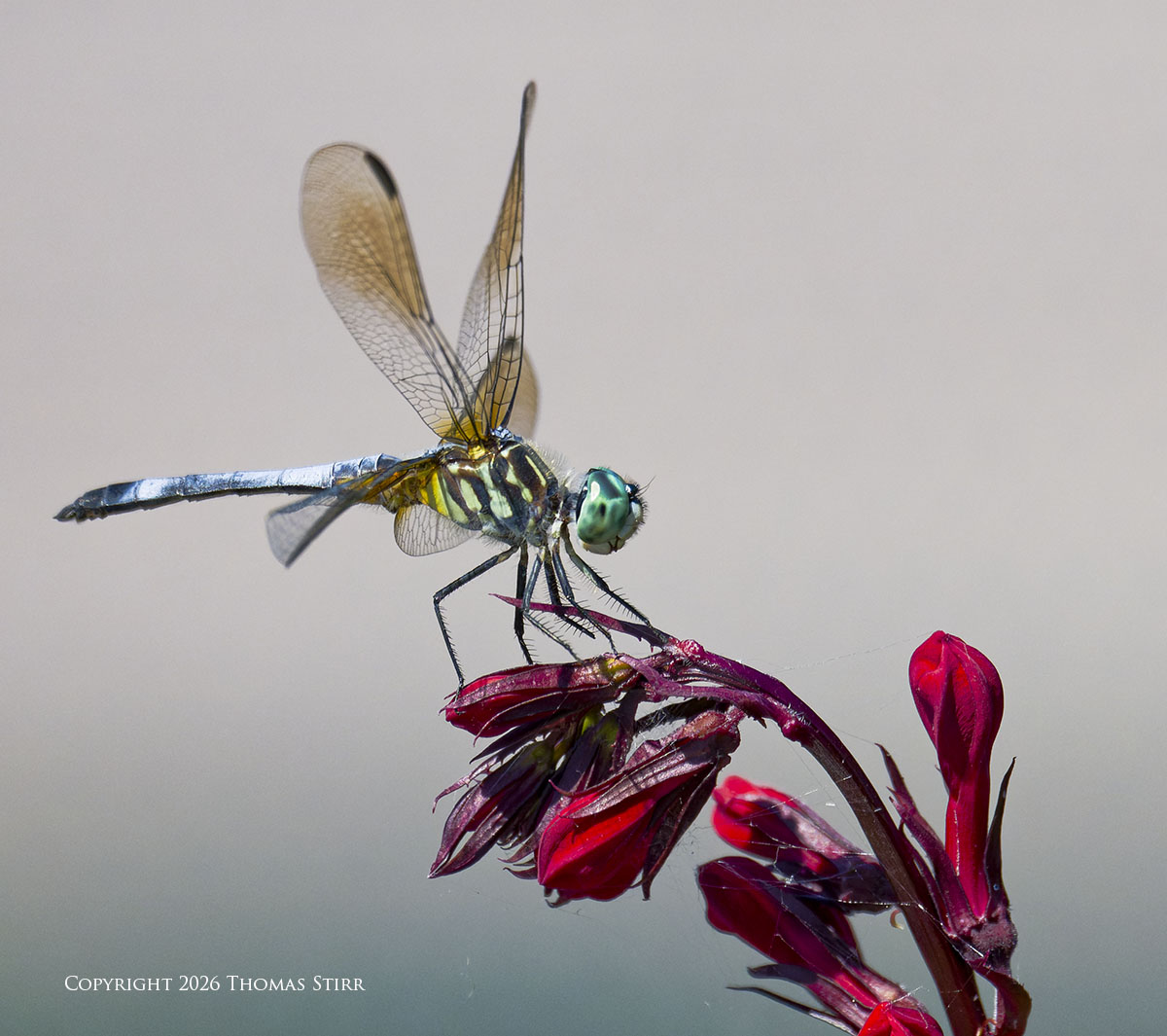
Since this was my first attempt to photograph dragonflies this year I was woefully out of practice. I inadvertently captured a few perched dragonflies with Pro Capture H before they actually launched into flight. I need more practice!
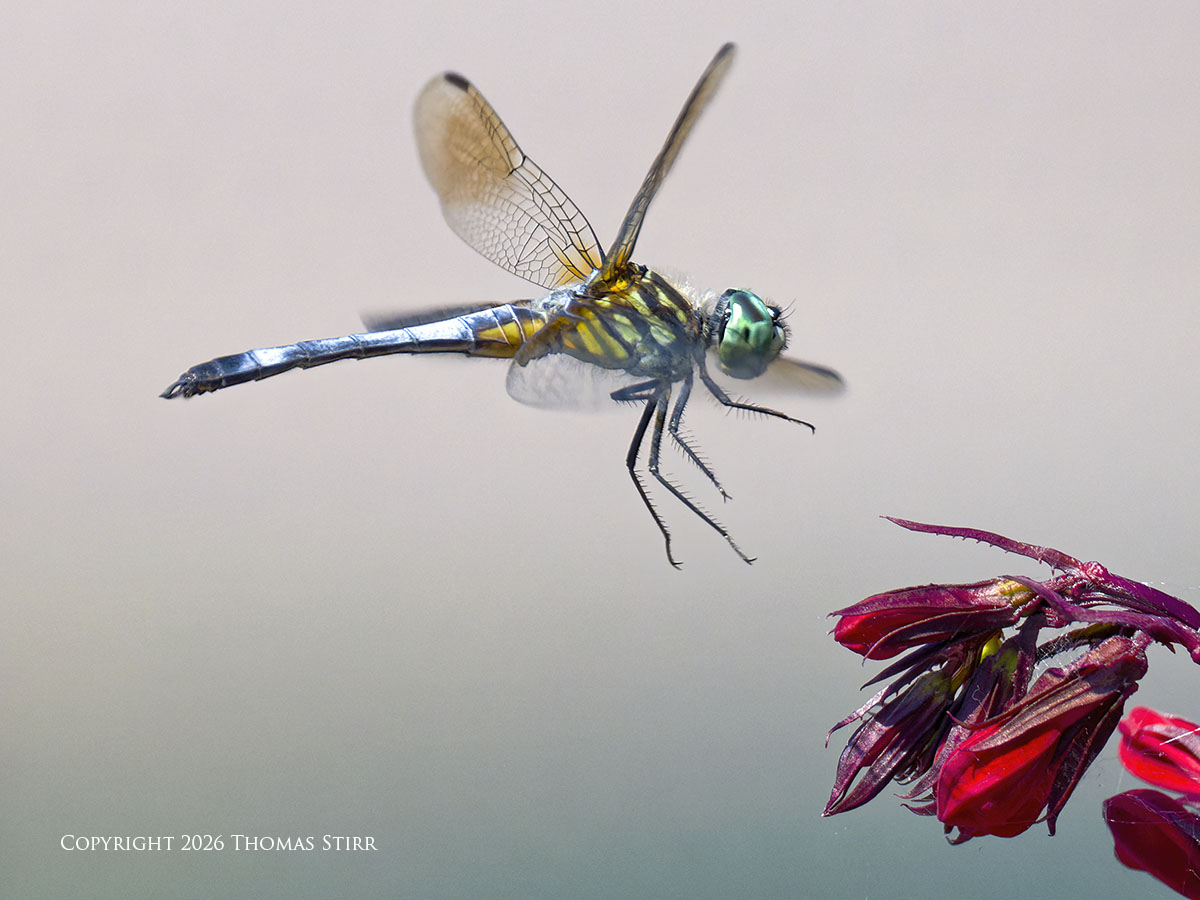
I did manage to capture a couple of Pro Capture H runs of a dragonfly coming in to land.
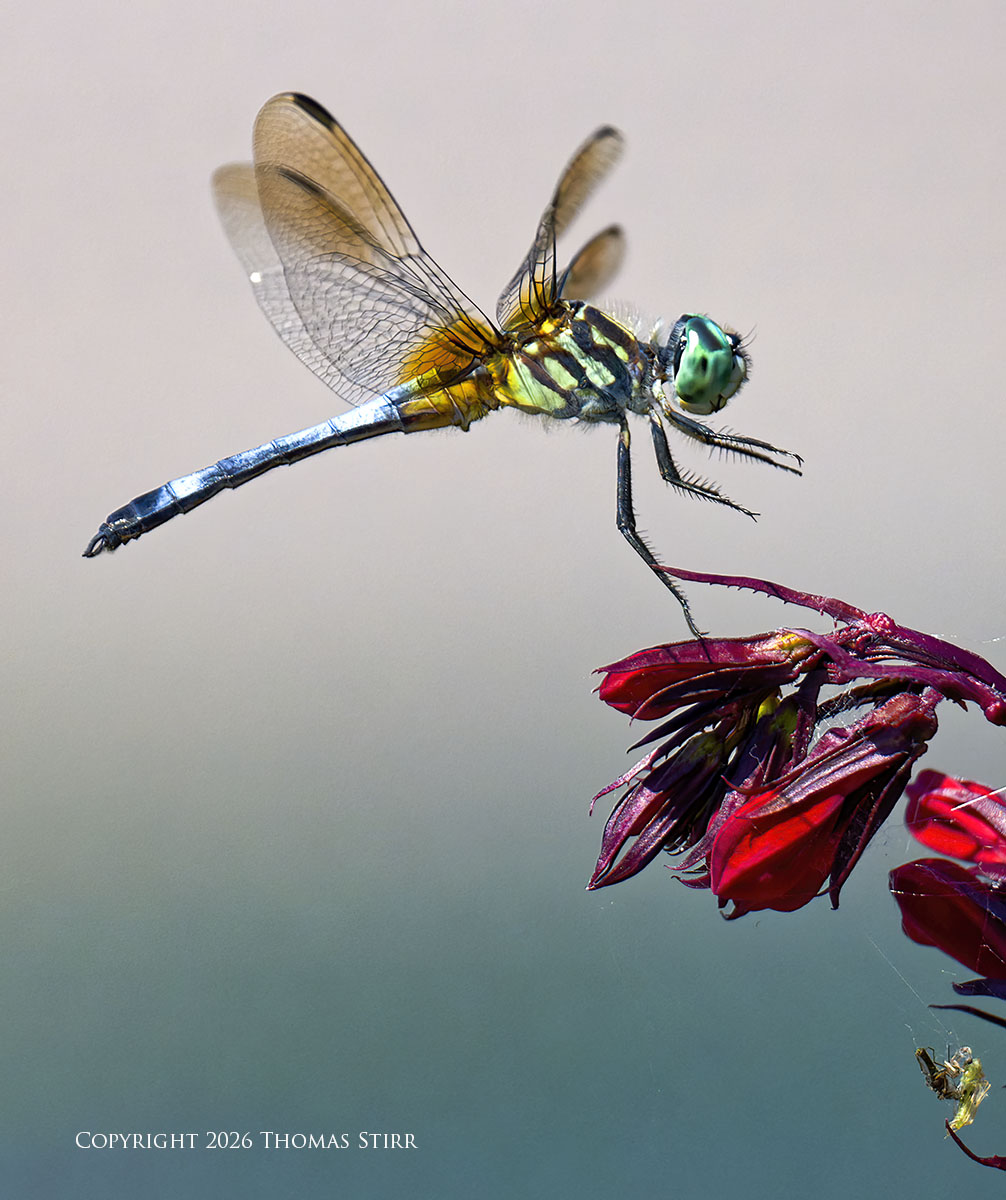
The two images above were from the same Pro Capture H run. Neither of these felt like ‘that one shot’ I was trying to capture.
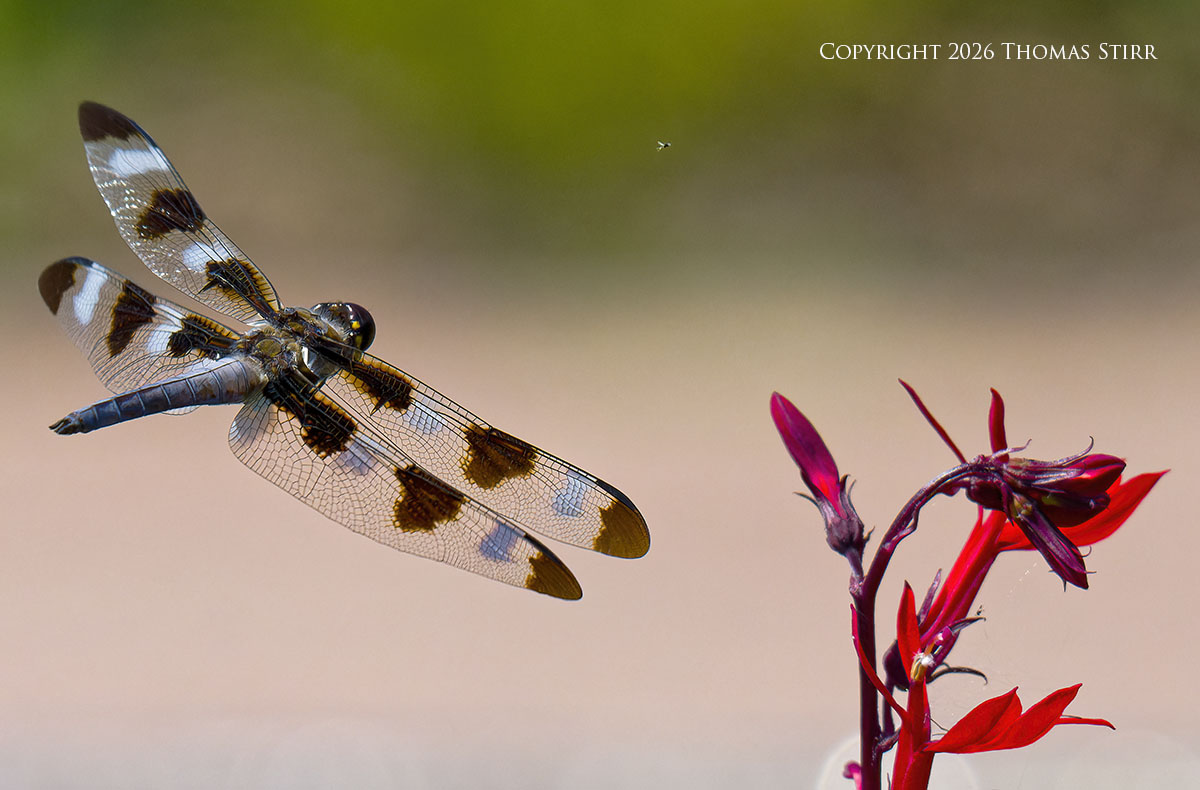
I noticed a Twelve-spotted Skimmer at one of the lily ponds and moved over to investigate. I managed to get one quite good image of it coming in to land on a flower bud. I loved the anticipation in this image and was hoping to get a few more similar opportunities.
Unfortunately this particular dragonfly was very erratic and wasn’t coming back to previous perches on any kind of a regular basis. So I needed to change my strategy in order to capture ‘that one shot’ of the day.
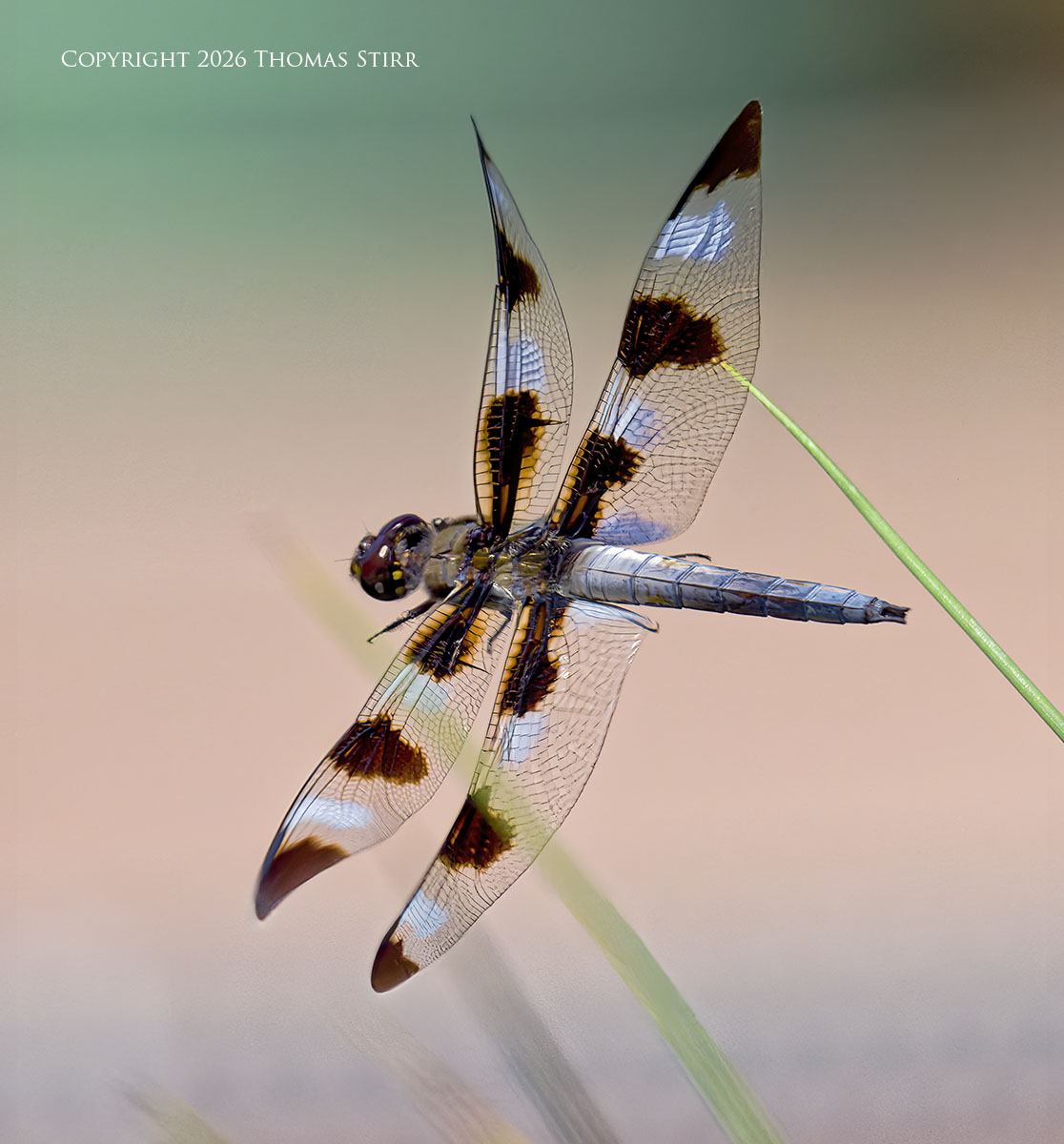
Since I couldn’t anticipate if it would come back to the same perch again, I decided to try to capture this Twelve-spotted Skimmer as soon as it took flight. Experience has taught me that dragonflies are much faster when taking flight than they are when coming back in to land on a previous perch.
Regular readers know that my standard Pro Capture H settings are 15 Pre-Shutter Frames with my Frame Limiter also set to 15. This gives me 1/4 second of response time in terms of my shutter release timing, when shooting at 60 frames-per-second. I knew that 1/4 second would not be a sufficient amount of shutter release response time to capture this dragonfly taking flight.
I changed my Pro Capture H settings to 25 for both my Pre-Shutter Frames and Frame Limiter. This change gave me almost 1/2 second of response time.
For the next 10 minutes I observed this specific dragonfly as it flitted around the lily pond. I was waiting for it to land on a reasonably unobstructed perch that would also give me the right shooting angle to capture a nice, profile view.
As soon as the Twelve-spotted Skimmer landed at a suitable location I started spooling images into temporary memory. The moment it blasted off into flight I fully depressed my shutter release. My run of 25 Pro Capture H photographs yielded 2 useable images. I chose the better one and had ‘that one shot’ I wanted for my visit to the Royal Botanical Gardens. I left for home a happy camper. 🙂
Technical Note
Photographs featured in this article were captured handheld using camera gear and technologies noted in the EXIF data. All images were created from RAW files using my standard process in post. This is the 1543 article published on this website since its original inception in 2015.
Copyright
Word of mouth is the best form of endorsement. If you like our website please let your friends and associates know about our work. Linking to this site or to specific articles is allowed with proper acknowledgement. Reproducing articles, or any of the images contained in them, on another website or in any social media posting is a Copyright infringement.
Article and images are Copyright 2026 Thomas Stirr. No use, duplication or adaptation of any kind is allowed without written consent. If you see this article reproduced anywhere else it is an unauthorized and illegal use. Posting comments on offending websites and calling out individuals who steal intellectual property is always appreciated!
I marvel at your patients and perseverance. Great shots come from these 2 attributes mixed with experience.
Hi Lewsh,
Thanks for your supportive comment. I’m glad you enjoyed the images!
Tom