
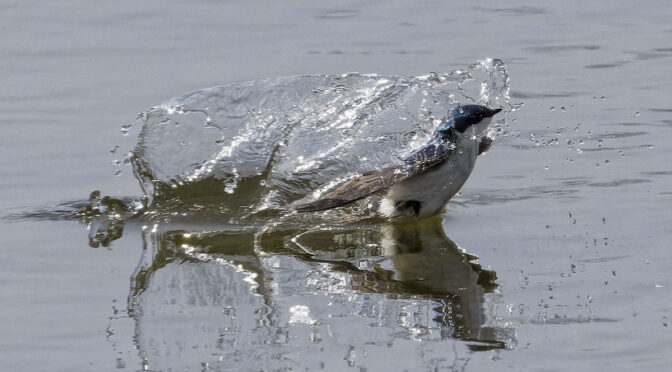
This article features a selection of handheld photographs that document tree swallows diving at the large pond at Biggar Lagoon Wetlands in Grimsby Ontario. Folks who have attempted to photograph tree swallows in flight can attest to the fact that these diminutive birds are fast and erratic flyers. I often refer to them as ‘pocket rockets’.
NOTE: Click on images to enlarge.

Witnessing swallows diving at ponds is a very special treat that Mother Nature gives us on occasion. Capturing images of swallows diving is a completely different story… and represents a significant challenge for most of us.

As you review the images featured in this article, along with the corresponding EXIF it is prudent to keep a few things in mind. On average, tree swallows are about 14 centimeters in length (~5.5 inches). All of the subject birds illustrated in the images in this article were photographed from distances between 25.8 metres to 50.5 metres (~85 to 165 feet) away from my shooting position.

So, the fundamental challenge was to acquire focus on a small, fast, free flying bird and capture photographs of it from a distant position, while it was in the process of diving. Suffice to say that all of the photographs in this article were severely cropped. These crops were about 3 MP in total, with individual birds being less than 1 MP. Image quality has suffered as a result.

Last spring I went out to Biggar Lagoon Wetlands a number of times and tried my best to photograph swallows diving. I had no success creating any photographs that were useable… even as test images.

Undaunted, this spring I set myself the same goal to photograph swallows diving. The big difference this year was that I dedicated some time to study swallows diving, and to really work on my eye/hand coordination and shutter release timing as they applied to my swallow technique. Over the past number of weeks I spent close to 13 hours doing nothing else except working on my swallows-in-flight skills.

After experimenting with various auto-focusing modes, number of AF points, and available computational photography technology on my E-M1X, it became crystal clear that my best results were obtained when using Bird Detection AI Subject Tracking in combination with Pro Capture L.

All of the photographs in this article were captured with that combination. Pro Capture L was set to 18 frames-per-second with 10 Pre-Shutter Frames and my Frame Limiter turned off. I used a single AF point with Bird Detection AI Subject Tracking. I set my aperture to f/8 to get a bit more depth-of-field and used a shutter speed of 1/4000 to help freeze the action. I shot in Manual mode with Auto-ISO.

All of the photographs in this article were captured late last week in about 3/4 of an hour. I thought it was important to provide readers with a good selection of images to help confirm that this specific subject matter can be successfully photographed with some consistency.
Let’s have a look at a couple of short image runs. The first captures a swallow just about to enter the water, followed by it lifting its head as it skids on the surface of the water, then takes flight.


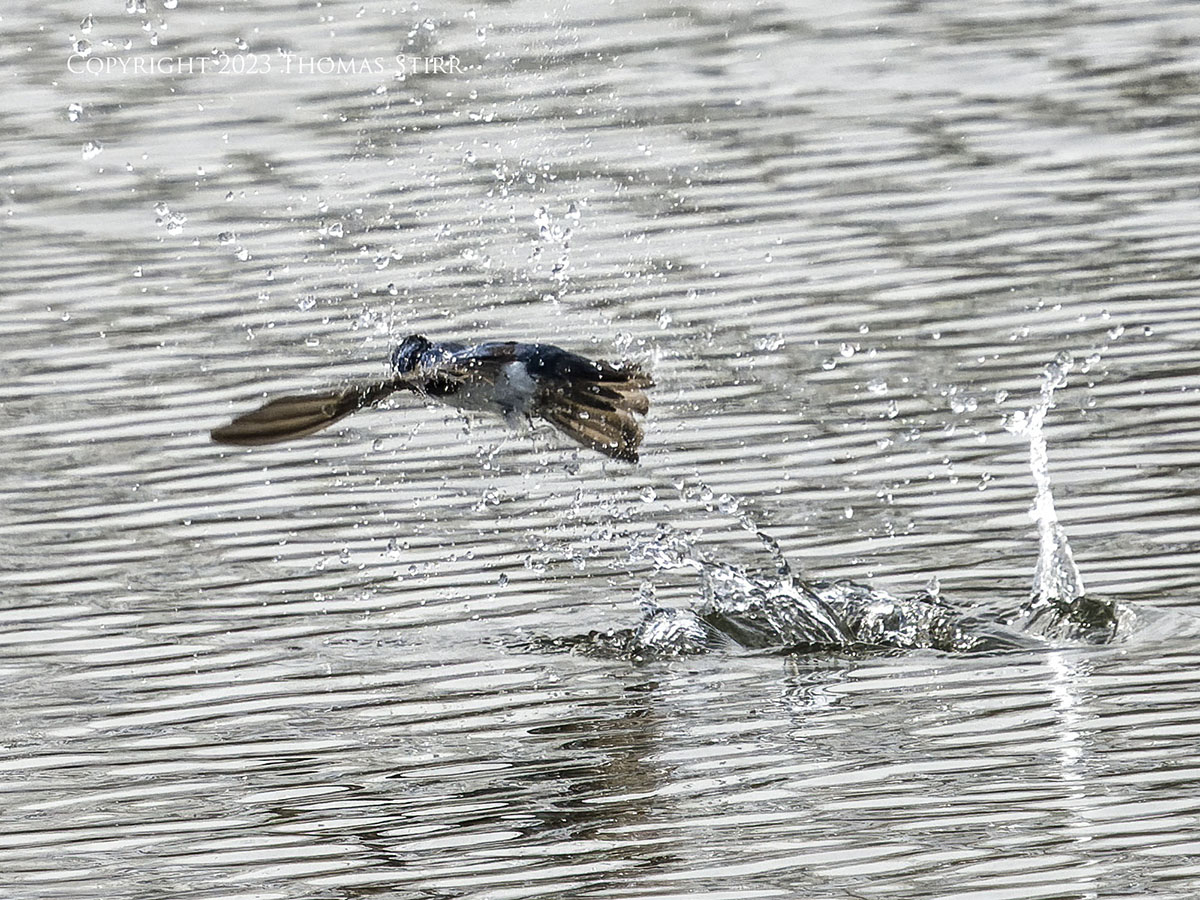
Our next image run shows a swallow bursting from the surface of the water, doing a head shake, then taking flight.
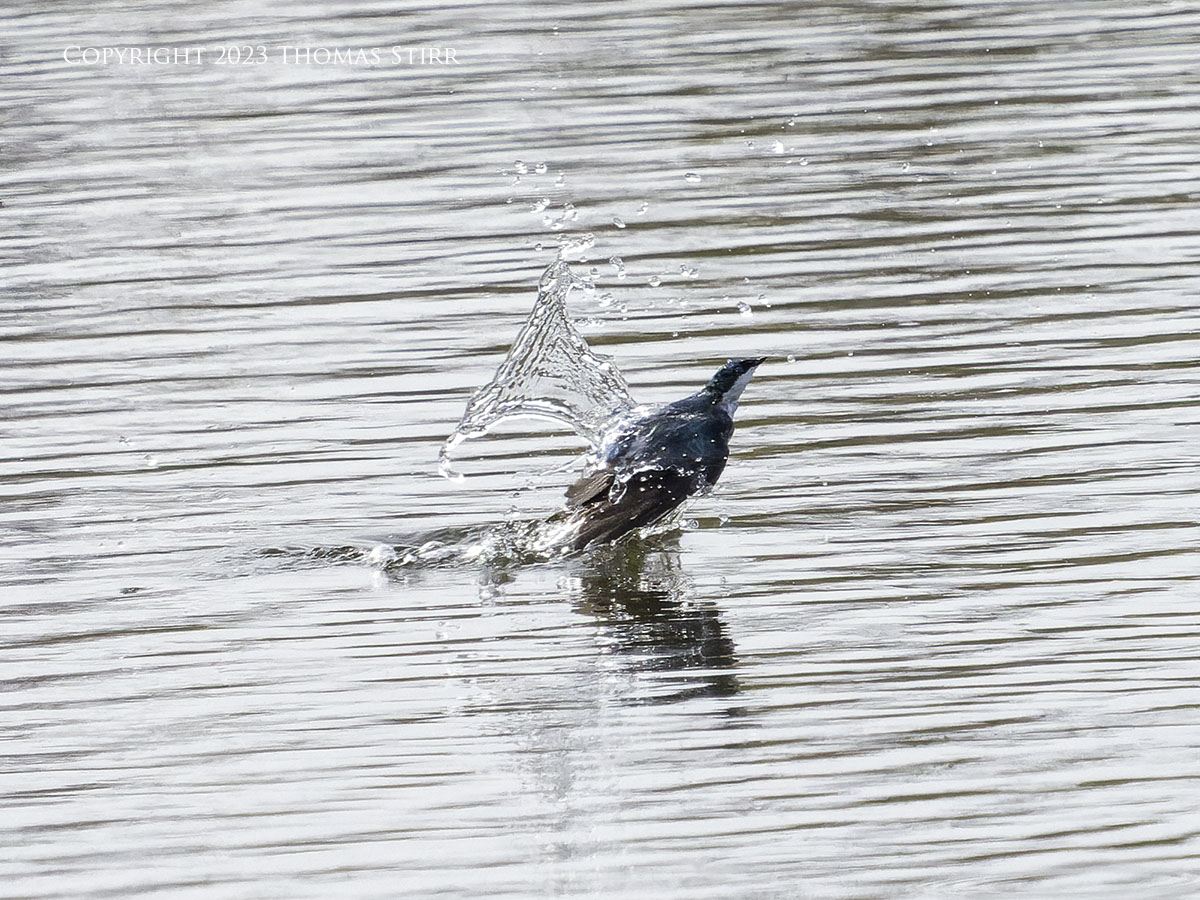

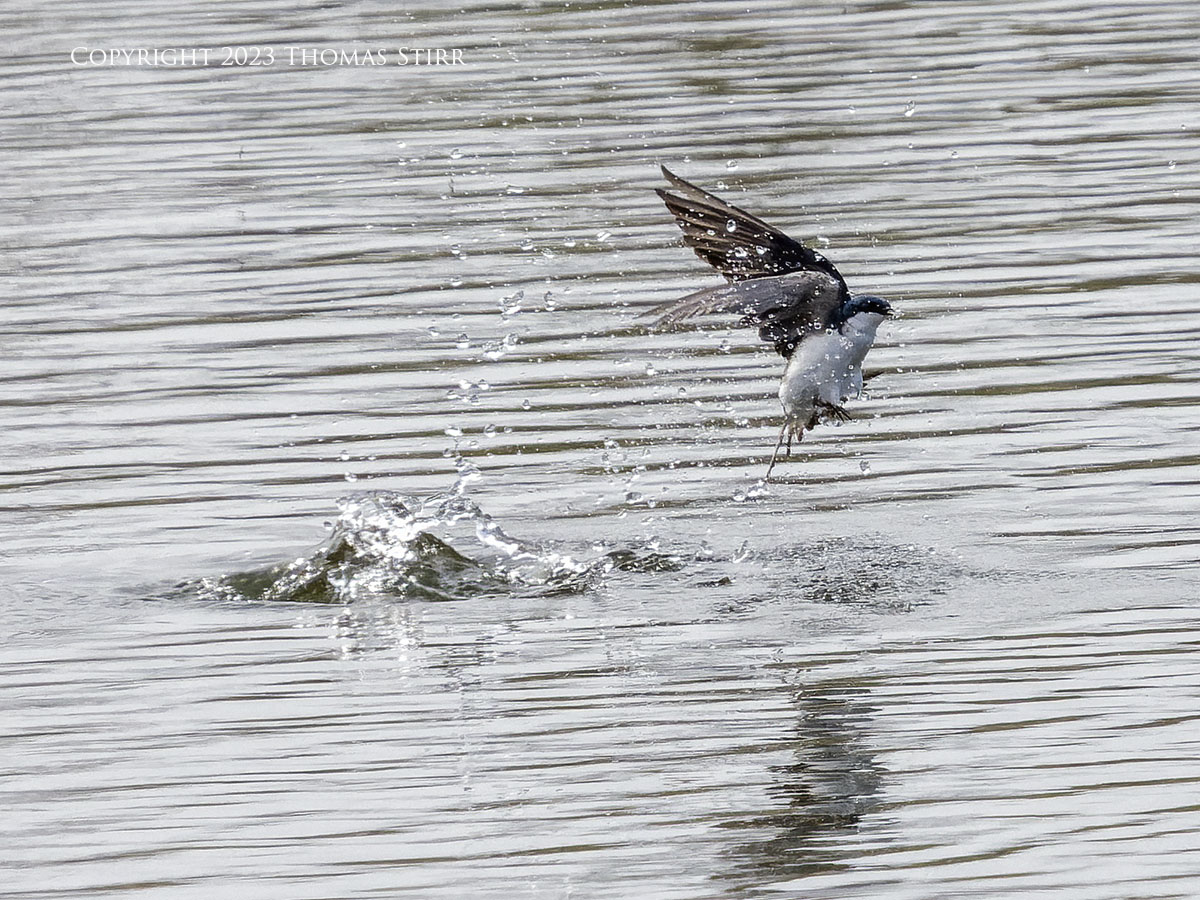
Our last three consecutive photograph image run shows a swallow emerging from the water and taking flight while it was facing my camera.
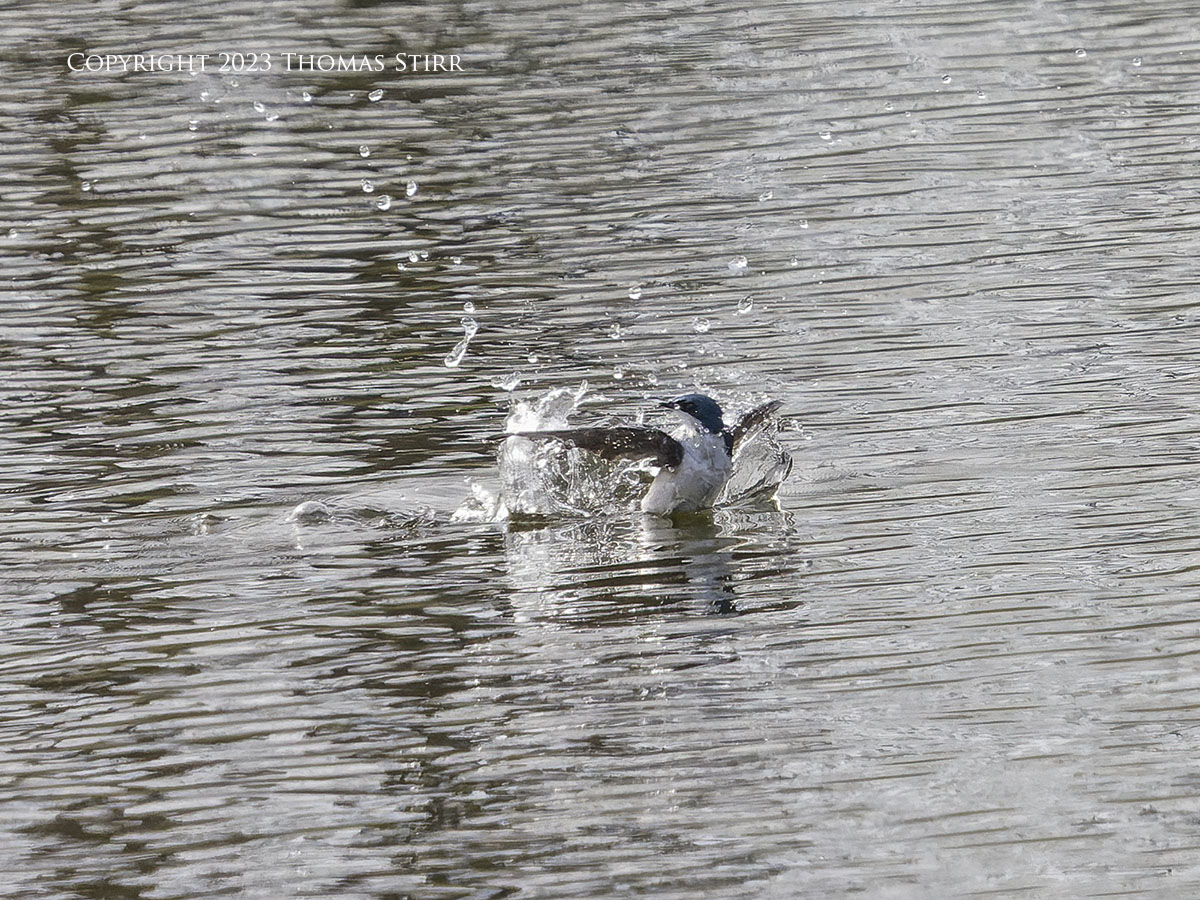
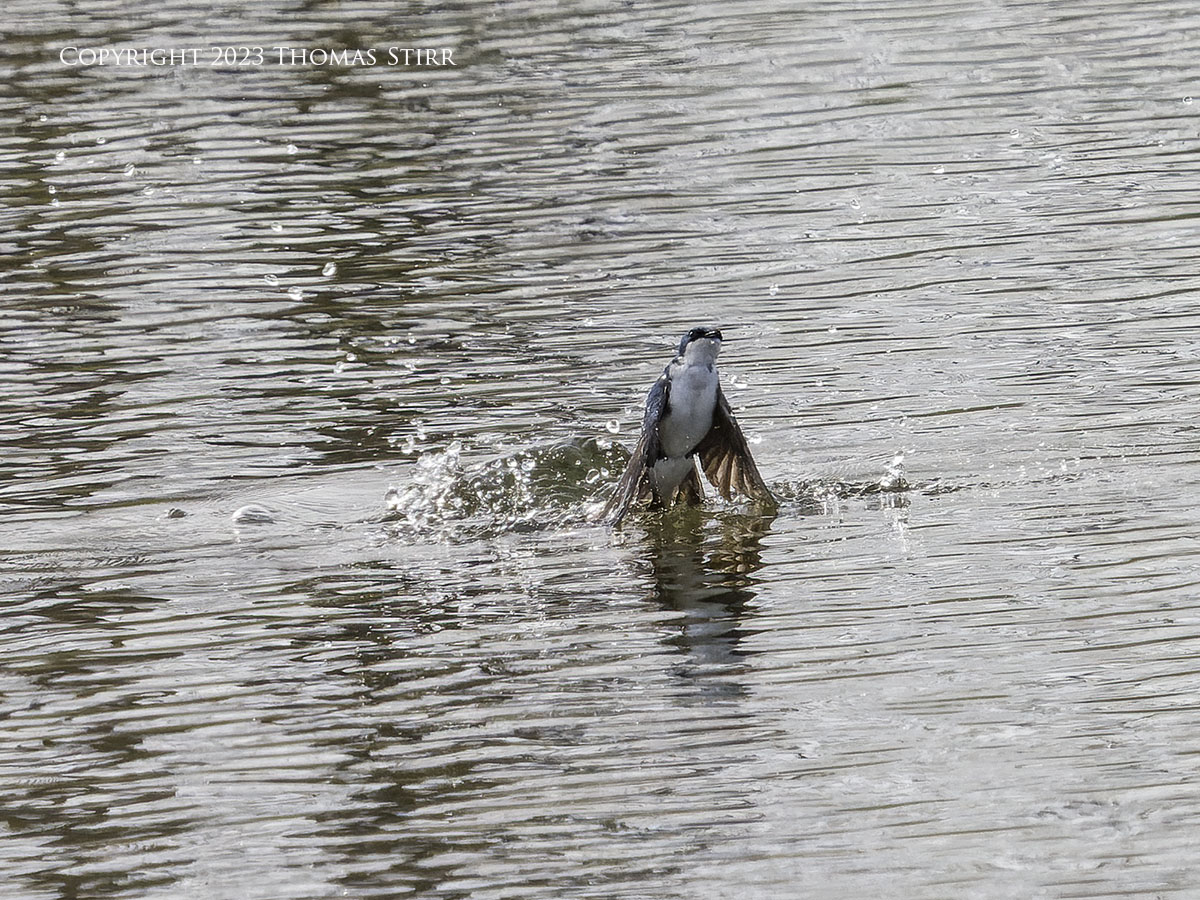

If you’re like me, a question comes to mind: “Why do swallows dive?”. Apparently this is how swallows bathe and keep their feathers clean. During very hot days they will also dive to help cool off, or perhaps take a drink.

Observing the swallows diving was an important component in devising a strategy to photograph them. I found that individual swallows that were more likely to dive would approach the pond from the south, at a height of about 1 to 1.5 metres (~3 to 4.5 feet).
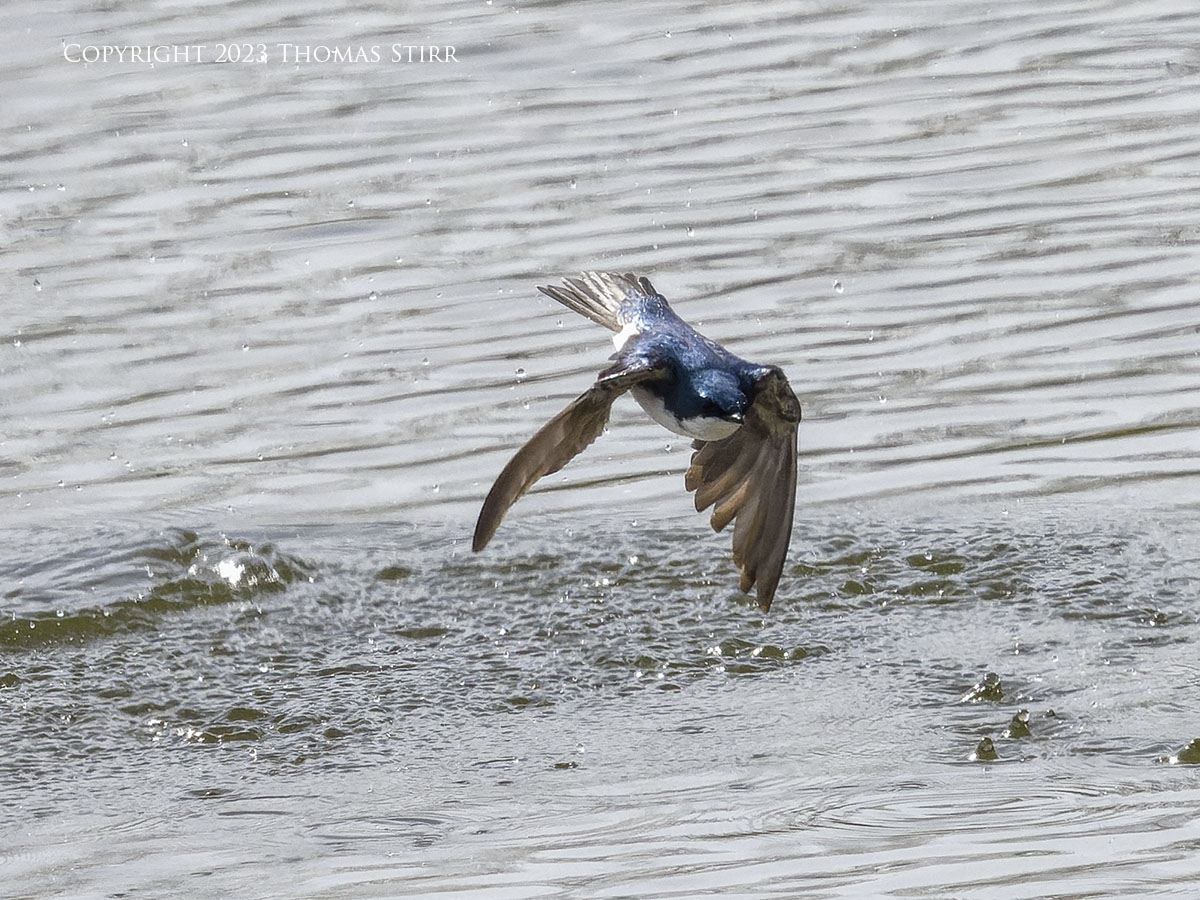
Once over the water they would fly in about one third of the way across the pond before dropping down for their first dive. Many swallows would repeat the diving action three or four times before flying off.

Understanding the subject bird’s behaviour was as important as my eye/hand coordination, shutter release timing, and the camera gear that I was using. Without being able to anticipate which birds may be preparing to dive, I would have missed many image opportunities as my reaction time would have been insufficient. Even though the resulting images featured in this posting were far too small to be used outside of this article, the experience of capturing them was rewarding.

The final two images in this article show a tree swallow about to hit the water and dive, followed by it bursting out of the surface of the water.


Taking on a photographic challenge is a great way to hone our physical skills as well as sharpen our observational capabilities.
Technical Note
Photographs were captured handheld using camera gear as noted in the EXIF data. Pro Capture L was set to 18 frames-per-second using silent shutter, 10 Pre-Shutter Frames with Frame Limiter turned off. I used a single auto-focus point with Bird Detection AI Subject Tracking. All images were produced from RAW files using my standard process. This is the 1,278 article published on this website since its original inception in 2015.
Word of mouth is the best form of endorsement. If you like our website please let your friends and associates know about our work. Linking to this site or to specific articles is allowed with proper acknowledgement. Reproducing articles, or any of the images contained in them, on another website or in any social media posting is a Copyright infringement.
Article and images are Copyright 2023 Thomas Stirr. All rights reserved. No use, duplication or adaptation of any kind is allowed without written consent. If you see this article reproduced anywhere else it is an unauthorized and illegal use. Posting comments on offending websites and calling out individuals who steal intellectual property is always appreciated!
Thomas
been following your articles and your excellent photos
thank you so much for sharing.
I’m glad you have been enjoying the website.
Tom
Thank you for sharing these wonderful pictures and reminding us of the pleasures of taking your time to observe the small things that happen around us.
I’m glad you enjoyed the images Eduardo.
Tom
Very impressive. They are such difficult little birds to photograph. Well done and thank you for sharing.
Thank you for your supportive comment Carol. I agree they are a challenge.
Tom
Superb photography
Thanks Mark… I’m glad you enjoyed the images.
Tom