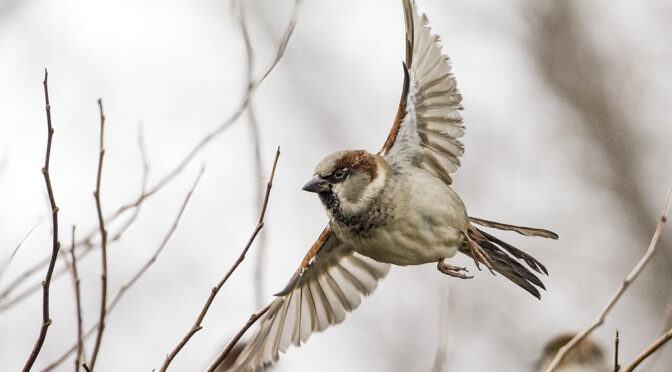
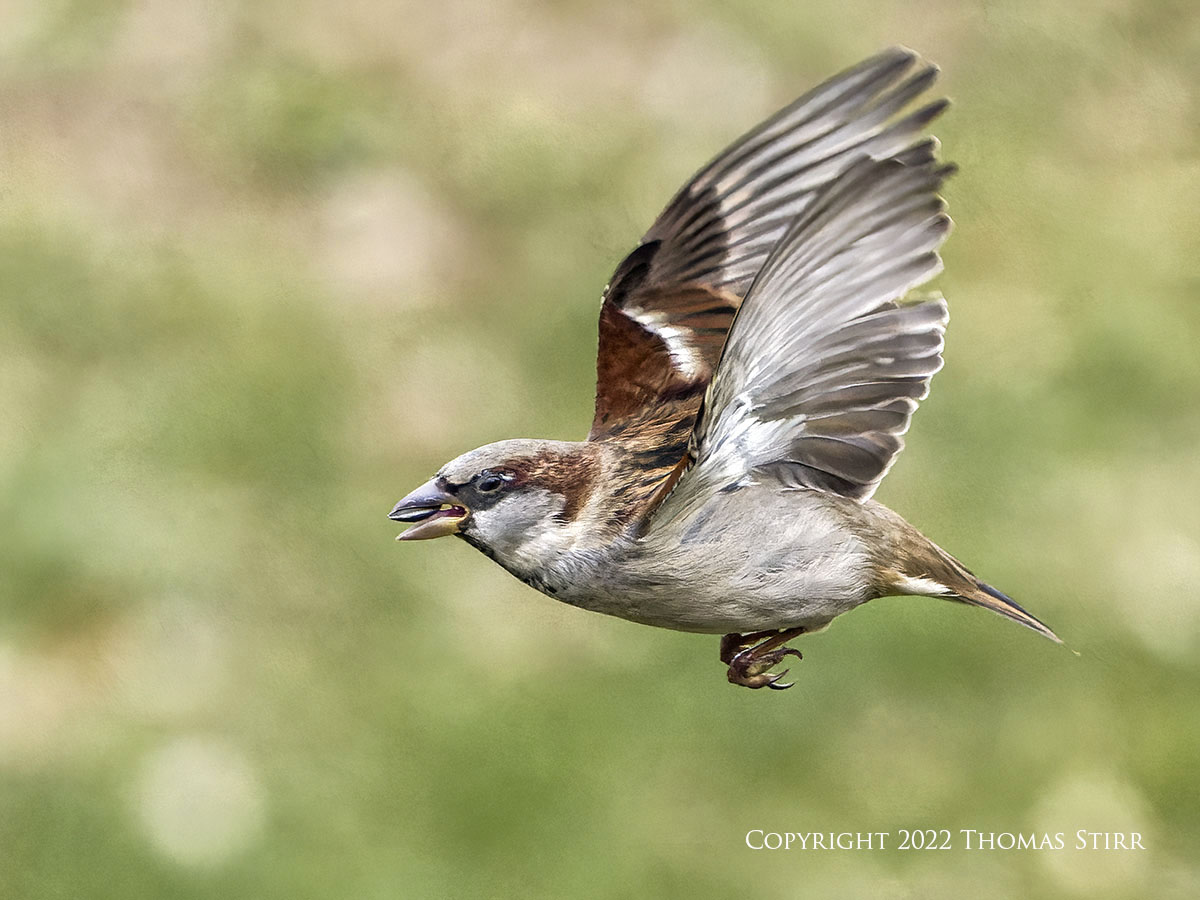
This article features a selection of handheld photographs of sparrows in-flight captured with an M.Zuiko 75-300 f/4.8-6.7 II zoom lens and an Olympus OM-D E-M1 Mark III.
NOTE: Click on images to enlarge.
OM-D E-M1 Mark III + M.Zuiko 75-300 mm f/4.8-6.7 II @ 300 mm, efov 600 mm, f/6.7, 1/4000, ISO-6400, Pro Capture H, cropped to 3276 pixels on the width, subject distance 7.2 metres
I haven’t been out with my camera gear for a little while, so I decided to do something a little different. To that end I used our E-M1 Mark III with the M.Zuiko 75-300 mm f/4.8-6.7 II to photograph some sparrows in our backyard.
OM-D E-M1 Mark III + M.Zuiko 75-300 mm f/4.8-6.7 II @ 300 mm, efov 600 mm, f/6.7, 1/4000, ISO-6400, Pro Capture H, cropped to 2984 pixels on the width, subject distance 7 metres
It was a dull, overcast day so lighting was less than ideal. Making the outing into a bit of a higher ISO test seemed like a logical thing to do.
OM-D E-M1 Mark III + M.Zuiko 75-300 mm f/4.8-6.7 II @ 300 mm, efov 600 mm, f/6.7, 1/5000, ISO-10000, Pro Capture H, cropped to 2717 pixels on the width, subject distance 10.3 metres
I captured all of the images in this article using Pro Capture H with my standard settings. Both Pre-Shutter Frames and Frame Limiter were set to 15. I used a frame rate of 60 frames per second, along with a single auto-focus point. The following photographs are 5 consecutive images from the same Pro Capture H run.
OM-D E-M1 Mark III + M.Zuiko 75-300 mm f/4.8-6.7 II @ 300 mm, efov 600 mm, f/6.7, 1/4000, ISO-4000, Pro Capture H, cropped to 4485 pixels on the width, subject distance 7.4 metresOM-D E-M1 Mark III + M.Zuiko 75-300 mm f/4.8-6.7 II @ 300 mm, efov 600 mm, f/6.7, 1/4000, ISO-4000, Pro Capture H, cropped to 3988 pixels on the width, subject distance 7.4 metresOM-D E-M1 Mark III + M.Zuiko 75-300 mm f/4.8-6.7 II @ 300 mm, efov 600 mm, f/6.7, 1/4000, ISO-4000, Pro Capture H, cropped to 3888 pixels on the width, subject distance 7.4 metresOM-D E-M1 Mark III + M.Zuiko 75-300 mm f/4.8-6.7 II @ 300 mm, efov 600 mm, f/6.7, 1/4000, ISO-4000, Pro Capture H, cropped to 3988 pixels on the width, subject distance 7.4 metresOM-D E-M1 Mark III + M.Zuiko 75-300 mm f/4.8-6.7 II @ 300 mm, efov 600 mm, f/6.7, 1/4000, ISO-4000, Pro Capture H, cropped to 3959 pixels on the width, subject distance 7.4 metres
To capture the 5 photographs above, I focused on the perched female sparrow and spooled images into temporary memory as I waited for the male bird to fly into my composition. It suddenly veered off to its right… and out of focus… as it came in closer to the perched female.
Another approach that can often generate some interesting images is to pre-focus on a bird feeder, then slide your composition slightly away from the feeder while spooling images into temporary memory. Using ‘both eyes open’ technique can help anticipate the arrival of birds flying in to feed. The four consecutive images that follow were created using this method.
OM-D E-M1 Mark III + M.Zuiko 75-300 mm f/4.8-6.7 II @ 300 mm, efov 600 mm, f/6.7, 1/4000, ISO-6400, Pro Capture H, cropped to 3512 pixels on the width, subject distance 7 metresOM-D E-M1 Mark III + M.Zuiko 75-300 mm f/4.8-6.7 II @ 300 mm, efov 600 mm, f/6.7, 1/4000, ISO-6400, Pro Capture H, cropped to 3983 pixels on the width, subject distance 7 metresOM-D E-M1 Mark III + M.Zuiko 75-300 mm f/4.8-6.7 II @ 300 mm, efov 600 mm, f/6.7, 1/4000, ISO-6400, Pro Capture H, cropped to 3938 pixels on the width, subject distance 7 metresOM-D E-M1 Mark III + M.Zuiko 75-300 mm f/4.8-6.7 II @ 300 mm, efov 600 mm, f/6.7, 1/4000, ISO-6400, Pro Capture H, cropped to 3428 pixels on the width, subject distance 7 metres
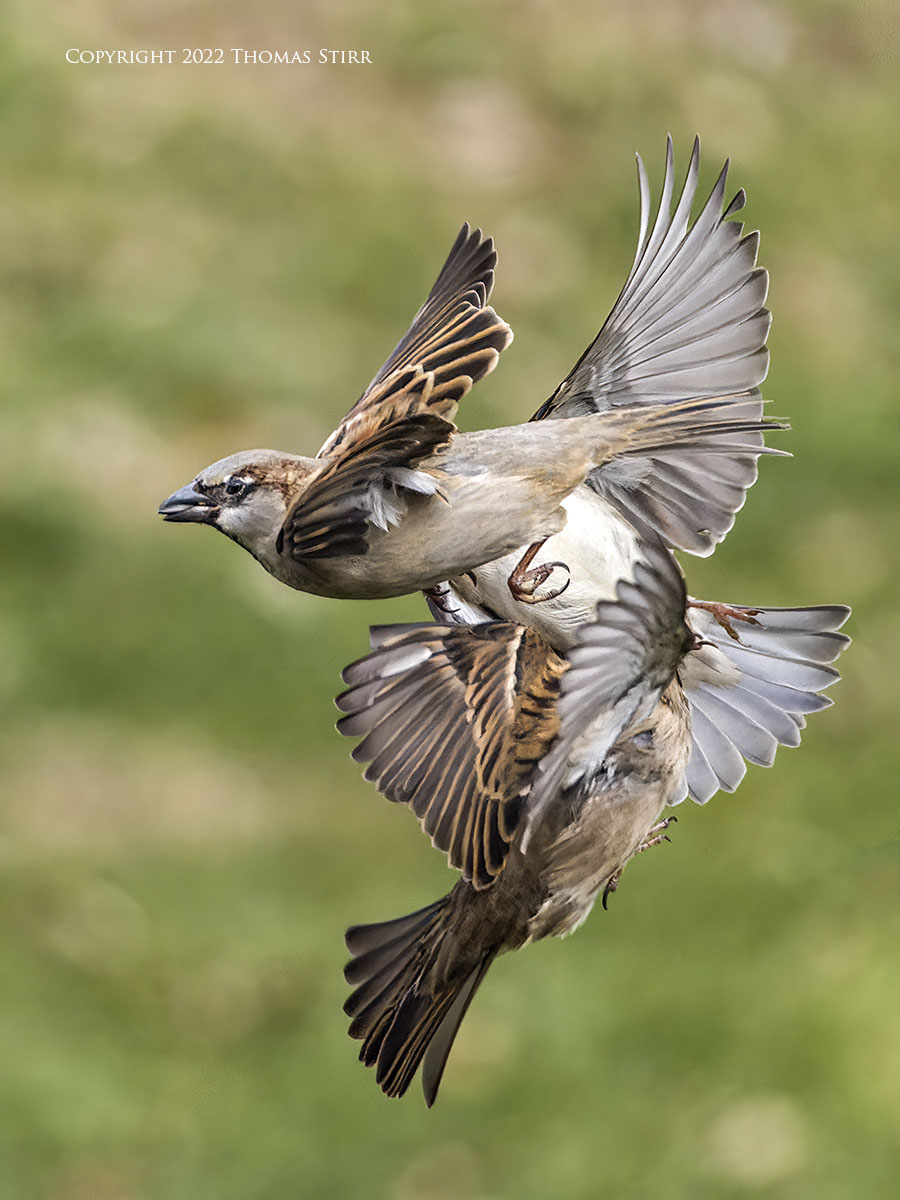
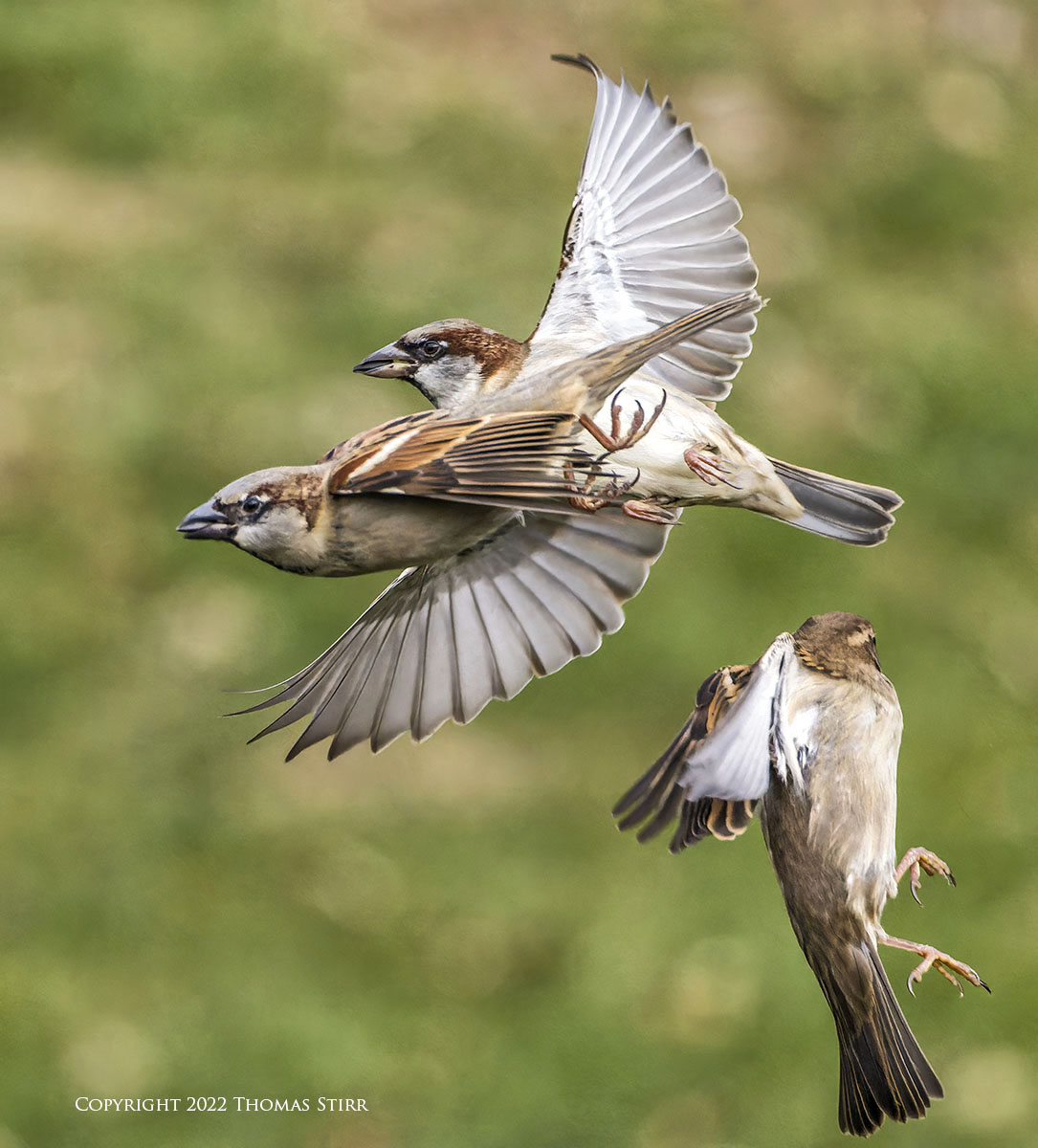
This technique can also be used to captured small groupings of small birds in flight as we can see with the next two photographs.
OM-D E-M1 Mark III + M.Zuiko 75-300 mm f/4.8-6.7 II @ 300 mm, efov 600 mm, f/6.7, 1/4000, ISO-6400, Pro Capture H, cropped to 2915 pixels on the width, subject distance 7 metresOM-D E-M1 Mark III + M.Zuiko 75-300 mm f/4.8-6.7 II @ 300 mm, efov 600 mm, f/6.7, 1/4000, ISO-6400, Pro Capture H, cropped to 3516 pixels on the width, subject distance 7 metres
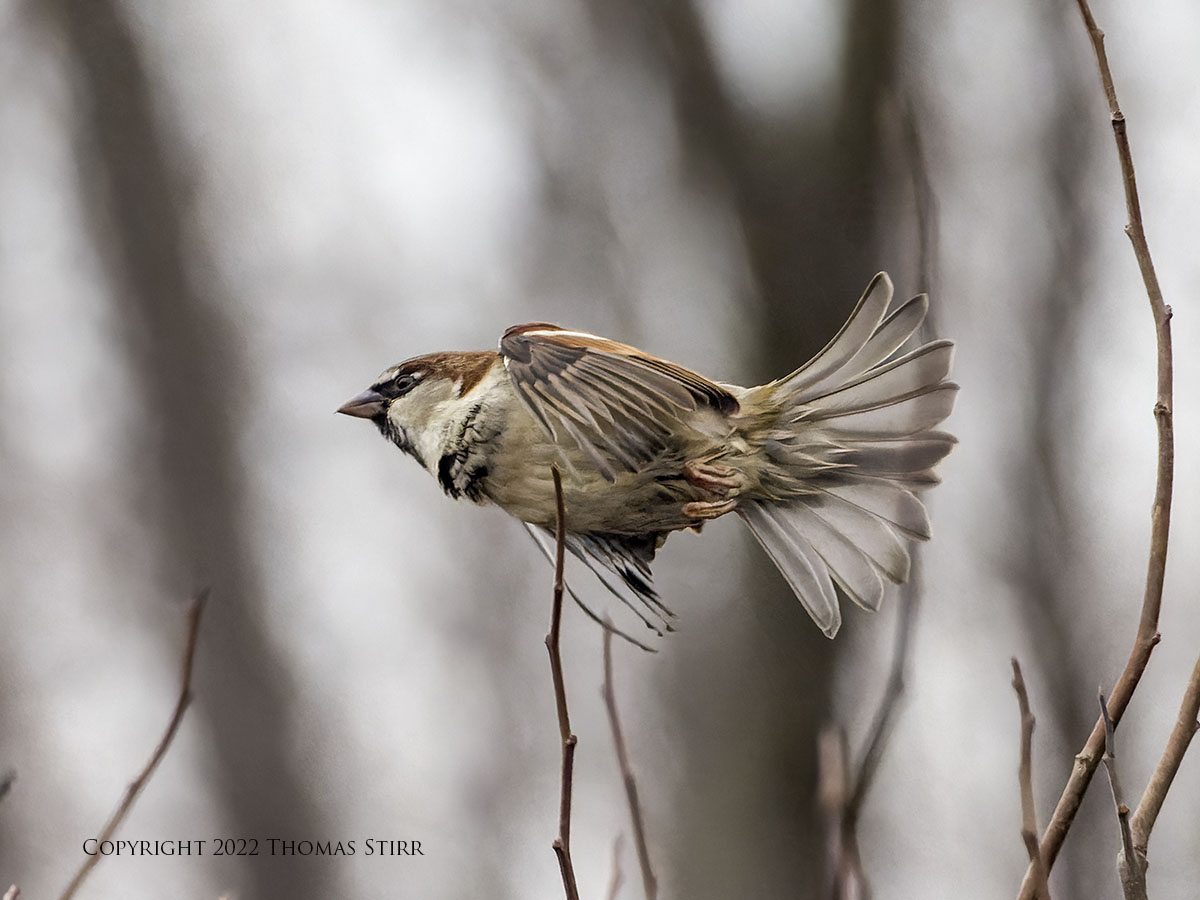
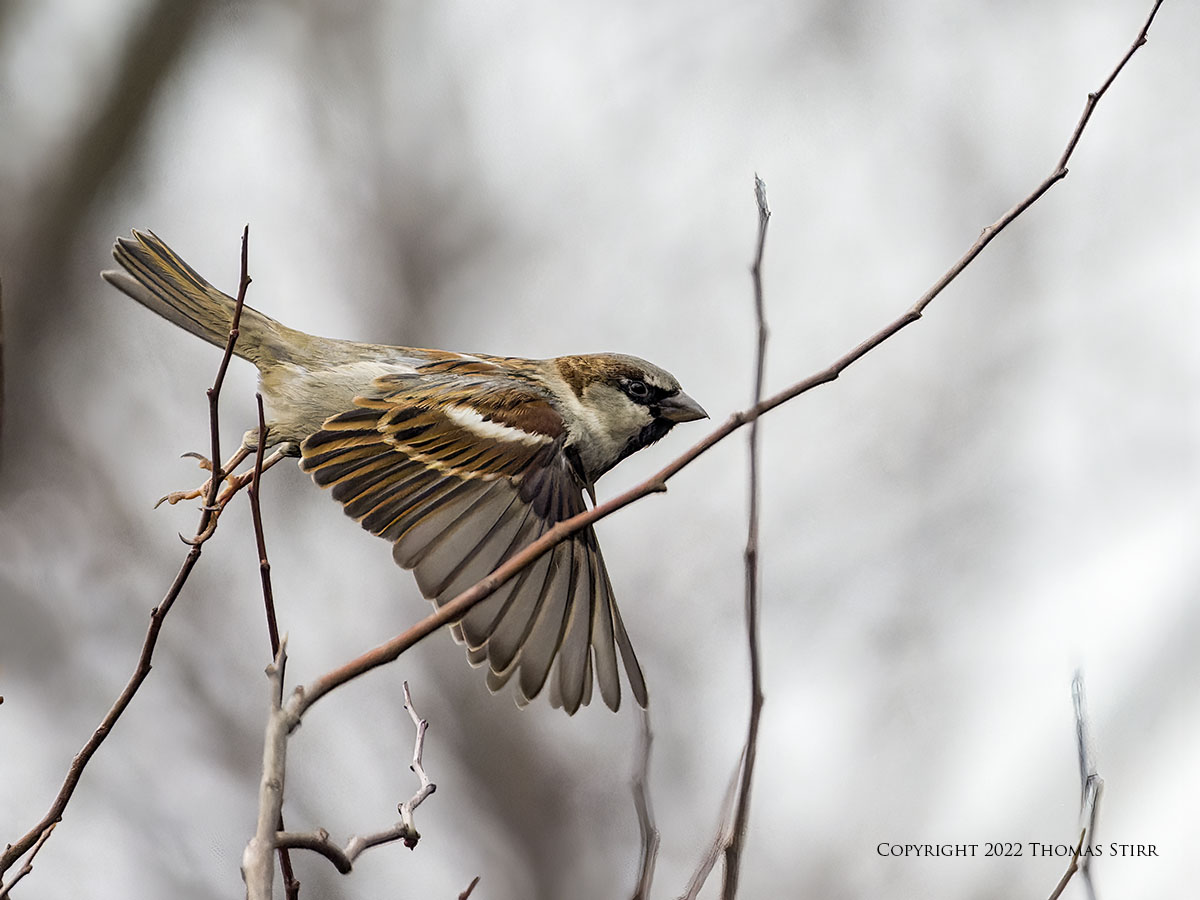
I enjoy capturing images of birds taking flight just as they are becoming airborne. These types of photographs tend to have a feeling of anticipation in them… as in the following photograph.
OM-D E-M1 Mark III + M.Zuiko 75-300 mm f/4.8-6.7 II @ 300 mm, efov 600 mm, f/6.7, 1/4000, ISO-4000, Pro Capture H, cropped to 3120 pixels on the width, subject distance 7.5 metres
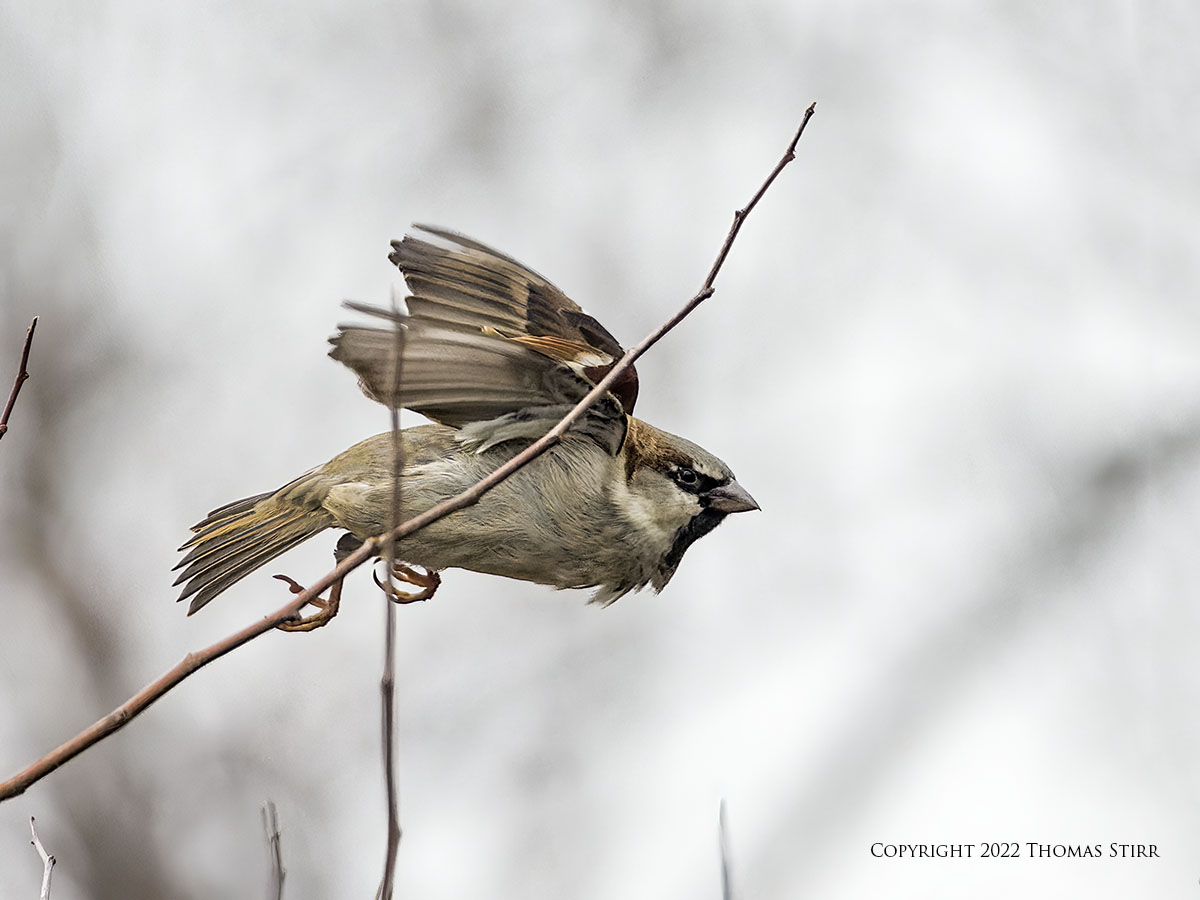
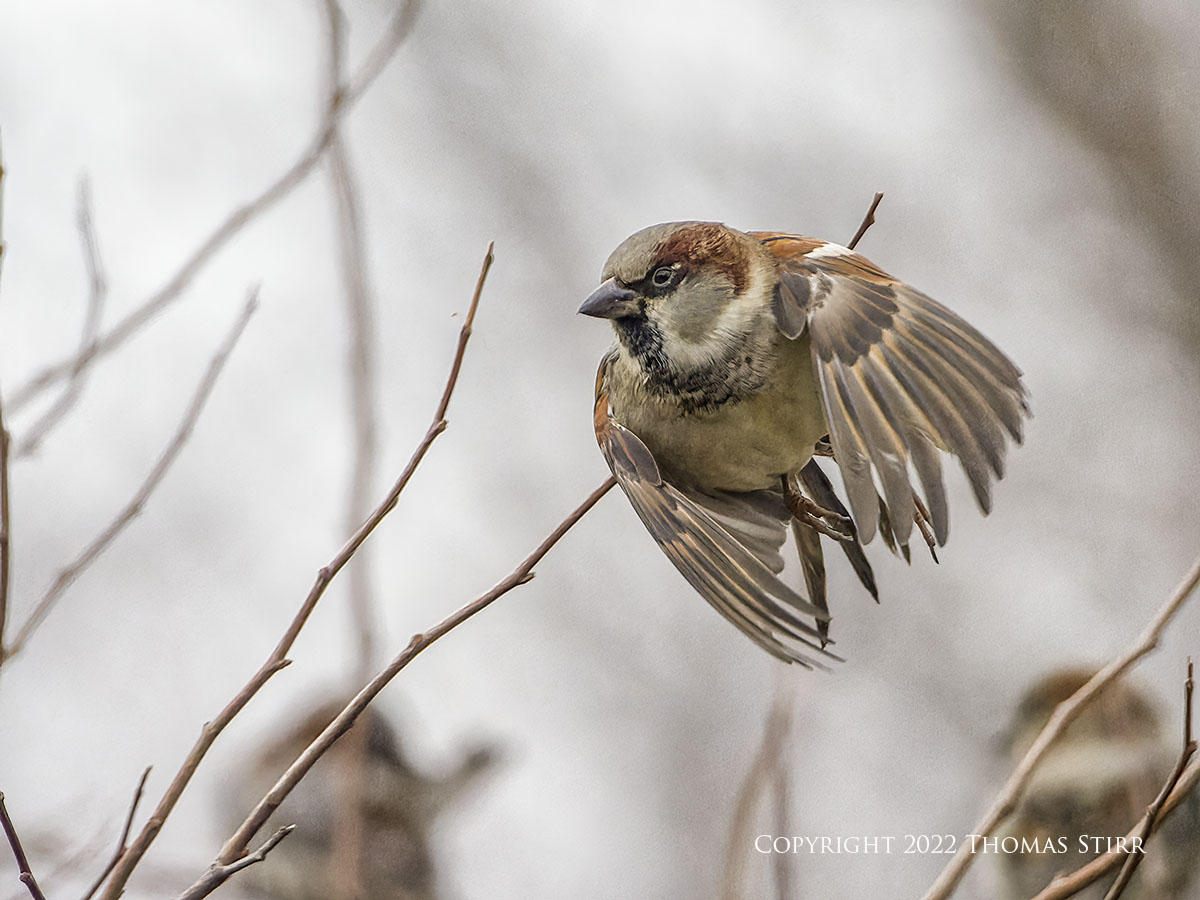
The next 5 photographs are from the same Pro Capture H run. They are not all consecutive as the twigs in the composition obscured the sparrow’s eye in a few of the frames.
OM-D E-M1 Mark III + M.Zuiko 75-300 mm f/4.8-6.7 II @ 300 mm, efov 600 mm, f/6.7, 1/4000, ISO-6400, Pro Capture H, cropped to 3293 pixels on the width, subject distance 8.5 metresOM-D E-M1 Mark III + M.Zuiko 75-300 mm f/4.8-6.7 II @ 300 mm, efov 600 mm, f/6.7, 1/4000, ISO-6400, Pro Capture H, cropped to 3389 pixels on the width, subject distance 8.5 metresOM-D E-M1 Mark III + M.Zuiko 75-300 mm f/4.8-6.7 II @ 300 mm, efov 600 mm, f/6.7, 1/4000, ISO-6400, Pro Capture H, cropped to 3203 pixels on the width, subject distance 8.5 metresOM-D E-M1 Mark III + M.Zuiko 75-300 mm f/4.8-6.7 II @ 300 mm, efov 600 mm, f/6.7, 1/4000, ISO-6400, Pro Capture H, cropped to 3558 pixels on the width, subject distance 8.5 metresOM-D E-M1 Mark III + M.Zuiko 75-300 mm f/4.8-6.7 II @ 300 mm, efov 600 mm, f/6.7, 1/4000, ISO-6400, Pro Capture H, cropped to 3189 pixels on the width, subject distance 8.5 metres
It is important to try to anticipate the angle of flight that a bird may use when taking flight. If we are successful in capturing an image run with the bird flying parallel to our camera’s sensor it will stay in focus when we are using a frame rate that is locking exposure and auto-focus based on only the first frame of the image run.
OM-D E-M1 Mark III + M.Zuiko 75-300 mm f/4.8-6.7 II @ 300 mm, efov 600 mm, f/6.7, 1/4000, ISO-5000, Pro Capture H, cropped to 3045 pixels on the width, subject distance 7.2 metres
Even very common birds like sparrows can have an intense, focused expression when taking flight.
OM-D E-M1 Mark III + M.Zuiko 75-300 mm f/4.8-6.7 II @ 300 mm, efov 600 mm, f/6.7, 1/4000, ISO-5000, Pro Capture H, cropped to 3001 pixels on the width, subject distance 7.2 metres
As noted earlier, photographing birds-in-flight with an E-M1 Mark III and M.Zuiko 75-300 mm f/4.8-6.7 II zoom lens isn’t a combination that I use very often. it is a small, lightweight match-up that can be a heck of a lot of fun. As time permits I may go out with this combination on a more frequent basis this winter.
OM-D E-M1 Mark III + M.Zuiko 75-300 mm f/4.8-6.7 II @ 300 mm, efov 600 mm, f/6.7, 1/4000, ISO-5000, Pro Capture H, cropped to 3946 pixels on the width, subject distance 7.2 metres
Photographers looking for a small, lightweight, and easy-to-use zoom lens for birding should have a look at the M.Zuiko 75-300 mm f/4.8-6.7 II. It is a good little lens that won’t break the bank.
Technical Note:
Photographs were captured handheld using camera gear as noted in the EXIF data. Images were produced from RAW files using my standard approach in post. This is the 1,235 article published on this website since its original inception in 2015.
Word of mouth is the best form of endorsement. If you like our website please let your friends and associates know about our work. Linking to this site or to specific articles is allowed with proper acknowledgement. Reproducing articles, or any of the images contained in them, on another website or in any social media posting is a Copyright infringement.
Article and images are Copyright 2022 Thomas Stirr. All rights reserved. No use, duplication or adaptation of any kind is allowed without written consent. If you see this article reproduced anywhere else it is an unauthorized and illegal use. Posting comments on offending websites and calling out individuals who steal intellectual property is always appreciated!
4 thoughts on “Sparrows with 75-300”
Enjoyed your photos with the 75-300 – I purchased one new about a year ago on special but finding I use it much less my 40-150 f2.8 Pro & MC14 extender – mainly because of the Pro WR sealing and faster aperture. I tried it for BIF and it did struggle to keep up for C-AF compared to the Pro, but for static set ups it delivered some nice quality images. Certainly a winner for weight and size!
Our M.Zuiko 75-300 mm f/4.8-6.7 II is used mainly by my wife, and most often for perched birds she can photograph from our kitchen window. I’ve only used it a few times and most often with Pro Capture H to photograph birds taking flight. I plan on spending more time with it to get a better understanding of its capabilities. A few more articles may follow.
I’ve also used the PRO 40-150 f/2.8 extensively with the MC-20 for birds-in-flight. I found this was a very good combination.
This website celebrates the joy of photography and features a wide range of photographic subject matter. The content is designed to appeal to a wide range of people interested in photography. The website also provides information to help readers increase their level of photographic freedom.
You cannot copy content of this page
We use cookies to ensure that we give you the best experience on our website. This is an advertising free website and we do not use any kind of advertising tracking cookies. Your email address or any other information you provide as your subscription to the website is never sold to any other party. If you subscribe to this website your email address is used to send out notifications on new articles. If you continue to use this site we will assume that you are happy with our approach to cookie use.










Enjoyed your photos with the 75-300 – I purchased one new about a year ago on special but finding I use it much less my 40-150 f2.8 Pro & MC14 extender – mainly because of the Pro WR sealing and faster aperture. I tried it for BIF and it did struggle to keep up for C-AF compared to the Pro, but for static set ups it delivered some nice quality images. Certainly a winner for weight and size!
Hi Mark,
Our M.Zuiko 75-300 mm f/4.8-6.7 II is used mainly by my wife, and most often for perched birds she can photograph from our kitchen window. I’ve only used it a few times and most often with Pro Capture H to photograph birds taking flight. I plan on spending more time with it to get a better understanding of its capabilities. A few more articles may follow.
I’ve also used the PRO 40-150 f/2.8 extensively with the MC-20 for birds-in-flight. I found this was a very good combination.
Tom
These birds are so pretty and I love their shape. My favorite photos are 19 and 23. You always amaze me with your great bird shots!
Hi Joni,
thanks for your feedback… much appreciated. I’m glad you enjoyed the photographs.
Tom