

Getting close up with primates is always an interesting photographic experience when visiting our local zoo. I can only imagine what the experience would be like in the wild.
NOTE: Click on images to enlarge. To view this article in a range of other languages click on the Canadian flag in the upper right corner.
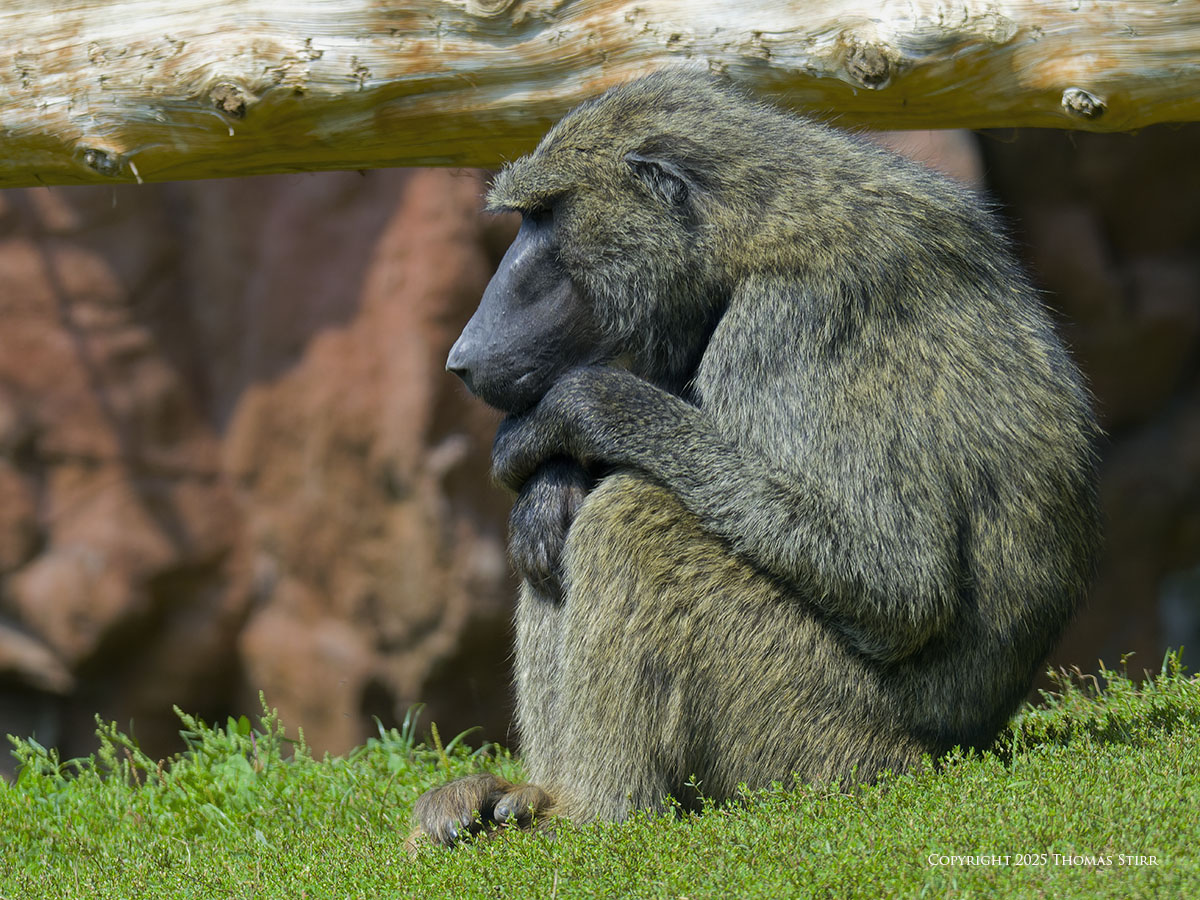
As noted in a previous article, using the M.Zuiko 150-600 mm f/5-6.3 IS zoom is an interesting piece of kit to use for zoo photography. The incredible reach does come in handy for subjects at a distance… but it can also be somewhat limiting when a photographer wants to capture the entire body of animal.

During our recent zoo visit I had the opportunity to get up close to primates in four different display areas. This article shares a small sample of the resulting images. All of the photographs were captured handheld through soiled glass, or wire mesh.
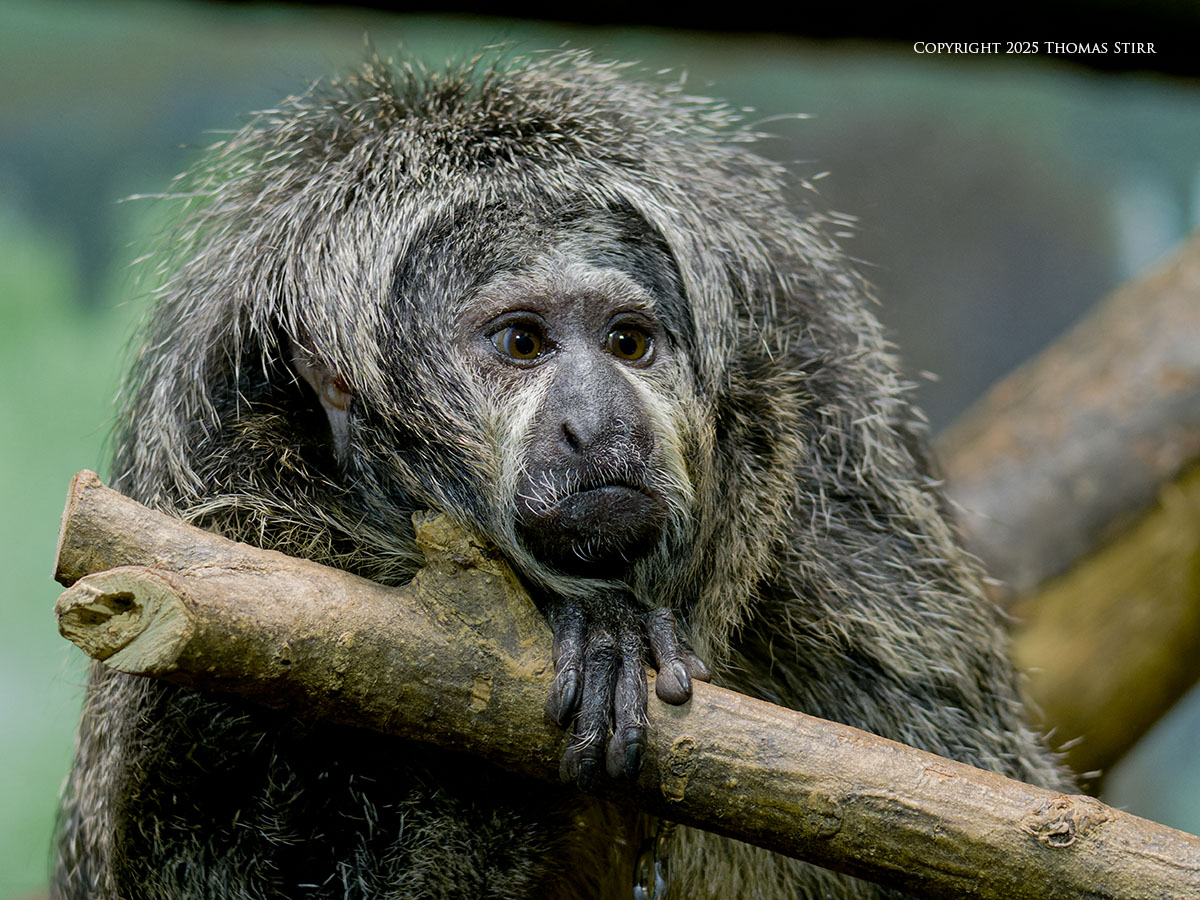
There is always something special about photographing our cousins, especially when they exhibit human-like behaviours and emotions.
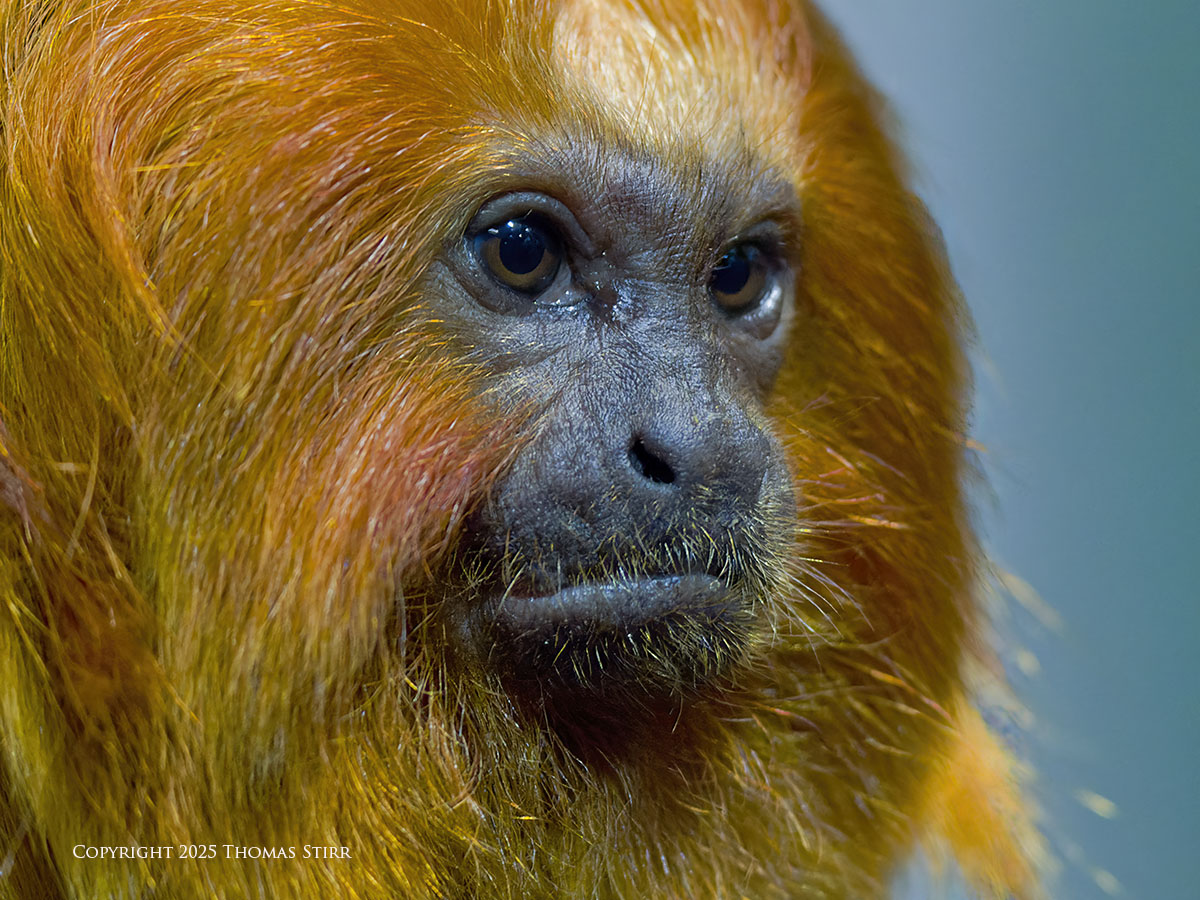
My wife and I typically spend a good amount of time observing and photographing primates. During this visit many of the individual primates were inside private areas and not visible to the public. We still managed to capture a few images of these beautiful animals. I used subject bleeds with some of my compositions to accentuate the faces of the primates.

A gorilla was reasonably close to a viewing window, but in quite a dark area. This necessitated the use of a higher ISO value. I managed to compose the image above while taking advantage of some lovely side lighting. The image was one of my favourites from our visit, even though it was captured at ISO-10000.
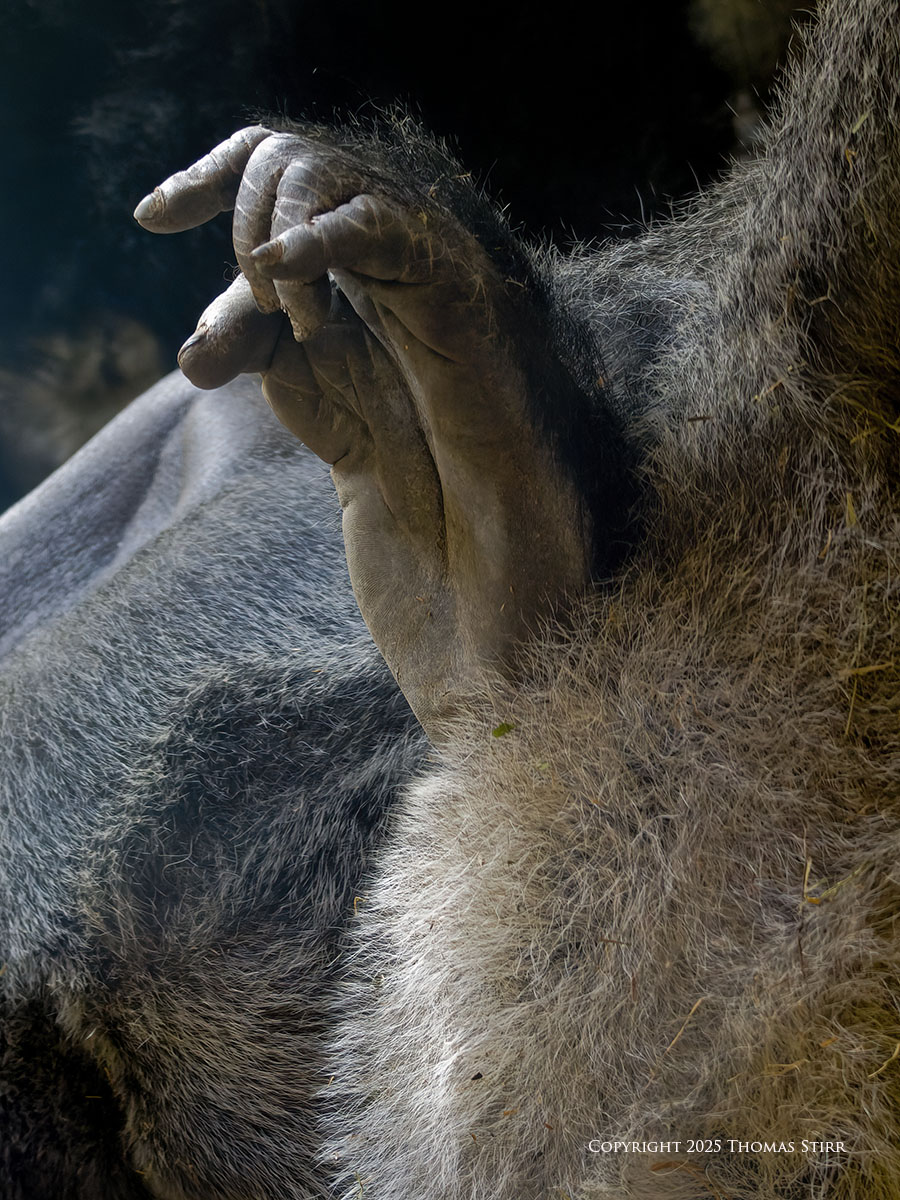
Shortly after capturing the portrait of the gorilla, it decided it was time for a nap and laid out with its head away from me, and totally obscured. As I studied the gorilla I did have the opportunity to capture a couple of images of its appendages.
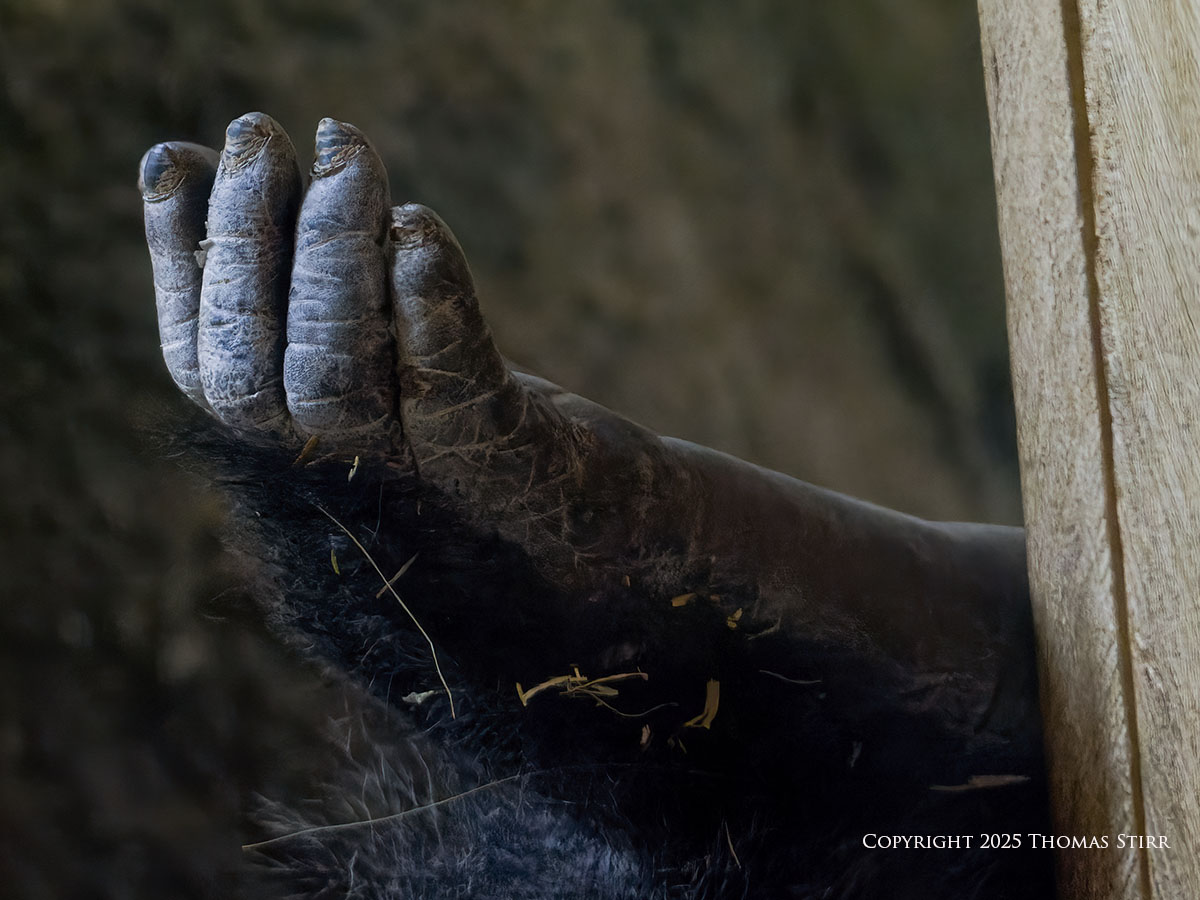
I found these images uniquely expressive.
Technical Note
Photographs were captured handheld using camera gear as noted in the EXIF data. All images were created from RAW files using my standard process in post. A single, small auto-focus point was used for all of the images in this article. This is the 1,484 article published on this website since its original inception in 2015.
Copyright
Word of mouth is the best form of endorsement. If you like our website please let your friends and associates know about our work. Linking to this site or to specific articles is allowed with proper acknowledgement. Reproducing articles, or any of the images contained in them, on another website or in any social media posting is a Copyright infringement.
Article and images are Copyright 2025 Thomas Stirr. All rights reserved. No use, duplication or adaptation of any kind is allowed without written consent. If you see this article reproduced anywhere else it is an unauthorized and illegal use. Posting comments on offending websites and calling out individuals who steal intellectual property is always appreciated!
Nice work Thomas
Out of interest what noise reduction program are you using?
Hi Mark,
I run all of my RAW files through DxO PhotoLab 7 and apply DeepPRIME to a maximum value of 15. If my images need further noise reduction I use an out-of-date copy of Topaz DeNoise AI.
Tom
Fabulous images even through glass and limited light.
Thanks for referencing the subject bleed article, it was something I did but not know the logic and reasoning for; an excellent read.
Hi Andrew,
I’m glad you enjoyed the images and found the subject bleed article of interest. When I do presentations to camera clubs, subject bleed is always one of the topics that generates a lot of interest.
Tom