

In preparation for the upcoming spring/summer outdoor macro photography season, I recently got in some practice with HHFS (handheld focus stacked) butterfly images at the Niagara Butterfly Conservatory.
NOTE: Click on images to enlarge. To view this article in a range of languages click on the Canadian flag in the upper right corner.
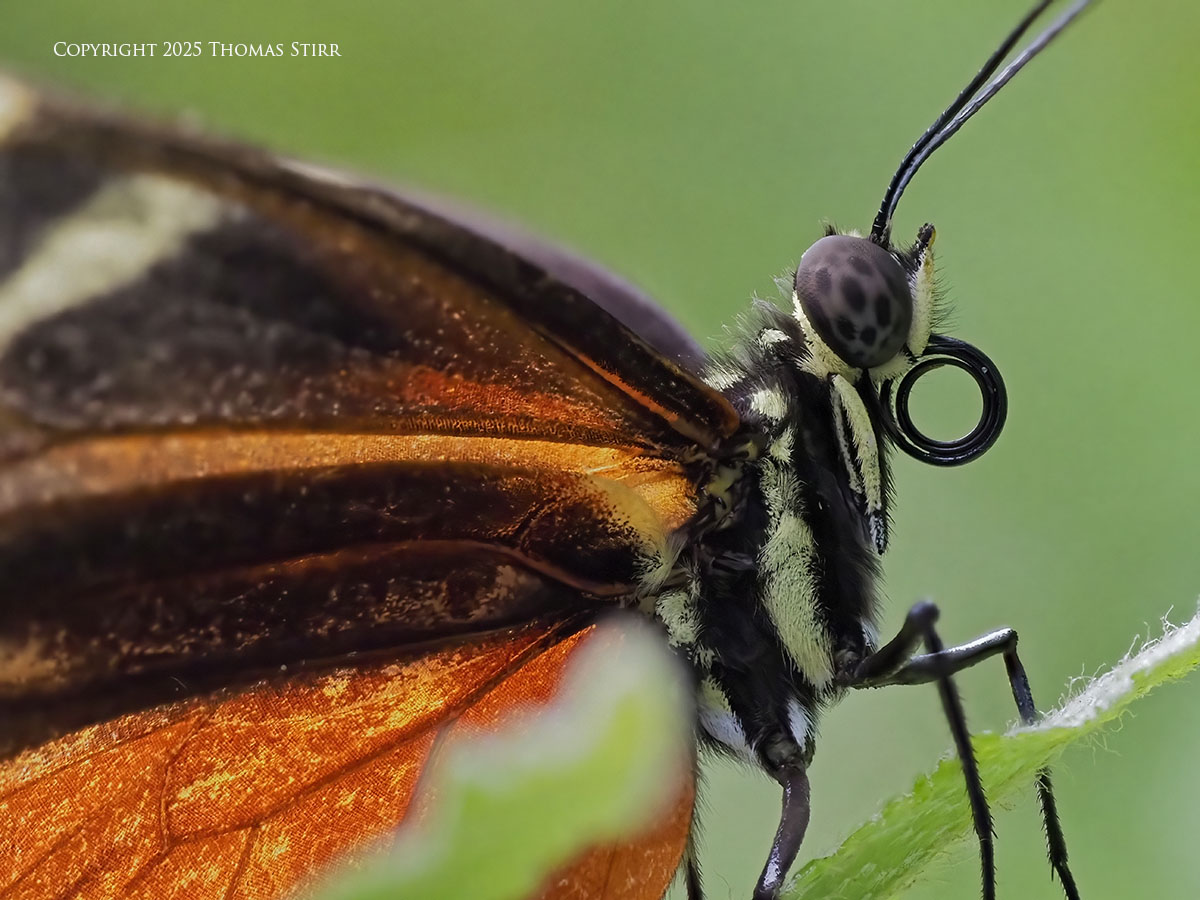
Last year I wasn’t able to get out as much as I would have liked due to my cataract surgeries and subsequent recovery times… so I’m very much looking forward to this outdoor macro photography season.
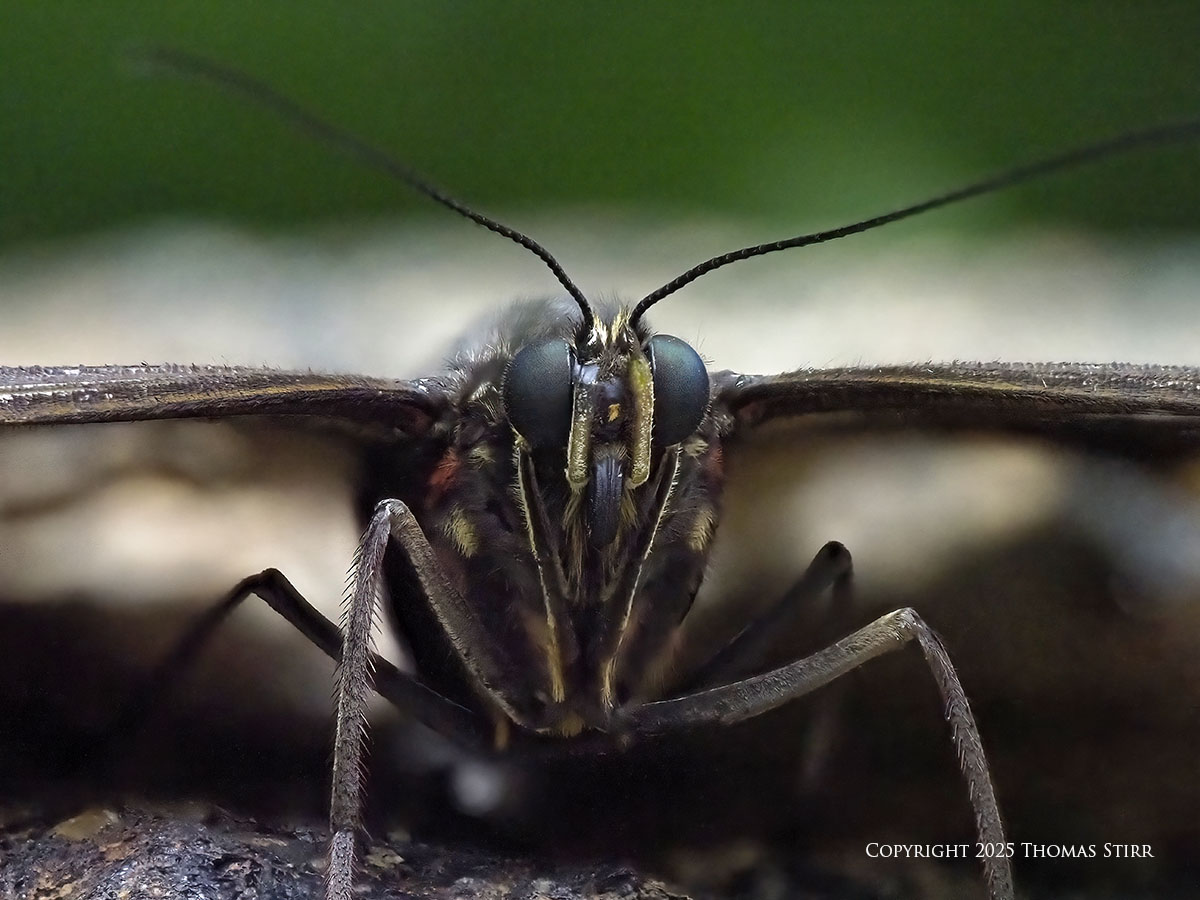
To prepare for the start of a specific genre of photography season, I typically go out a number of times and focus on one specific technique at a time in terms of a skills refresher. During this visit to the Niagara Butterfly Conservatory I focused on handheld in-camera focus stacking.
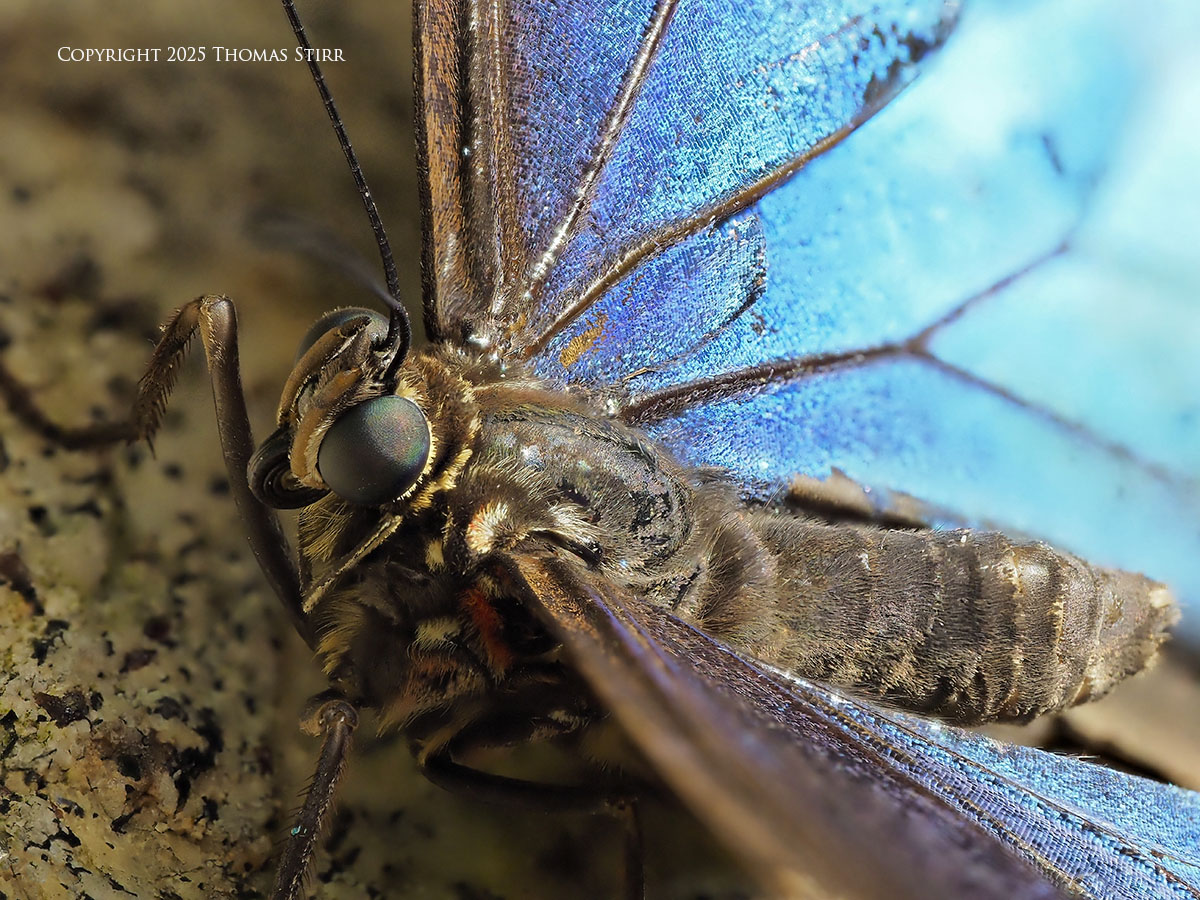
I didn’t pay that much attention to the ISO values at which I was shooting as this was a test session. I was more focused on my handholding technique, shutter speed and aperture settings. I set my E-M1X to a focus stack of 10 images with a focus differential of 5. Using a shutter speed of 1/250 with an aperture of f/9 was a good combination. These settings worked pretty well… although I did end up capturing a number of images at ISO-6400 which is higher than I would have liked.
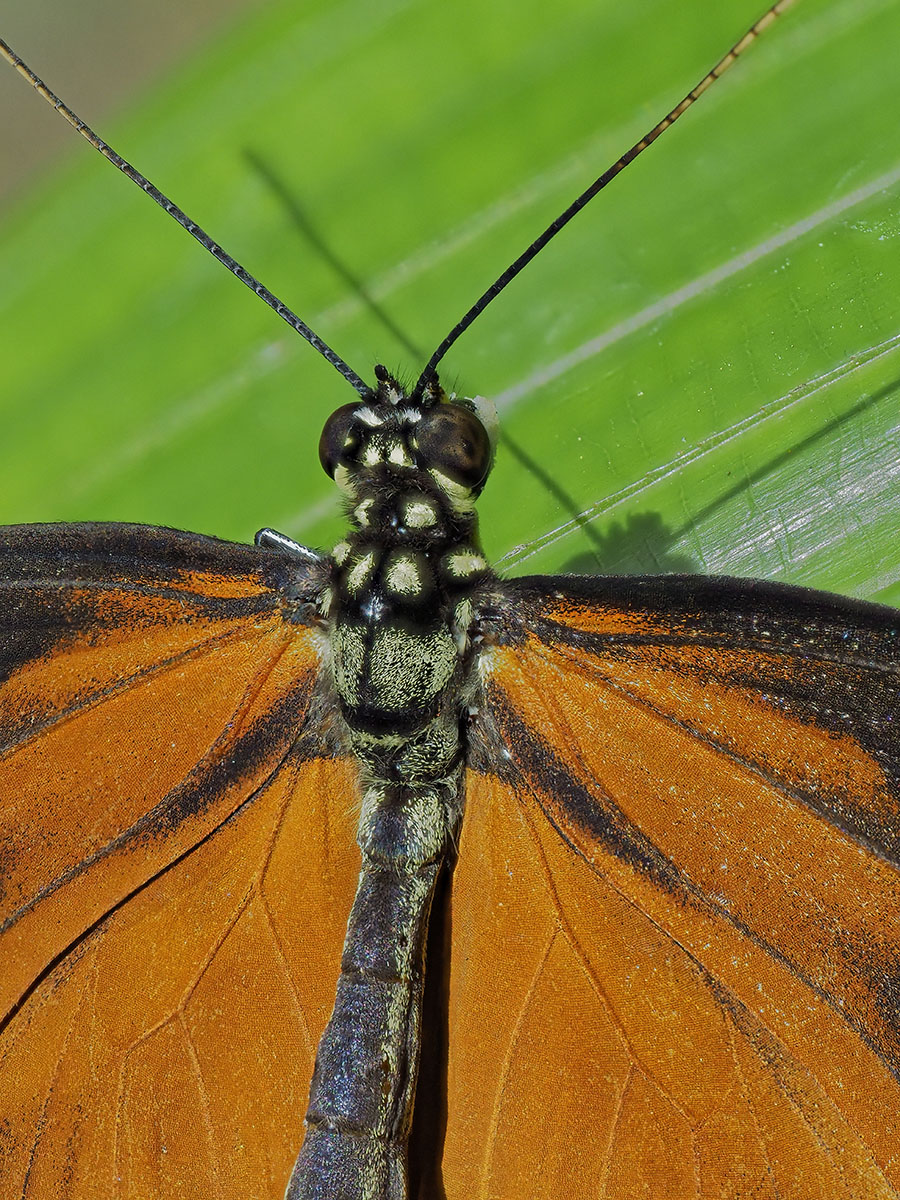
As Olympus/OM camera owners know, when using handheld in-camera focus stacking with these cameras the output is a jpeg file. This limits what can be done in post, so I prefer to keep my HHFS images to ISO-1600 and lower when possible.

Another consideration is subject movement. When using a stack of 10 images even small movements of antennae or a butterfly’s proboscis can be problematic. Obviously, it’s important to time an image capture when a subject is as still as possible.

When doing some in-field practice shooting with handheld in-camera focus stacking, it is important to compose photographs at different subject distances and angles. This necessitates some experimentation with the placement of a single, auto-focus point. I typically use a 30/70 ratio, i.e. place my single AF point about 30% behind where I want my image to start to be in focus.

As is the case with any photographic composition, being aware of the background and the subject’s distance to it, as well as shooting angle, are important to achieve good subject separation.

Compared to last year, when I first purchased the M.Zuiko 90 mm f/3.5 PRO IS macro, I got up to speed with my handheld technique much quicker this year. Practice has benefits.

I was also able to be very efficient when processing these out-of-camera jpegs in post, keeping my time per photograph to a little over 2 minutes each. This included working with images captured at higher ISO values like ISO-6400. When working with out-of-camera jpegs in post, trying to get it right in camera as much as possible, is important.
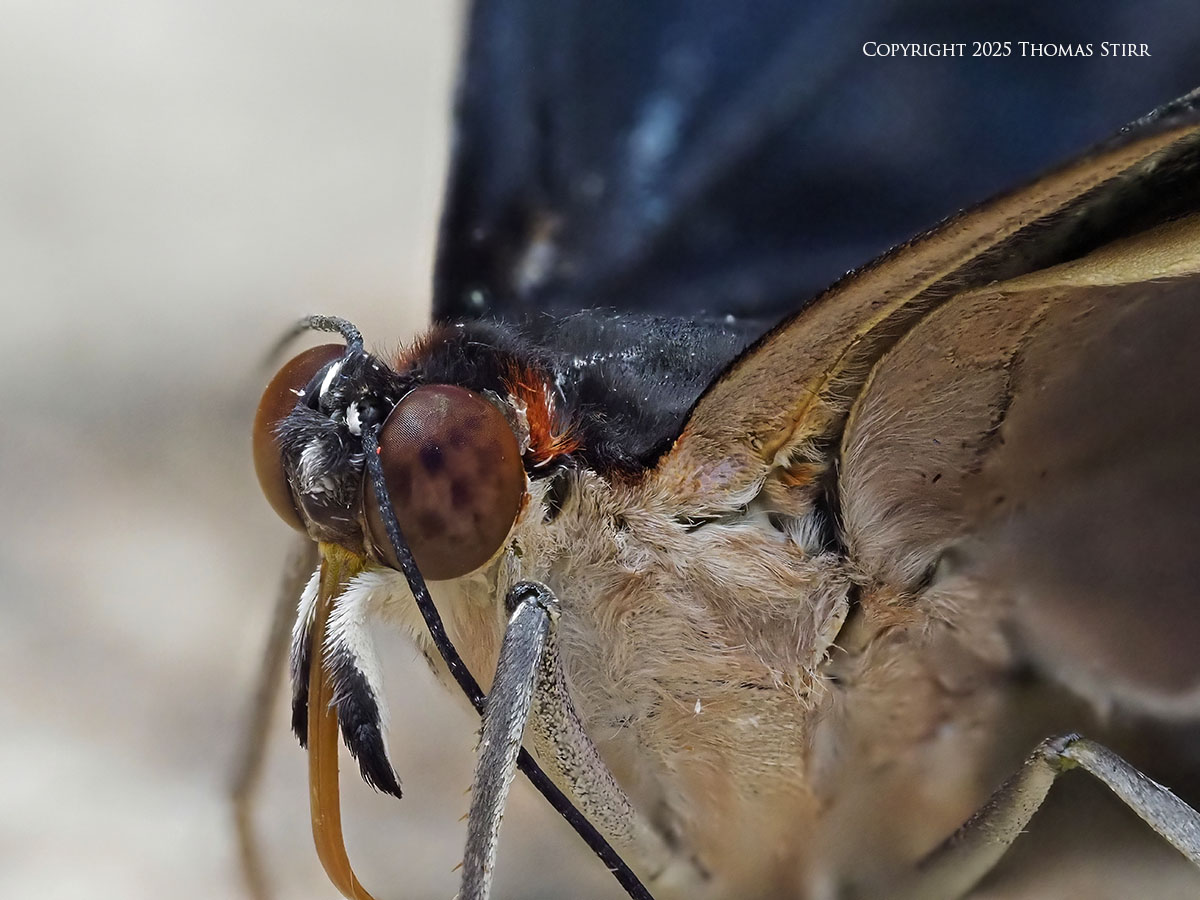
Every photographer has their own preferences when it comes to how they like to use their camera gear. When it comes to macro photography a lot of folks like to use flash with a diffuser and/or with a tripod.

I own an M.Zuiko STF-8 Twin Macro flash and do use it from time to time. As is the case with all of my photography, I love to shoot macro handheld… and my preference is to shoot in natural light whenever possible.

Investing in the M.Zuiko 90 mm f/3.5 PRO IS macro lens last year was a very good decision. While the M.Zuiko 60 mm f/2.8 macro is a small, excellent lens… using the 90 mm macro has expanded my handheld macro capabilities significantly.
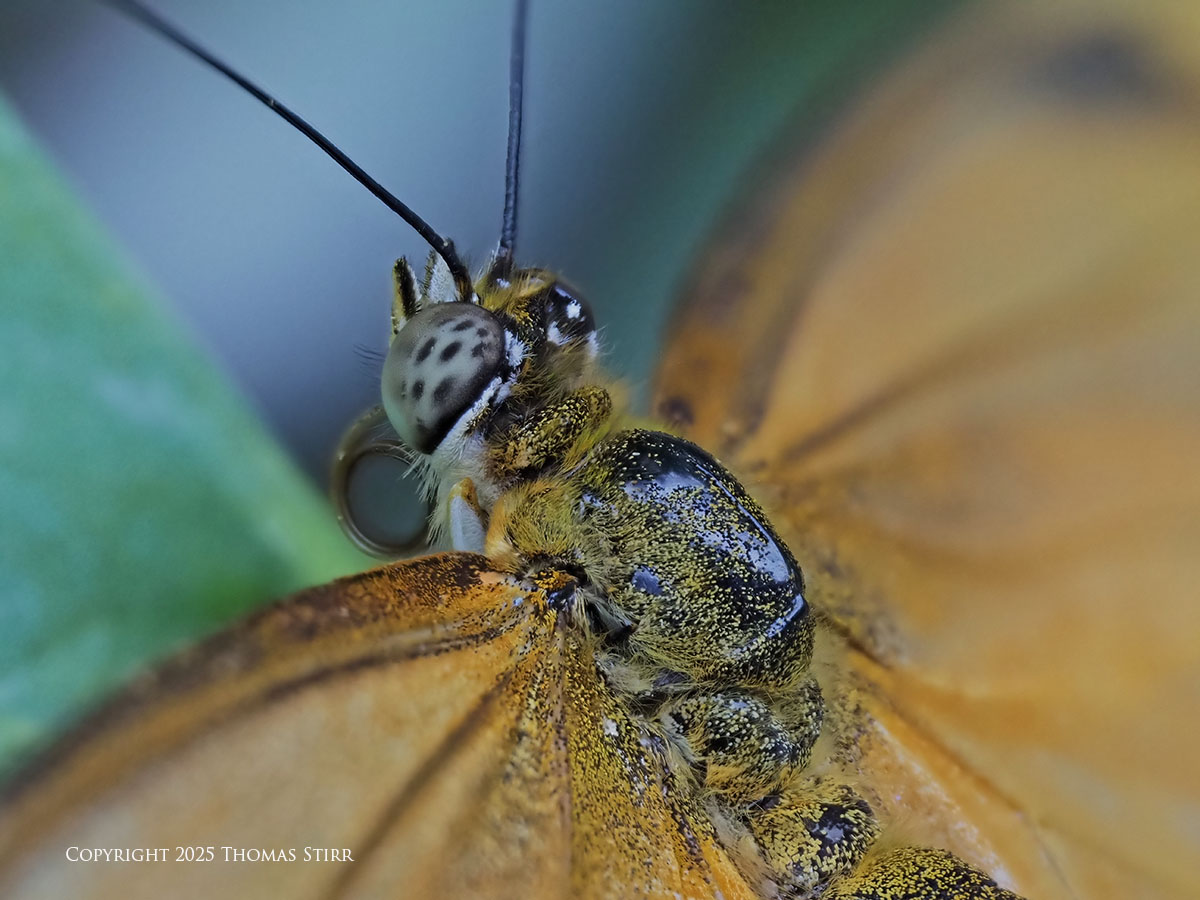
Although it wasn’t the primary focus of my recent session capturing HHFS butterfly images… at the end of my visit I used the M.Zuiko MC-20 teleconverter in combination with handheld in-camera focus stacking. Even when shooting at an equivalent field-of-view of 360 mm, the ease and practicality of shooting this way makes me smile.

Next month it will be six years since I made the switch to the Olympus/OM M4/3 system. I still feel like a little kid with a new toy when I’m out with my camera gear… especially when capturing HHFS butterfly images with the M.Zuiko 90 mm f/3.5 PRO IS macro.
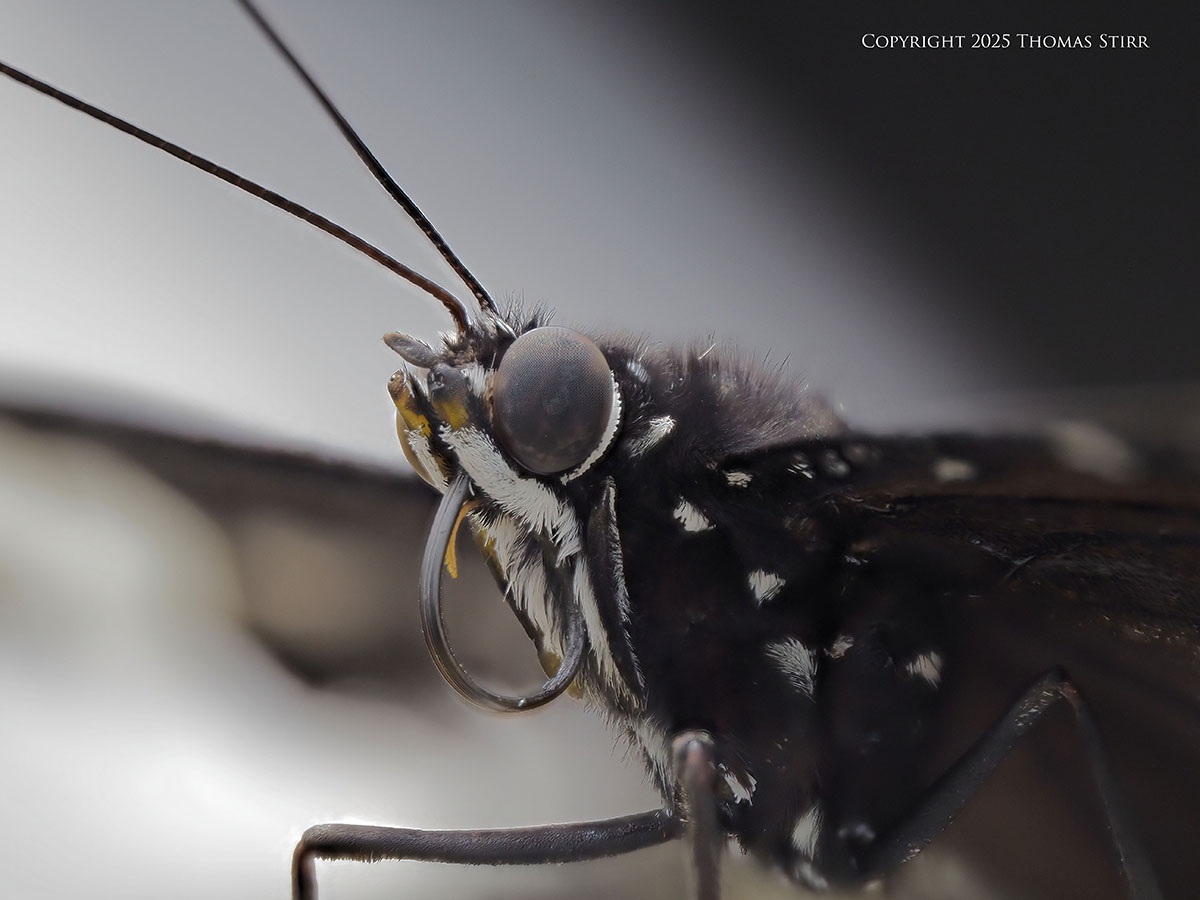
The functionality and ease-of-use of the computational photography technology resident in my E-M1X still astounds me. That technology coupled with outstanding IBIS performance in my E-M1X allowed me to shoot handheld in-camera focused stacked macro images with the MC-20 teleconverter (efov 360 mm) at 1/80th of a second. 🙂 Gotta love it!!!
Technical Note
Photographs were captured handheld using camera equipment noted in the EXIF data. All images were created from out-of-camera jpegs using my standard process in post. I used a stack of 10 images with a focus differential of 5 for all of the images featured in this article. This is the 1,453 article published on this website since its original inception in 2015.

Copyright
Word of mouth is the best form of endorsement. If you like our website please let your friends and associates know about our work. Linking to this site or to specific articles is allowed with proper acknowledgement. Reproducing articles, or any of the images contained in them, on another website or in any social media posting is a Copyright infringement.
Article and images are Copyright 2025 Thomas Stirr. All rights reserved. No use, duplication or adaptation of any kind is allowed without written consent. If you see this article reproduced anywhere else it is an unauthorized and illegal use. Posting comments on offending websites and calling out individuals who steal intellectual property is always appreciated!