

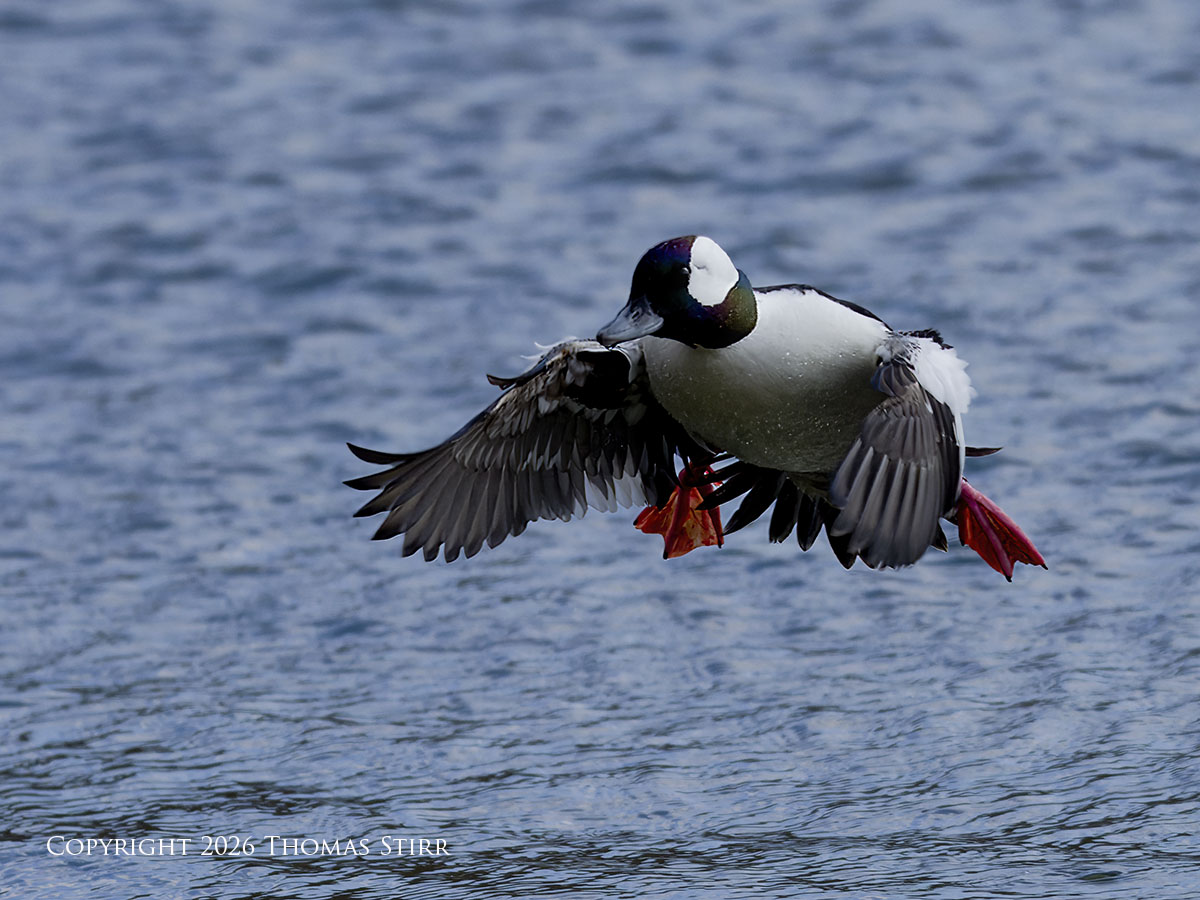
This article shares some images of buffleheads in flight, captured handheld with the M.Zuiko 150-600 mm f/5-6.3 IS zoom lens.
NOTE: Click on images to enlarge. To view this article in a range of other languages click on the Canadian flag in the upper right corner.

In mid-March I went out with a friend to practice photographing birds-in-flight handheld at LaSalle Park in Burlington. We were quite surprised to find some bufflehead ducks in the area.

A few years ago the cement pier that extends out along the shoreline of Lake Ontario from the Burlington Bay Lift Bridge was closed to the public due to safety concerns. That pier was the premier spot in our local area to photograph bufflehead ducks during the winter months.

As a result it has been somewhat difficult for the past number of years to find buffleheads in locations where photographing them was feasible.
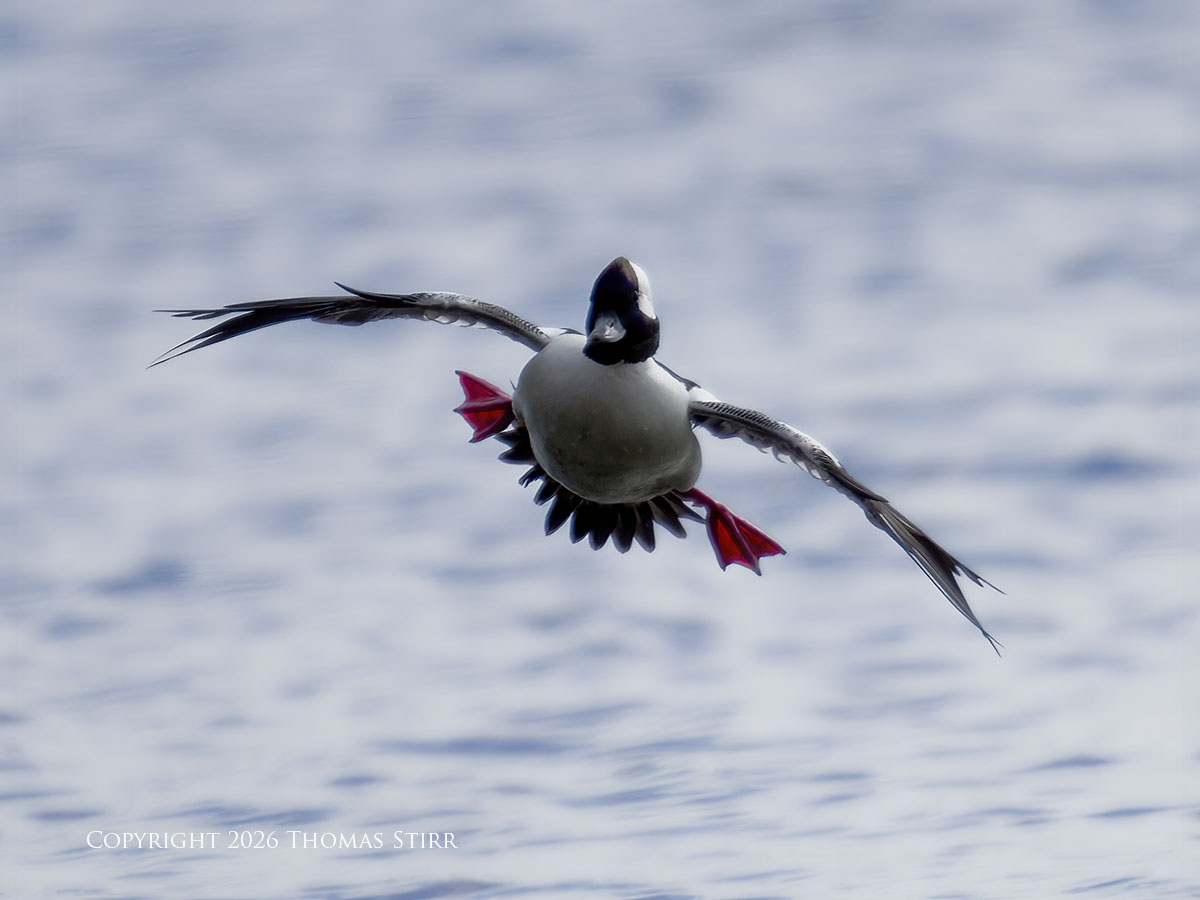
Buffleheads are reasonably small ducks averaging 36 to 38 centimetres (~14 to 15 inches) in length. They are quick to take flight and often only fly short distances before they land… then quickly dive to feed. They also tend to be skittish near people, and typically do not come too close in to the shoreline.
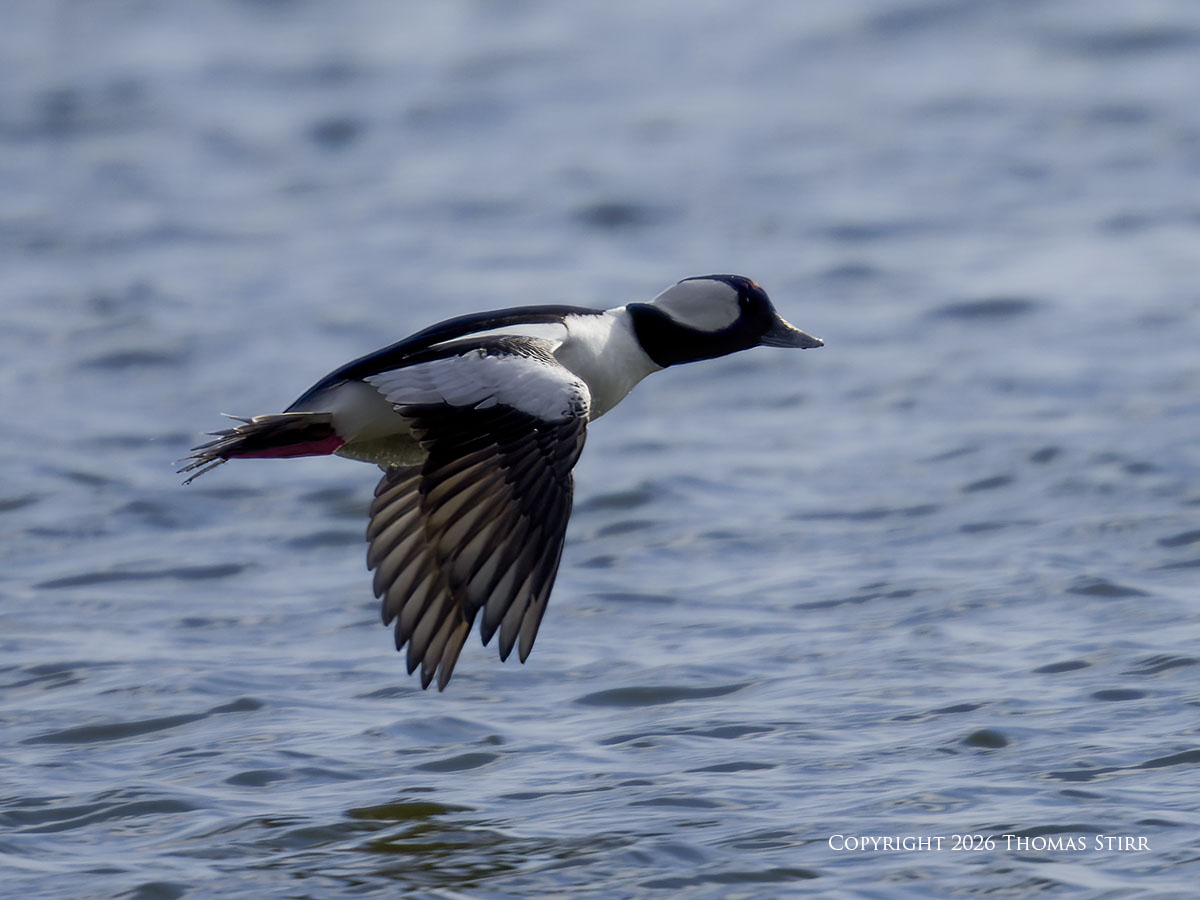
Being smaller birds that are a reasonable distance away, and flying just above the surface of the water, make buffleheads challenging to photograph in flight. All of these factors make bufflehead ducks very interesting practice subjects.
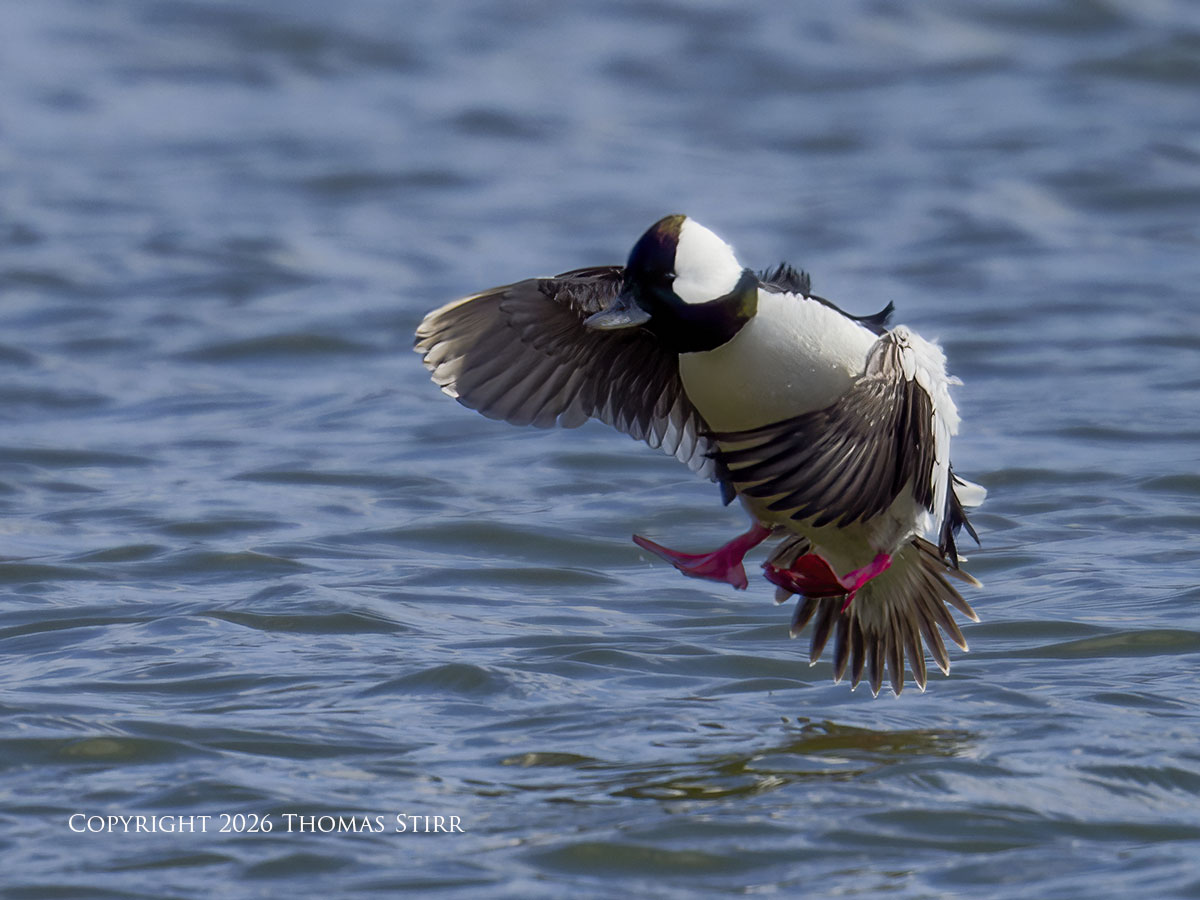
As you review the EXIF data for the sample images in this article you’ll find that most of them were aggressively cropped as the buffleheads were often somewhat distant from my shooting position. To convert metres to feet multiply by 3.28. For example, the bufflehead coming in for a water landing in the image above, was about 174 feet away.

I did have a few opportunities to photograph bufflehead ducks when they were a bit closer to me (i.e. less than 20 metres). Given their quick movements I needed to back off the focal length of my 150-600 telephoto zoom when they were in closer to me. This helped me keep them in my viewfinder.
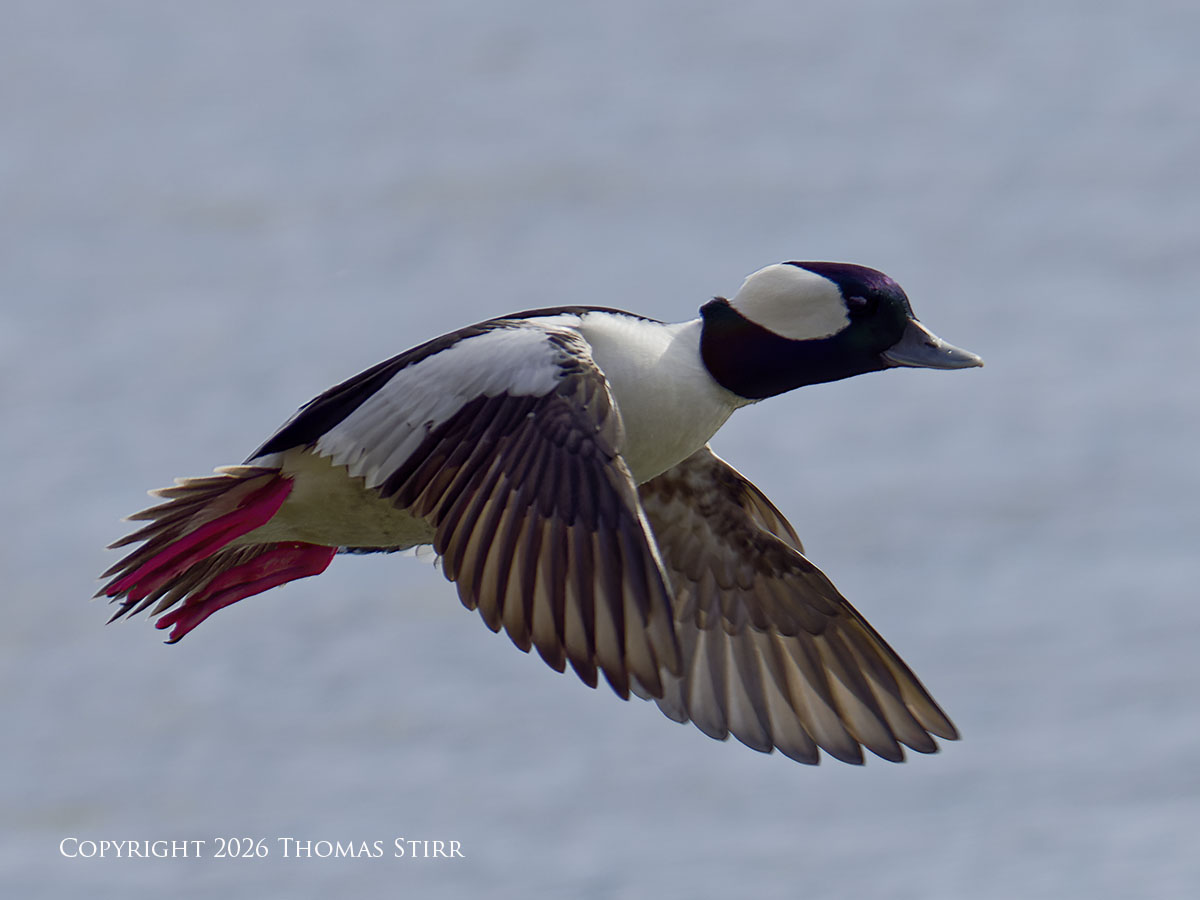
Given the aggressive cropping that I needed to do with these practice images they are best suited for use as smaller sized displays on the internet… like this article. I doubt that I would consider producing any printed enlargements of them.

The fact that there were some buffleheads proximate to the shoreline at LaSalle Park was definitely a bonus during our visit.

Being able to capture some in-flight images of smaller sized ducks at a distance… with my lens fully extended to 600 mm (efov 1200 mm) was a great practice exercise in terms of eye/hand coordination.
These bufflehead ducks also provided some opportunities to use ‘soft eyes’ technique to increase my sensitivity to peripheral motion. This helped me identify ducks that were making short flights as they approached the shoreline.

Even though I had to aggressively crop my images, I liked many of them more than other photographs I had captured of this species a number of years ago. My shooting angle was lower than in past years, which gave many of these photographs a more intimate feeling.

My recent visit to LaSalle Park reinforced something that all nature photographers understand. We need to be open to accept whatever opportunities Mother Nature sends our way… and do the best we can whatever the circumstances.
Technical Note
Photographs were captured handheld using camera gear as noted in the EXIF data. All images were created from RAW files using my standard process in post. A combination of Bird Detection AI Subject Tracking and Pro Capture L at 18 frames-per-second, using a single, small auto-focus point was used for all of the images featured in this article. This is the 1,516 article published on this website since its original inception in 2015.
Copyright
Word of mouth is the best form of endorsement. If you like our website please let your friends and associates know about our work. Linking to this site or to specific articles is allowed with proper acknowledgement. Reproducing articles, or any of the images contained in them, on another website or in any social media posting is a Copyright infringement.
Article and images are Copyright 2026 Thomas Stirr. All rights reserved. No use, duplication or adaptation of any kind is allowed without written consent. If you see this article reproduced anywhere else it is an unauthorized and illegal use. Posting comments on offending websites and calling out individuals who steal intellectual property is always appreciated!
Nice explanation Tom the EM1-X sings again!
Some very nice images there too.
I love the in flight shots especially the 150-600 looks super sharp too.
Enjoyed the piece Tom always looks forward to seeing an email from you and the site
Best wishes again
Mark
Thanks Mark,
I’m glad you enjoyed the images!
Tom