

This article features a selection of images of bees captured handheld with the M.Zuiko 150-600 mm f/5-6.3 IS zoom lens.
NOTE: Click on images to enlarge. To view this article in a range of other languages click on the Canadian flag in the upper right corner.
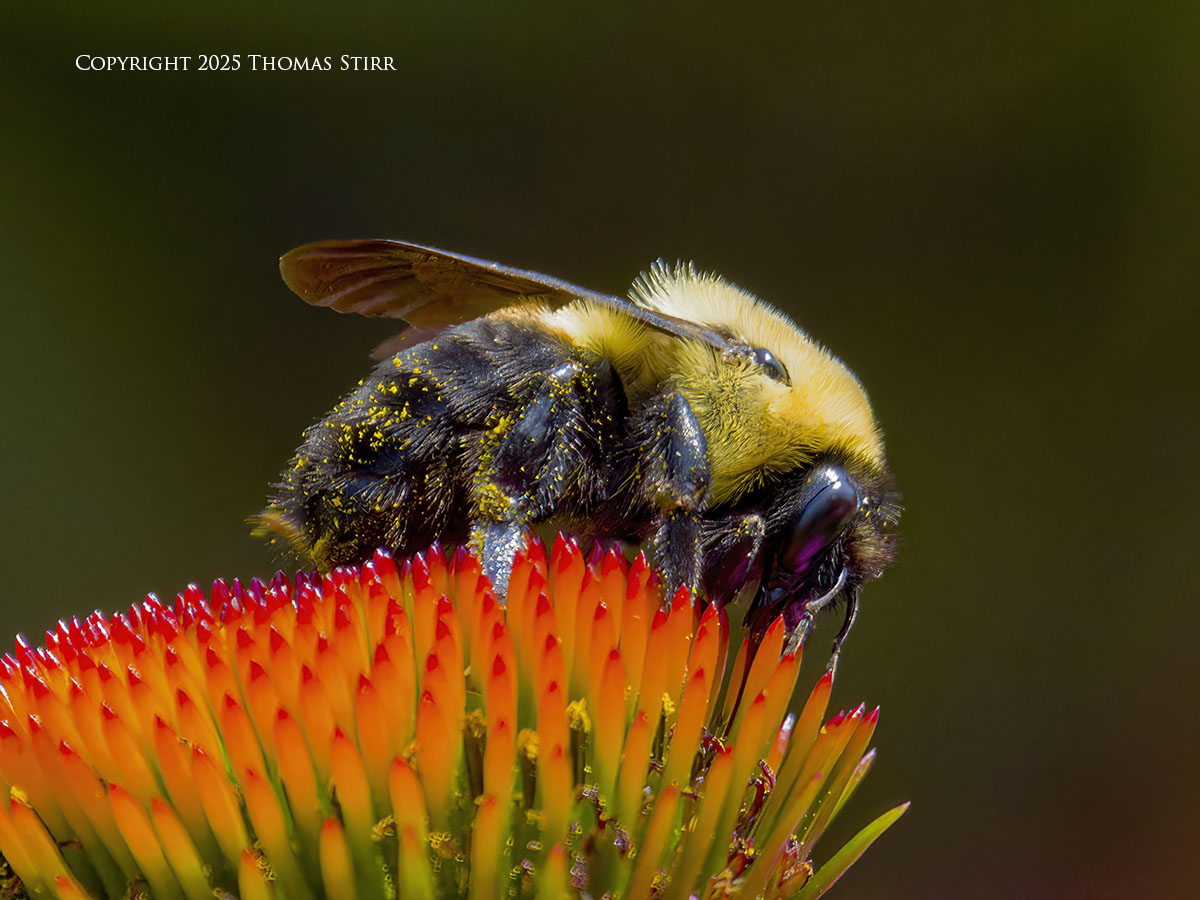
A couple of days ago I decided to use my M.Zuiko 150-600 mm f/5-6.3 IS zoom lens to photograph bees in my yard.
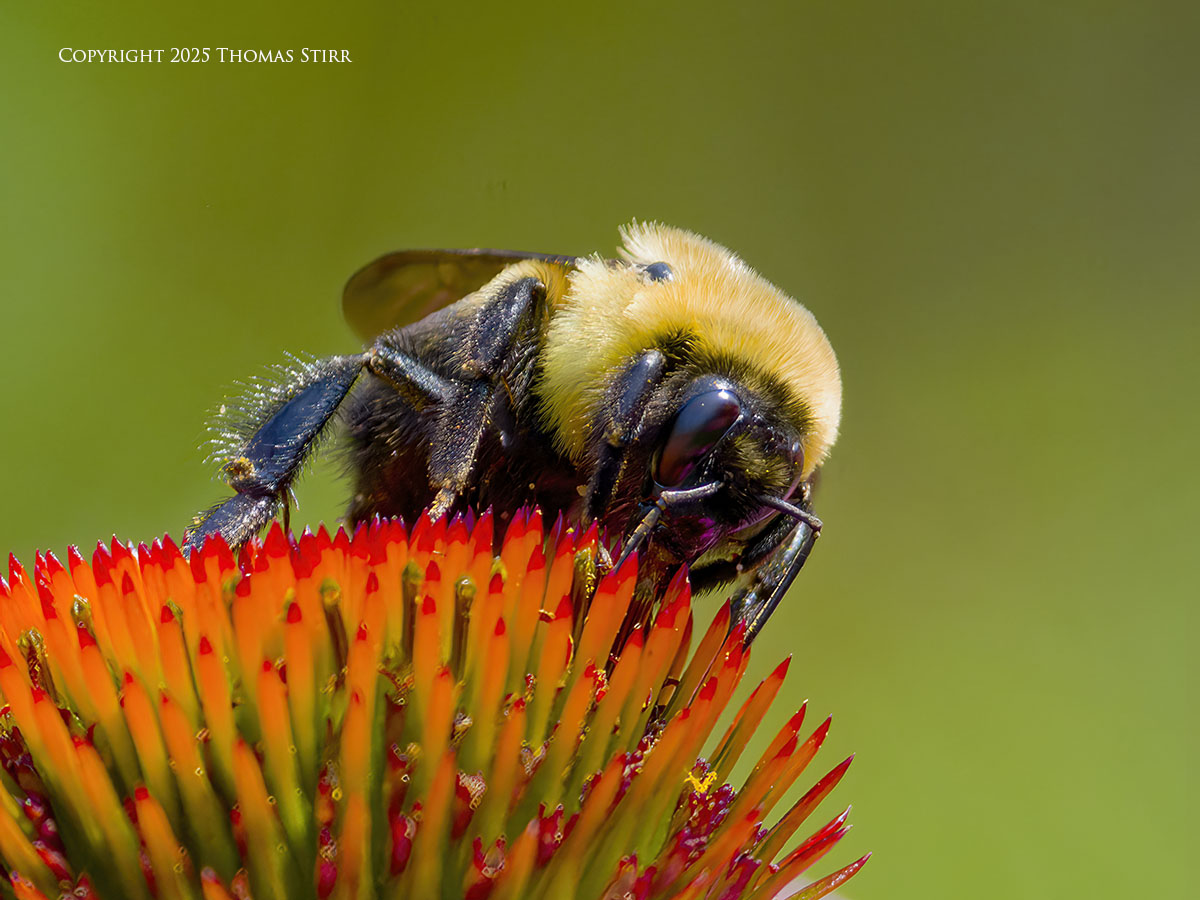
And… just for some added fun… I used my M.Zuiko MC-20 teleconverter for a good number of my image captures.
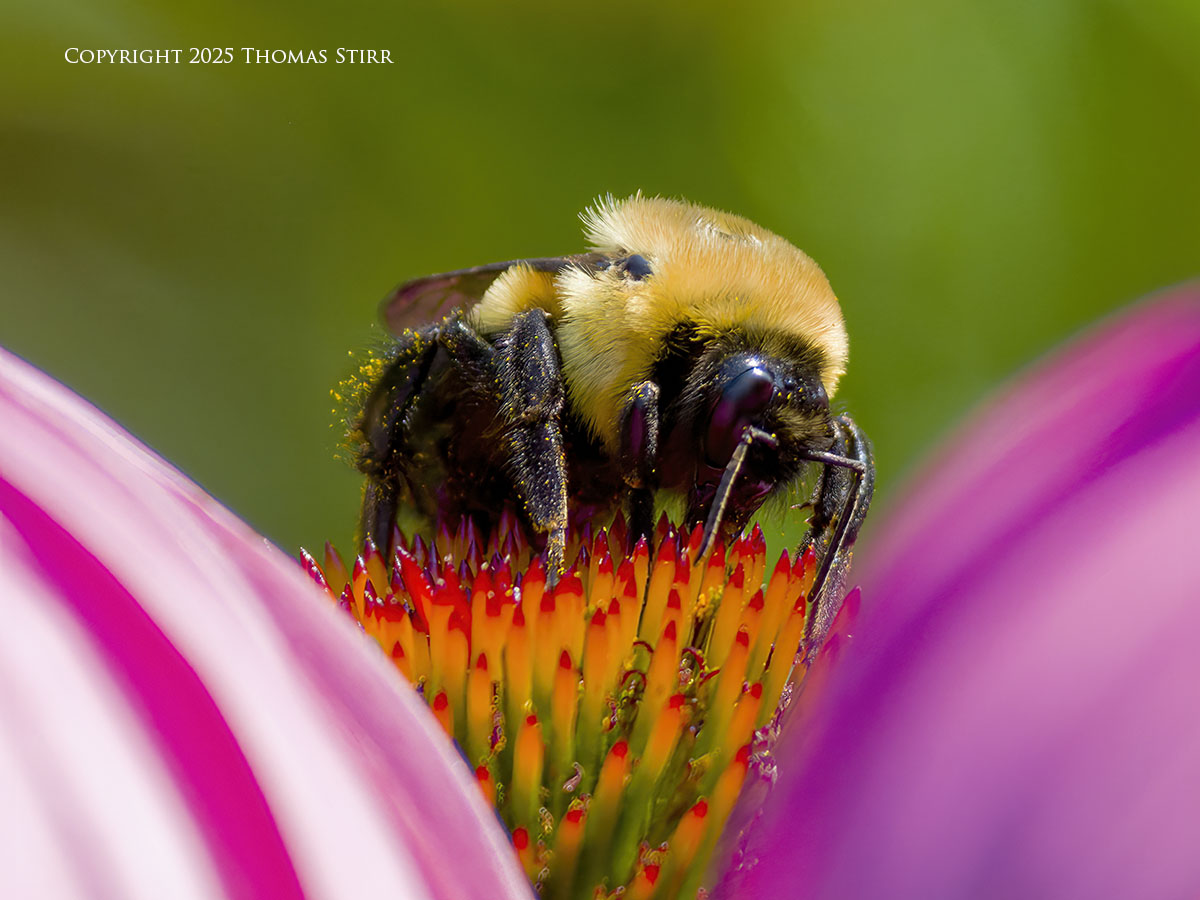
On the surface this choice of lens/teleconverter combination may seem a bit odd since the M.Zuiko 150-600 is fairly large and comparatively heavy.
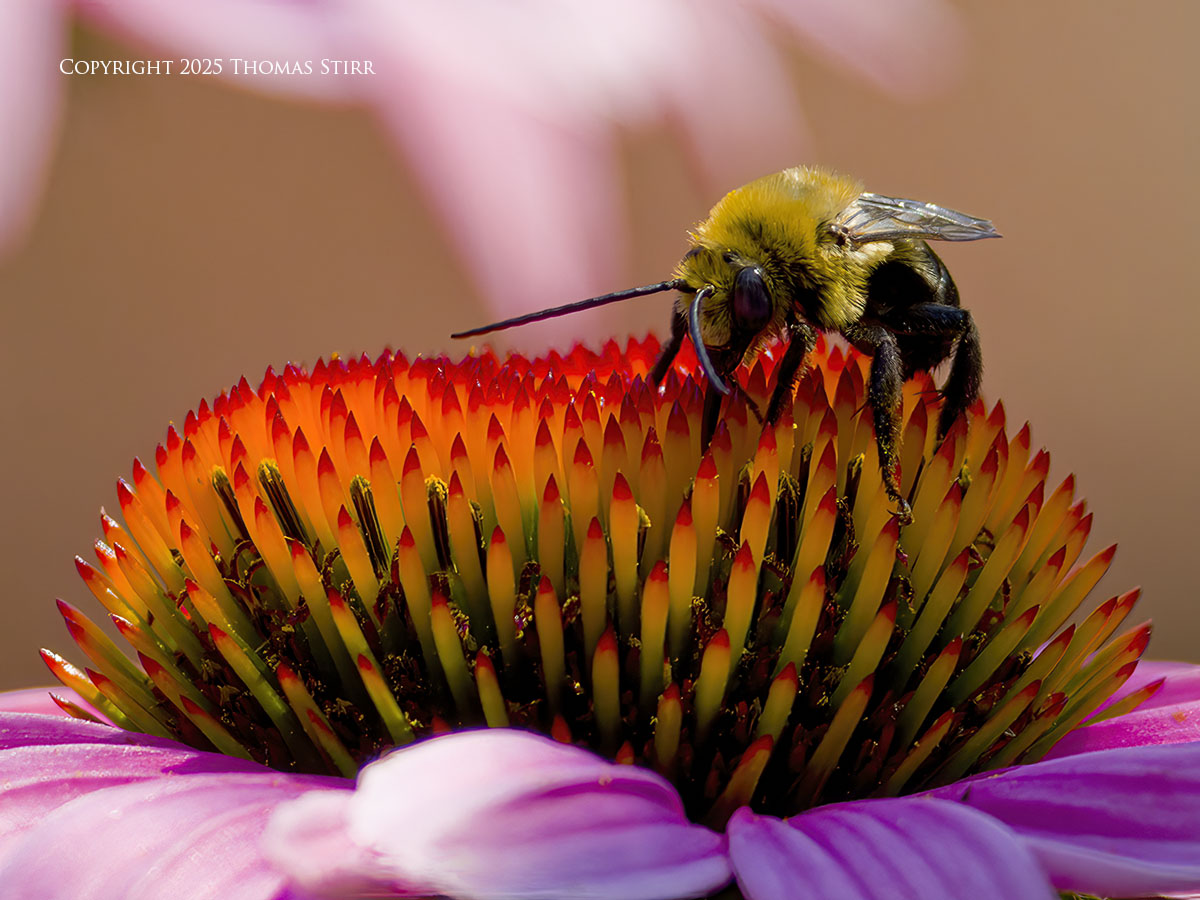
The reality is that this combination is well suited to this particular subject matter… as long as a photographer has a sufficient amount of light.
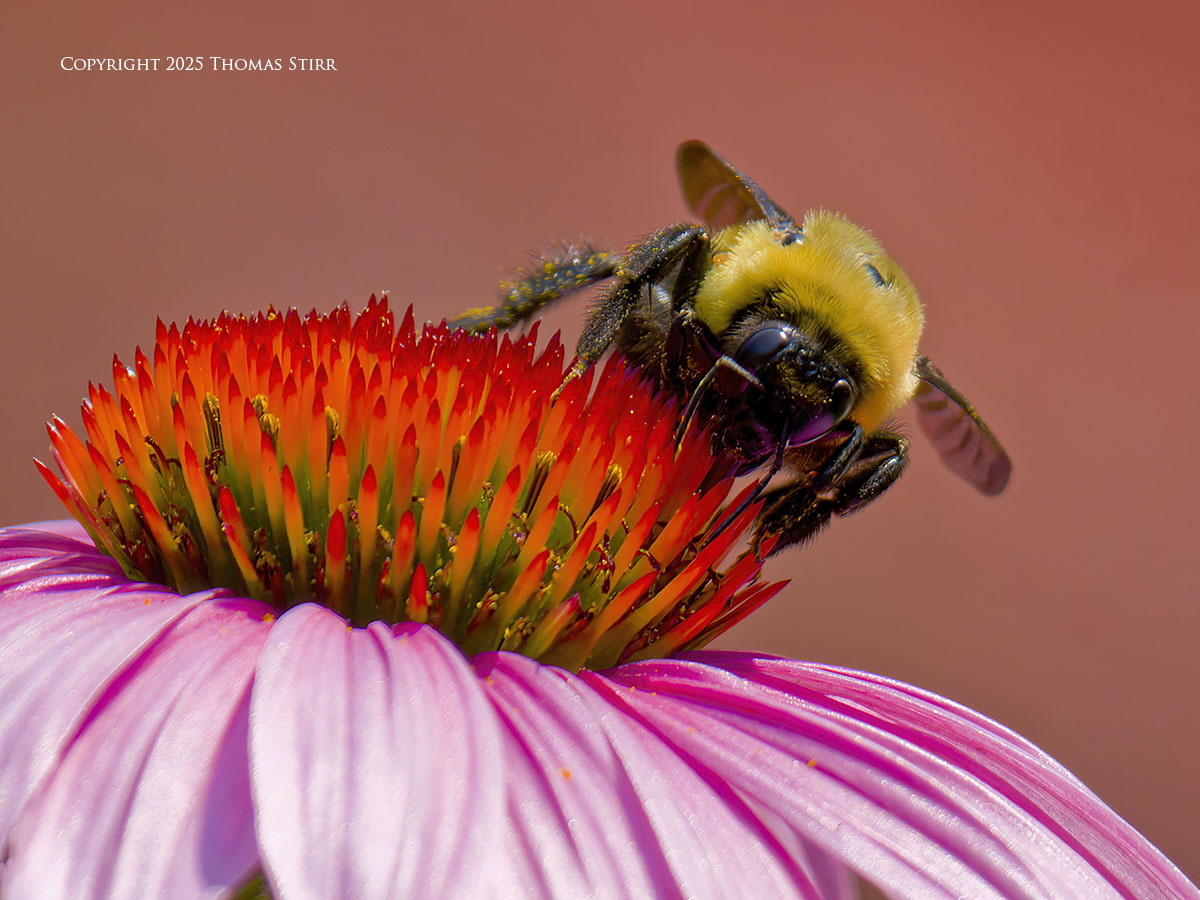
On the wide end of the zoom range, the M.Zuiko 150-600 mm f/5-6.3 has a minimum focusing distance of only 59 centimetres (~22.2 inches) when the M.Zuiko MC-20 teleconverter is used. This makes the M.Zuiko 150-600 very flexible for close-up photography when in the field.
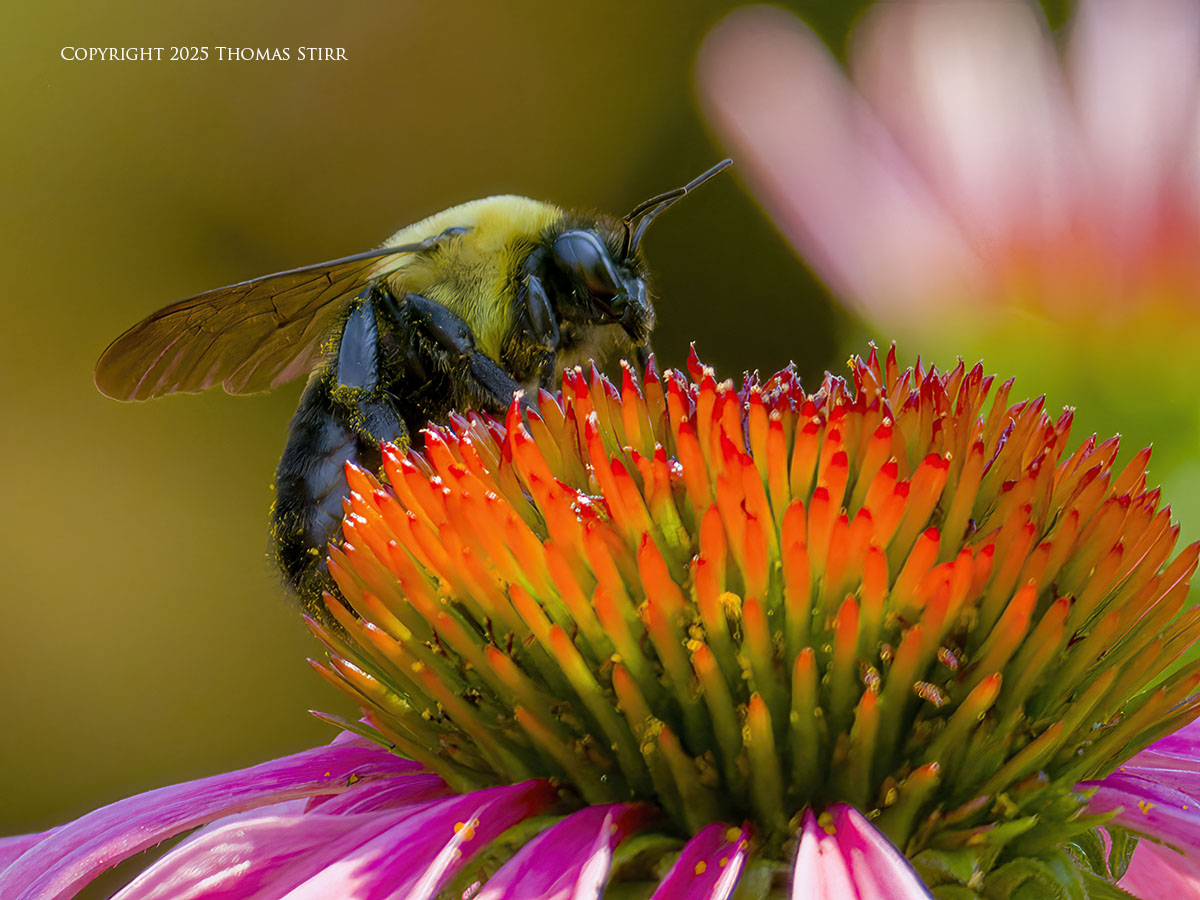
For the majority of the images in this article I was sitting on a short stool in my backyard, and photographing bees as they came in to gather pollen from a large grouping of echinacea plants.
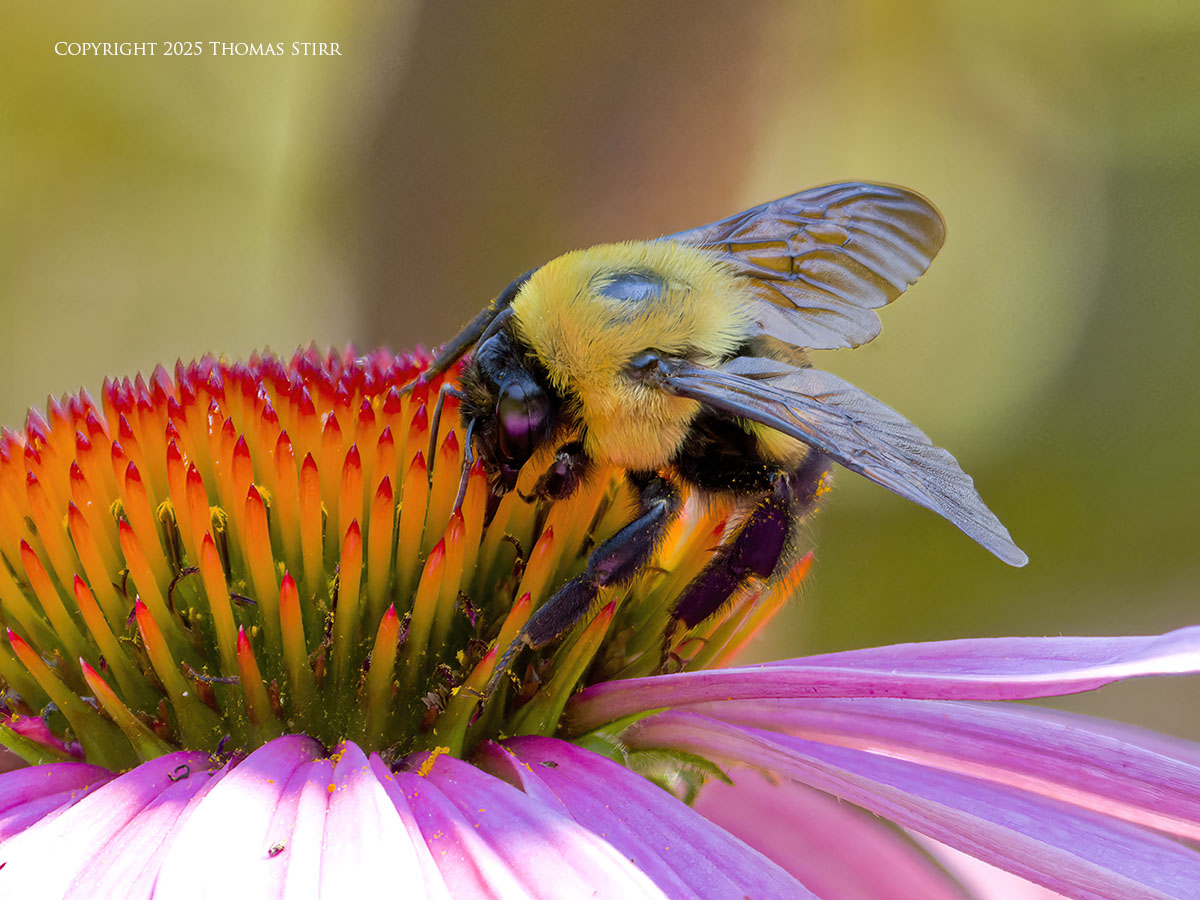
As I spotted suitable subject bees, I could quickly adjust my focal length by using the very smooth push/pull action of the M.Zuiko 150-600 zoom lens.
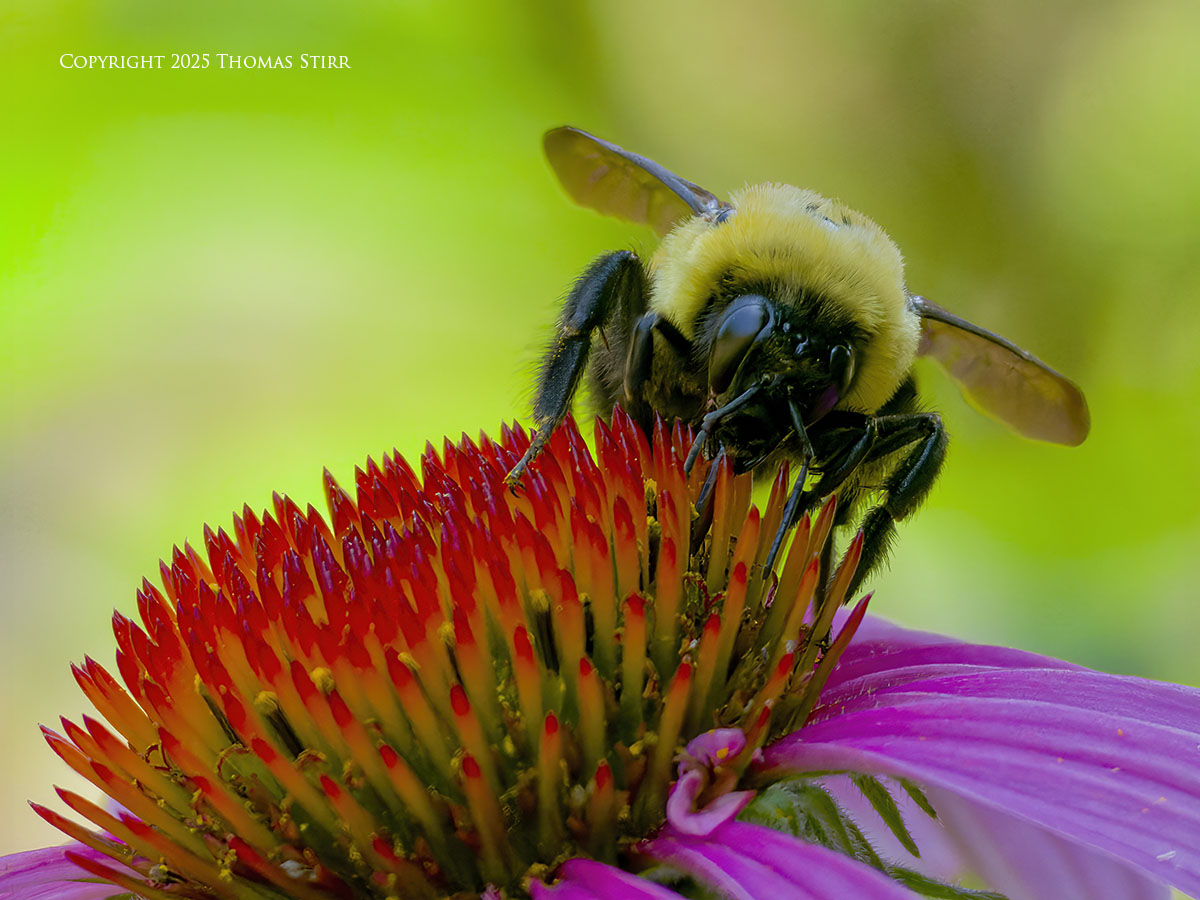
Using the MC-20 teleconverter does cause a loss of 2 stops of light, as well as 2 stops of image stabilization. Fortunately the Sync-IS in the M.Zuiko 150-600 is excellent, adding to the in-field flexibility of this lens.
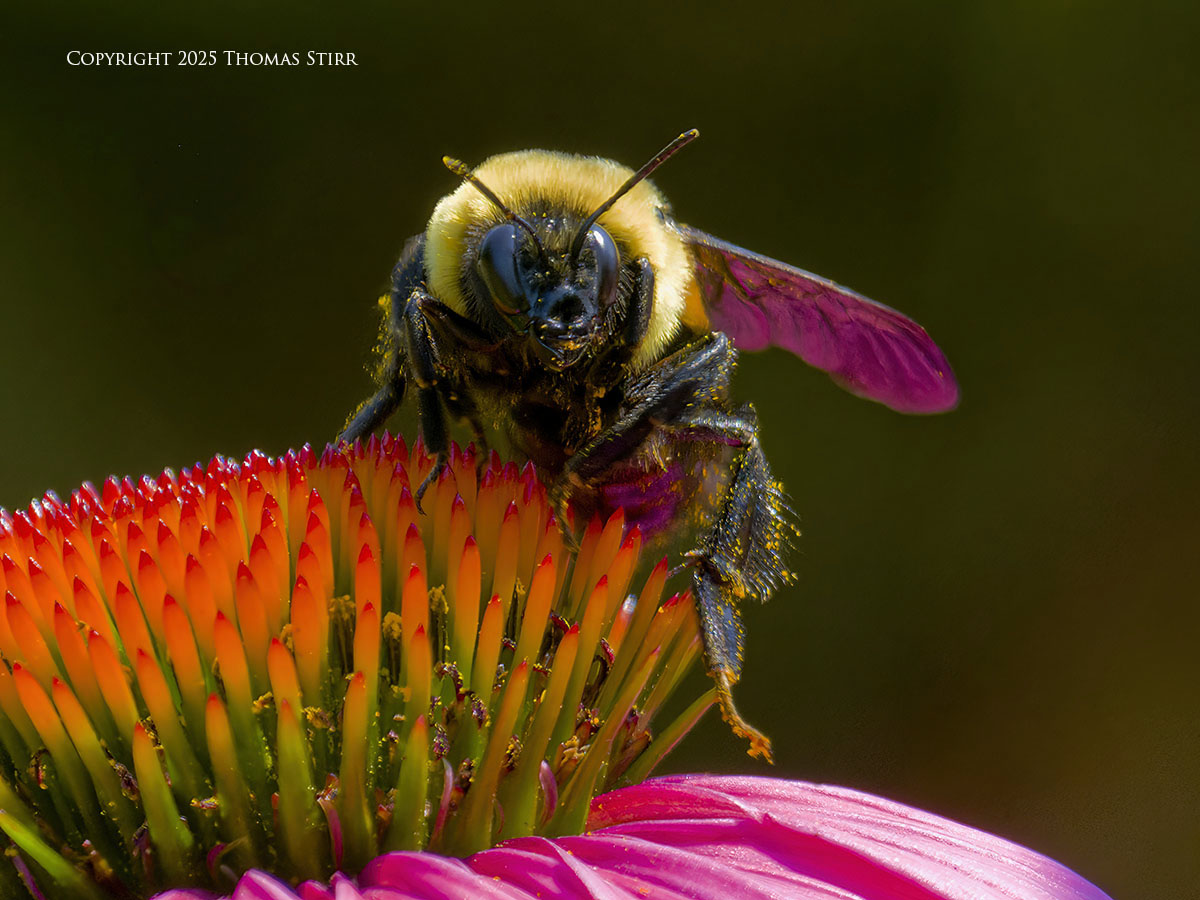
Sync-IS enabled me to use a shutter speed of 1/640 when using an equivalent field-of-view of 1898 mm for the image above. I could have shot at a slower shutter speed, but I needed to allow for subject movement. If you check the EXIF data you’ll see that I was 2.8 metres away (~9.2 feet) from the subject bee and was still able to capture the bee at a reasonable size in my composition.
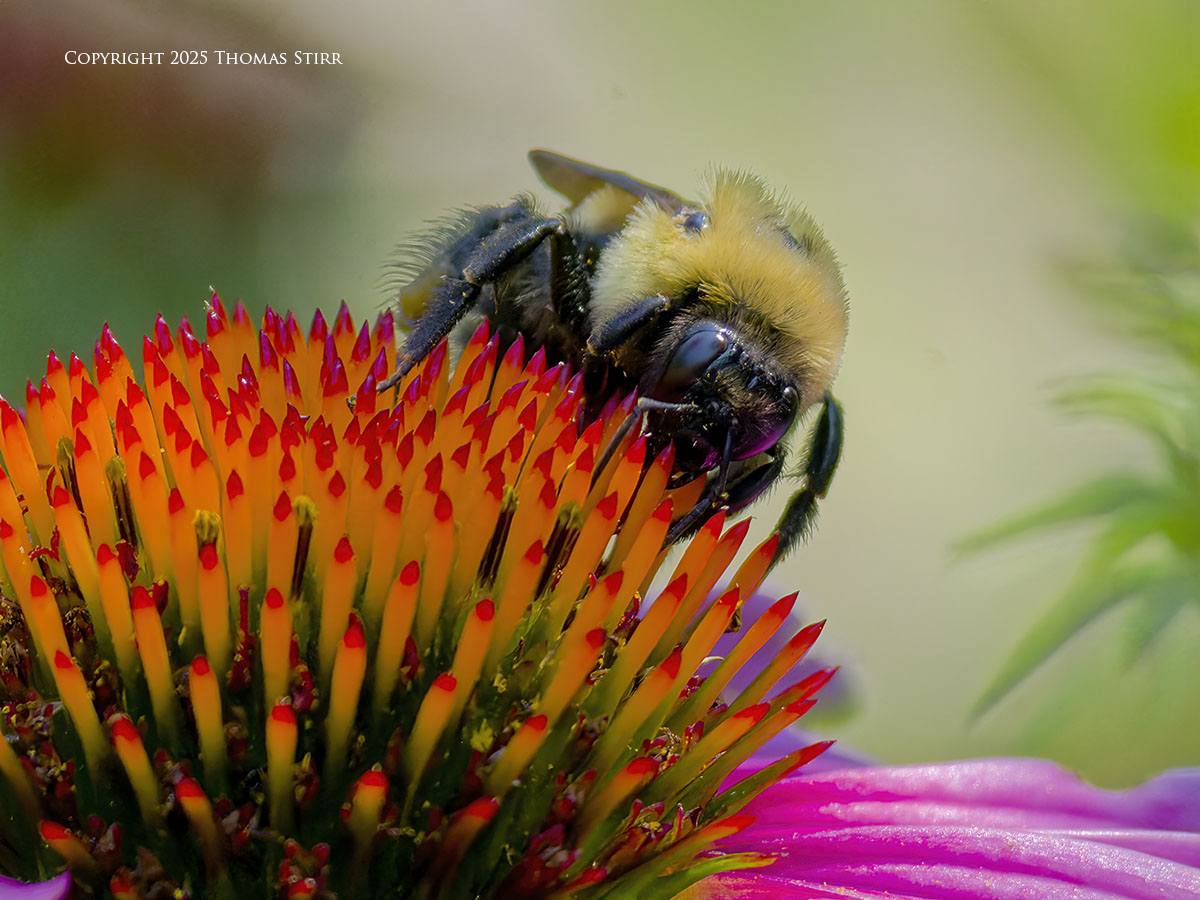
Using a longer focal length also helps to soften details in the background, as you can see on the right hand side in the image above.
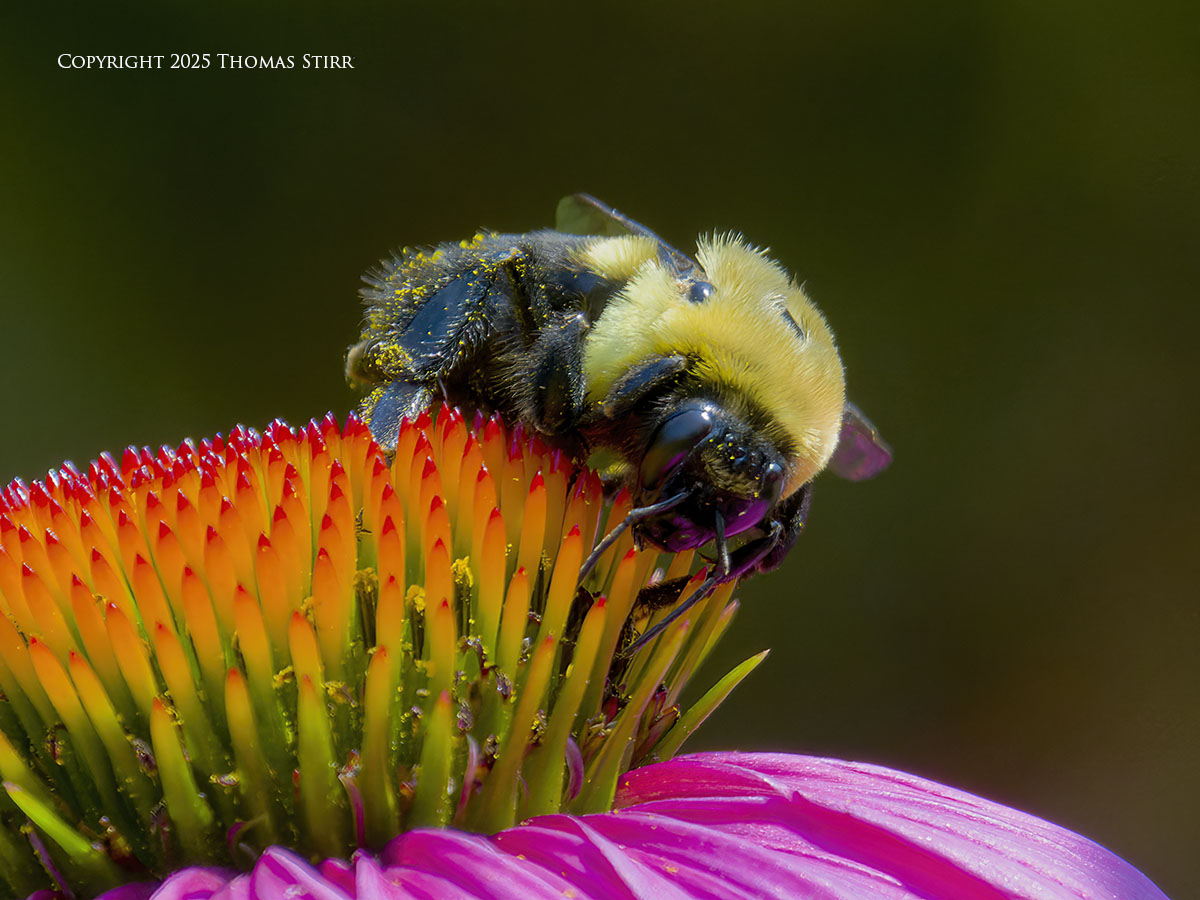
From my seated position I was able to identify a number of individual blossoms that provided shooting angles that gave me smooth, monochromatic backgrounds for my compositions.
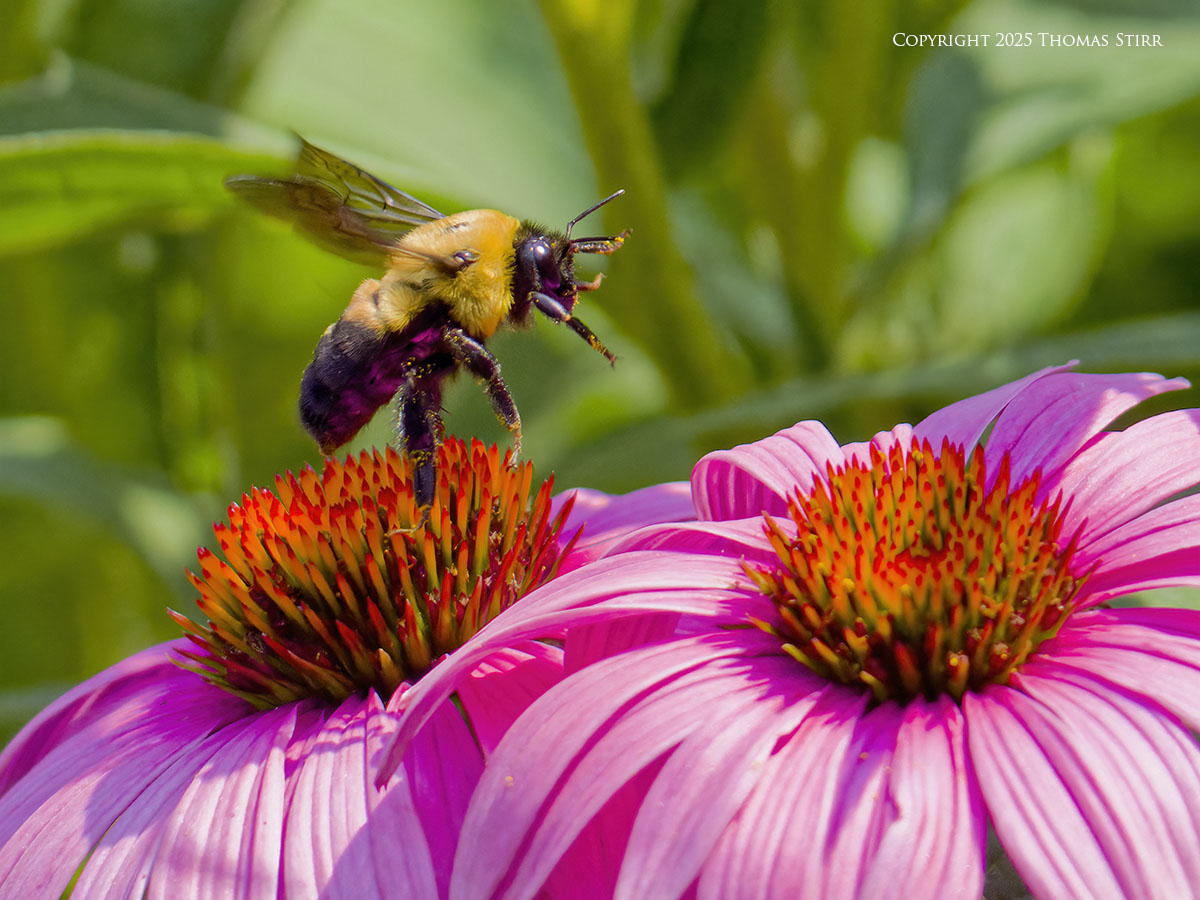
After capturing a sufficient number of bees perched on blossoms, I decided to photograph bees in-flight using Pro Capture H.

Since I was getting some useable images of bees in-flight, I initially kept shooting with the M.Zuiko MC-20 teleconverter in place.
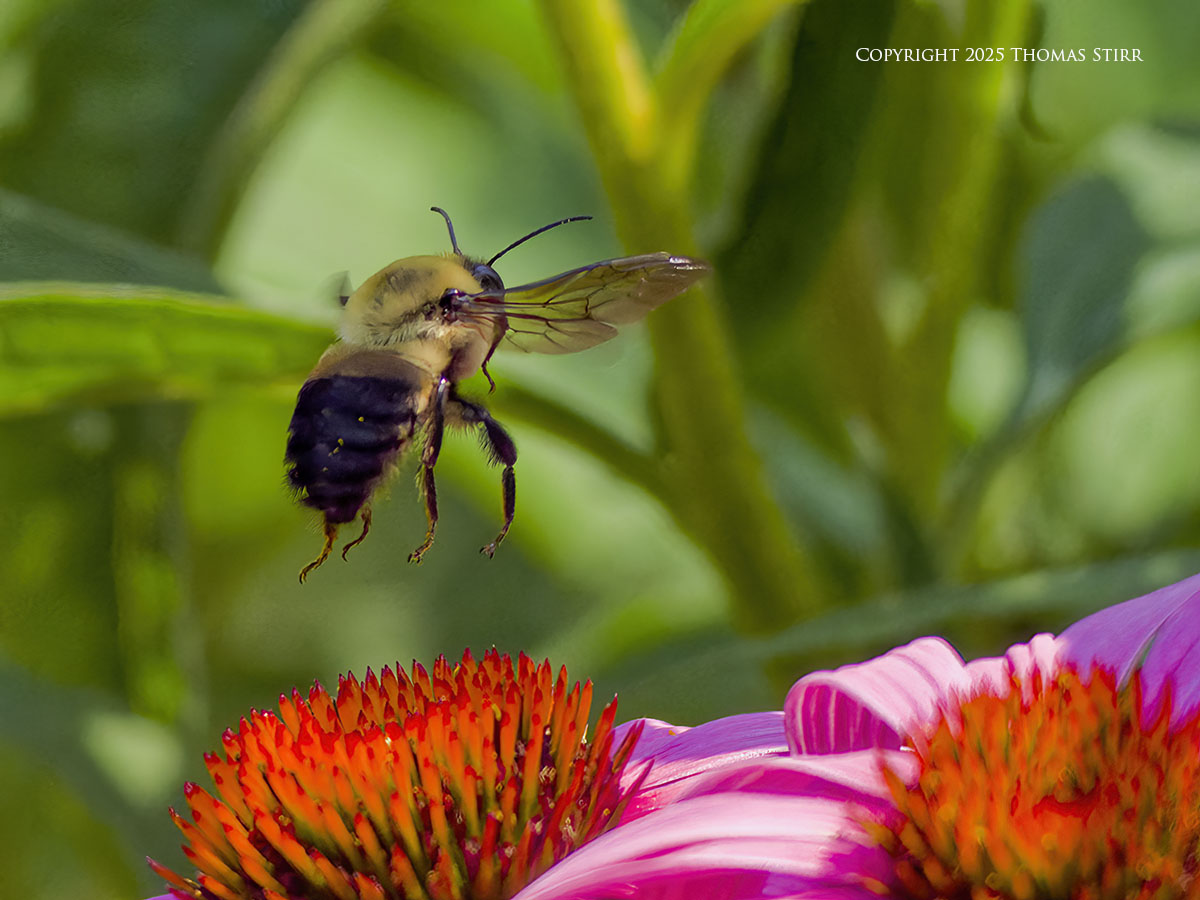
With a shutter speed of 1/2500, using this 2X teleconverter was often pushing my ISO up to ISO-6400, with some images being underexposed at that ISO value.
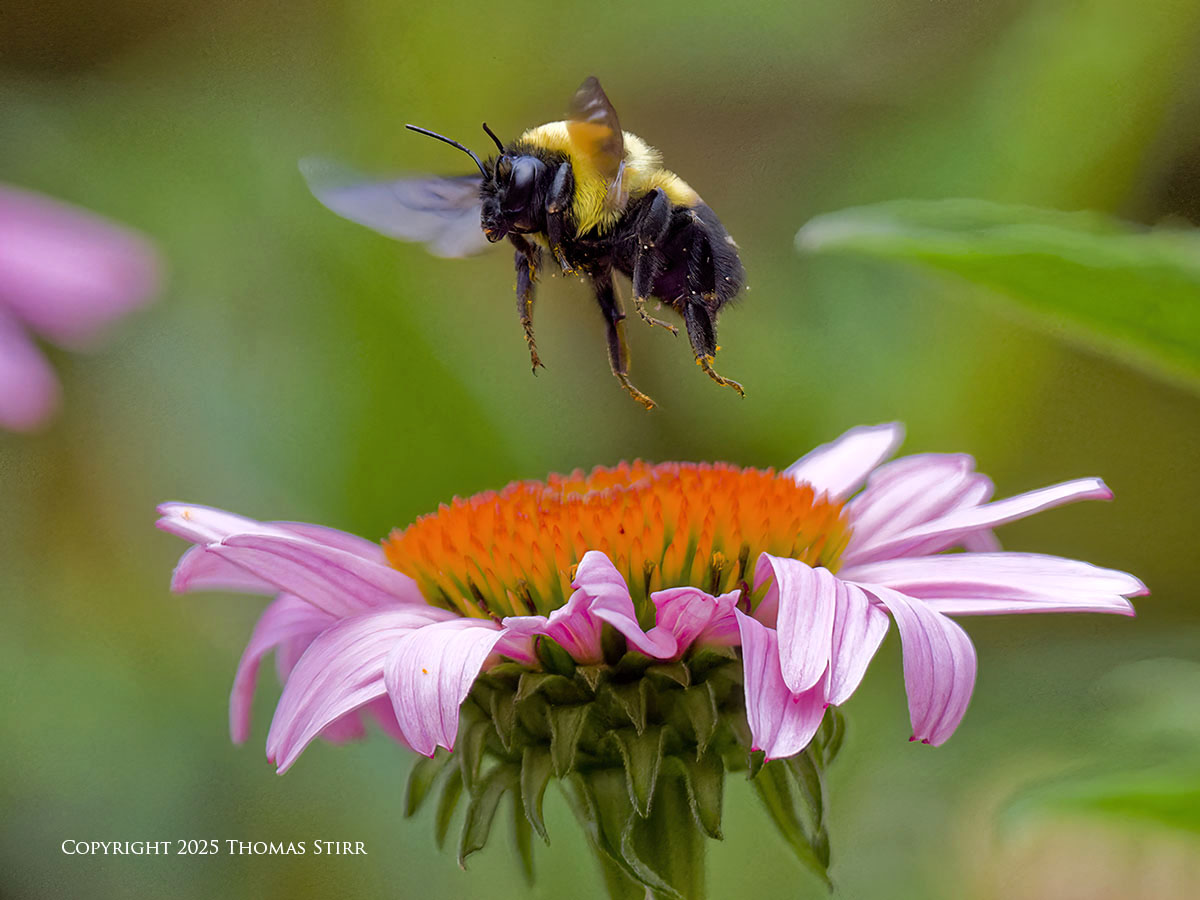
So I decided to remove the MC-20 to save some light. This allowed me to shoot at a maximum of f/6.3.
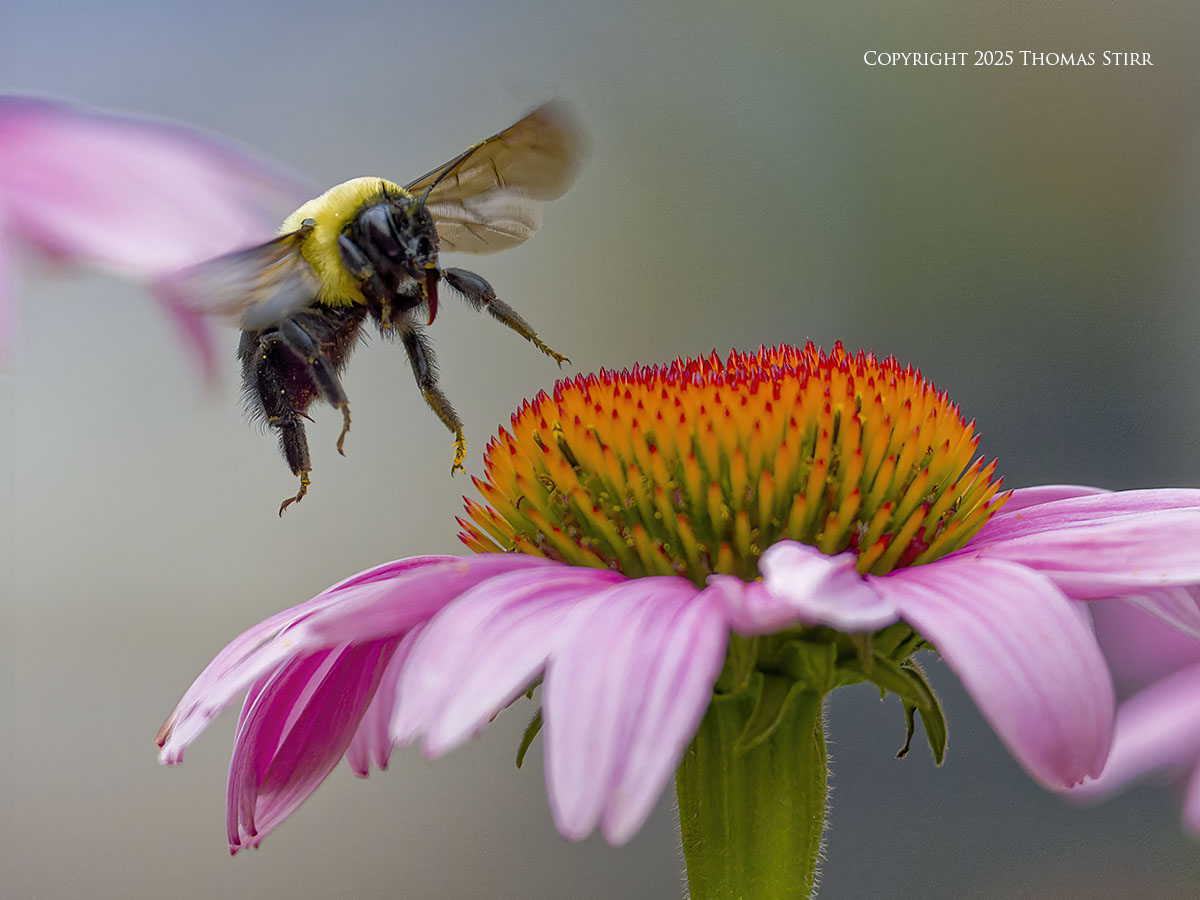
When possible I always prefer capturing a subject in-flight. I love the feeling of movement and anticipation that these action images can convey.
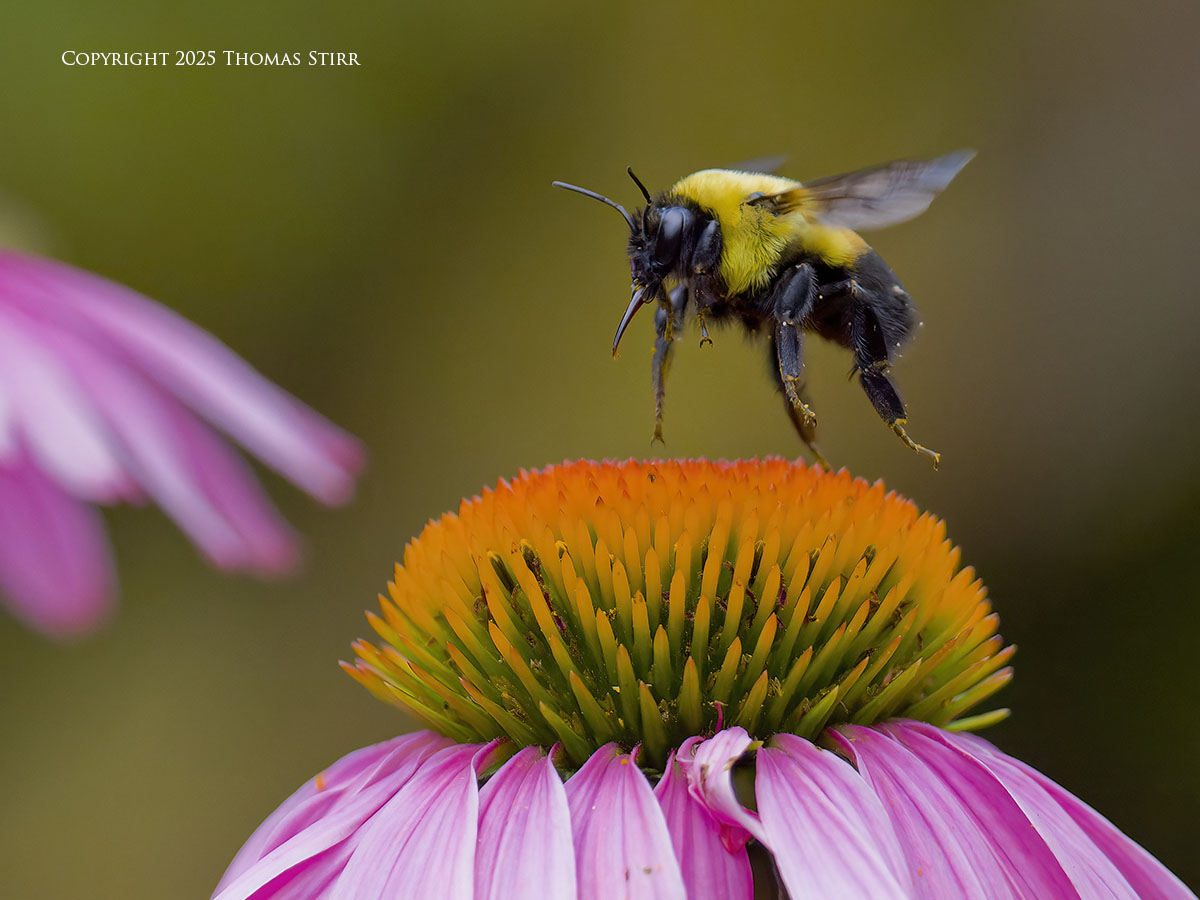
I find that compositions of bees in-flight that include flower buds can add some interesting environmental context to an image.
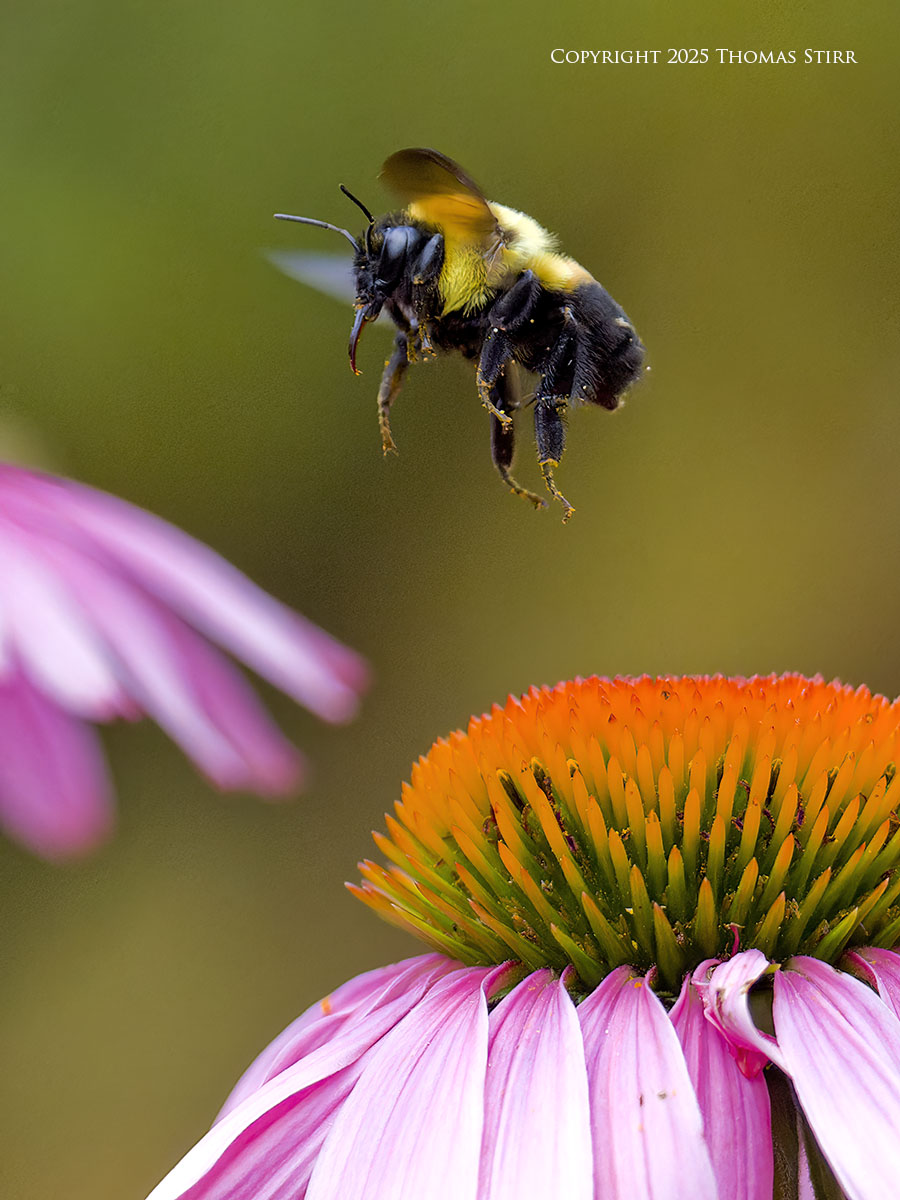
Sometimes we can habitually grab a specific piece of kit like a macro lens, for subjects like bees.

There are times when a longer focal length zoom lens provides us with more in-field flexibility. Especially if that lens has a comparatively short minimum focusing distance.
Technical Note
Photographs were captured handheld using camera equipment noted in the EXIF data. All images were created from RAW files using my standard process in post. This is the 1,473 article published on this website since its original inception in 2015.
Copyright
Word of mouth is the best form of endorsement. If you like our website please let your friends and associates know about our work. Linking to this site or to specific articles is allowed with proper acknowledgement. Reproducing articles, or any of the images contained in them, on another website or in any social media posting is a Copyright infringement.
Article and images are Copyright 2025 Thomas Stirr. All rights reserved. No use, duplication or adaptation of any kind is allowed without written consent. If you see this article reproduced anywhere else it is an unauthorized and illegal use. Posting comments on offending websites and calling out individuals who steal intellectual property is always appreciated!
Great article, do you think OM-90mm and OM 150-600 would make a great insect kit? I already own 90mm but looking for lens that capture skittish subject like butterfly, bee, dragonfly.
Hi Nop,
Yes, this is a good combination to use.
I use the 90mm macro and 150-600 IS zoom regularly for my insect/bug photography. One of the benefits of the 150-600 is its comparatively short minimum focusing distance on the wide end of the zoom. This keeps me far enough away from stinging insects to be safe. Adding the MC-14 or MC-20 teleconverters extends the in-field capability of the lens, especially when photographing dragonflies that may be perched over swampy water and away from the shoreline.
Another lens that I use on occasion is the PRO 40-150 f/2.8 zoom. I typically use this in lower light conditions when the subjects are a bit too far to use the 90 mm, but I don’t need the bulk of the 150-600. The PRO 40-150 is my third choice to photograph insects/bugs.
Tom
Nice work Thomas I especially liked the bees in flight, that lens does give nice rendering and a decent level of sharpness.
It’s useful out in the wild to have a lens that gives close up photography, it saves going out with just macro lenses
Lovely work as usual
Mark
Thanks Mark… I’m glad you enjoyed the images!
Tom