
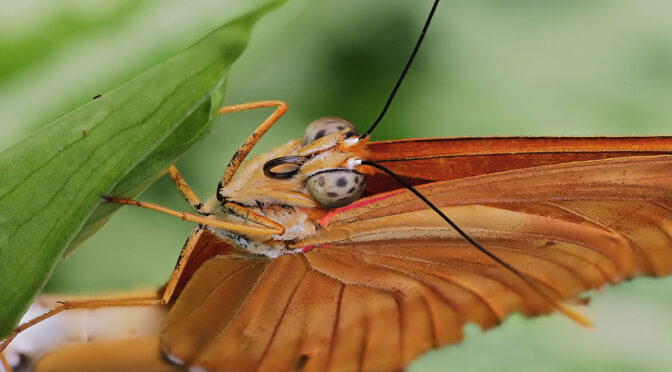
Photographing captive butterflies can be a very different experience when compared to photographing their counterparts in the wild. Since captive butterflies are usually acclimatized to people we can get much closer to them. This can also lead to them being more comfortable staying in a specific perched position for longer durations of time.
NOTE: Click on images to enlarge. To view this article in a range of other languages, click on the Canadian flag in the upper right corner.

Remaining in a static position means we have more opportunities to use computational photography technologies such as in-camera handheld focus stacking (HHFS) and handheld hi res (HHHR).

I find that using HHHR comes in very handy if a butterfly is in a restricted position and is a bit distant from my shooting position. HHHR allows me to crop in on the subject butterfly in post and still end up with a nicely detailed image.
For example, the HHHR photograph above was cropped to 5362 pixels on the width, down from the native HHHR resolution of 8160 pixels. This is a crop of about 34% which still delivered a good amount of details on the subject butterfly, as seen in its antennae.

My choice of lenses when photographing captive butterflies is very different than when I’m out in the field working with wild subjects. If you check the EXIF data on the images you’ll see that I used the M.Zuiko 90 mm f/3.5 PRO IS macro lens, and the M.Zuiko PRO 40-150 mm f/2.8 zoom for all of the images in this article. I love using these two lenses with captive butterflies as they provide maximum flexibility.

True macro performance with up to 2X native magnification… plus a constant f/2.8 zoom lens for lower light conditions when shooting indoor action sequences like butterflies in flight. In addition, both of these lenses can be used with teleconverters which further extends my shooting parameters.

Photographing captive butterflies in an indoor public facility can be a crowded experience. This makes it difficult to shoot butterflies in flight from a distance. The shorter minimum focusing distance of the M.Zuiko PRO 40-150 mm f/2.8 can come in handy on occasion. Using a shorter focal length also helps deliver more depth-of-field when shooting at more open apertures like f/2.8 or f/4.

When photographing captive butterflies in flight I usually compose my images using the rear screen of my camera. Using a lighter lens like the M.Zuiko PRO 40-150 mm f/2.8 is a more practical choice than my M.Zuiko 100-400.

Since wild butterflies are more skittish and thus harder to approach, my ‘go to’ lens for photographing them was my M.Zuiko 100-400 mm f/5-6.3 IS. The added reach of the M.Zuiko 150-600 mm f/5-6.3 IS, as well as its shorter minimum focusing distance on the wide end, has made this lens my new ‘go to’ choice for wild butterflies.

Regardless of the venue or lens selected, I always use Pro Capture H at 60 frames-per-second when photographing butterflies in flight. I set my Pre-Shutter Frames and Frame Limiter both to 15, and use a single, small auto-focus point.
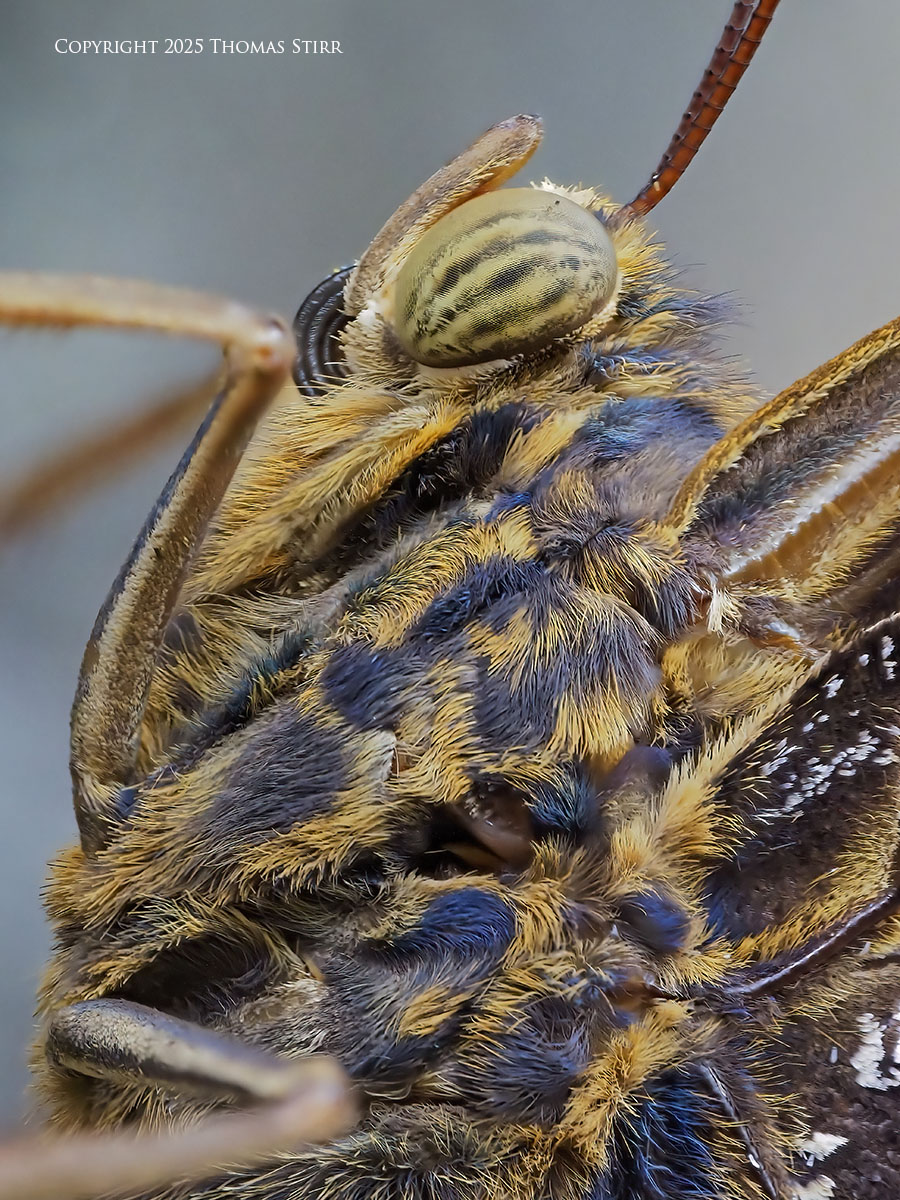
I don’t tend to use in-camera handheld focus stacking (HHFS) when photographing wild butterflies as the subjects tend to be more active. Outdoor breezes can also be problematic.
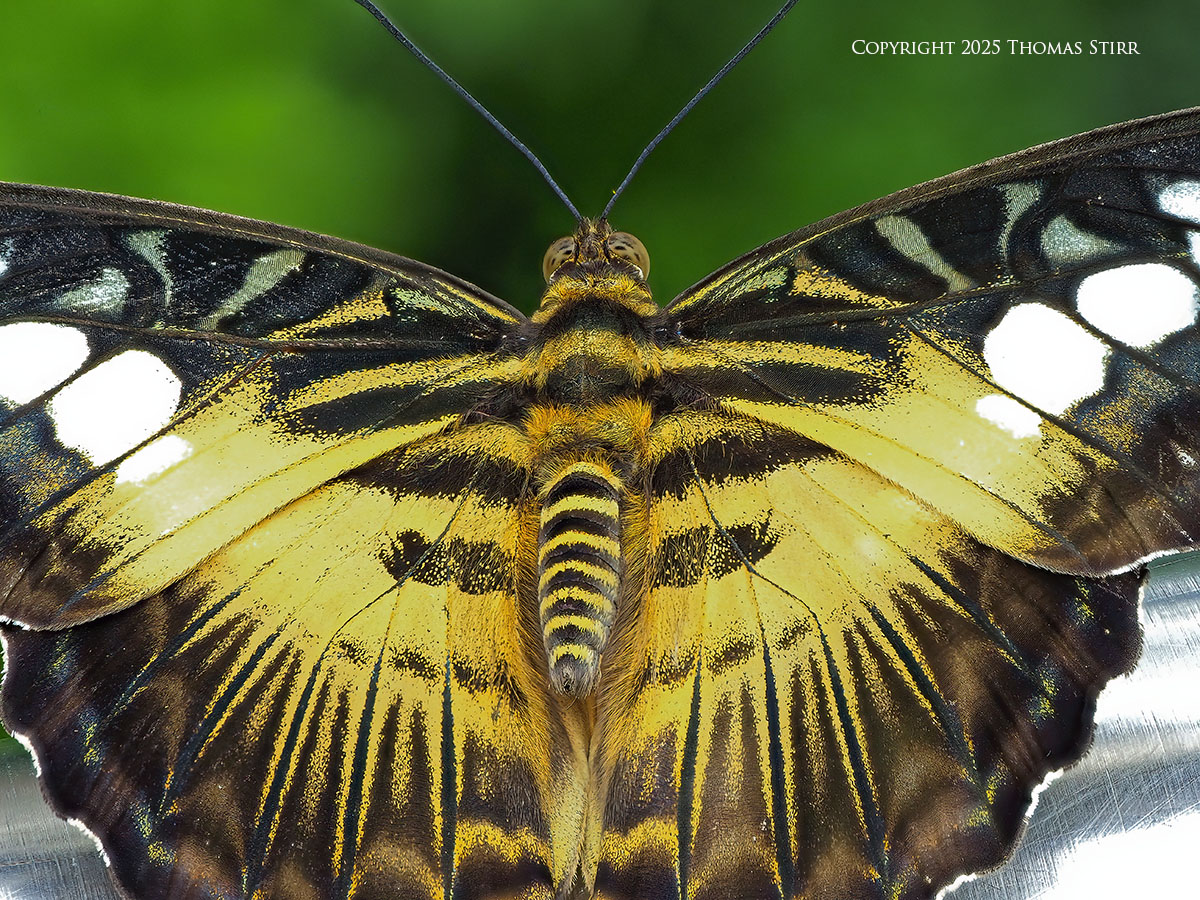
Any movement of a butterflies wings, antennae or proboscis can leave motion artifacts when using HHFS or HHHR. These movements can even cause an HHFS or HHHR image attempt to fail. I regularly rule out potential subject butterflies from being photographed with these technologies because of their movements.

I love getting in very tight to a subject butterfly so I can use the S-Macro 2X magnification available with my M.Zuiko 90 mm f/3.5 PRO IS macro lens. The results can be pretty dramatic when using in-camera handheld focus stacking.

I almost always compose my macro images using the articulating rear screen of my camera. This is invaluable when capturing images at difficult angles.

Although I did not bring my M.Zuiko STF-8 Twin Macro Flash with me on my most recent visit to the Niagara Butterfly Conservatory, I typically fit this flash onto my M.Zuiko 90 mm macro lens which gives me yet another macro photography option.

Photographing captive butterflies is a very enjoyable and creative pastime. I’m very fortunate to have the Niagara Butterfly Conservatory within a 45 minute drive of my home.
Technical Note
Photographs were captured handheld using camera equipment noted in the EXIF data. All images were created from RAW files or out-of-camera jpegs using in-camera Handheld Focus Stacking, Handheld Hi Res, or Pro Capture H technologies. I used a single, small auto-focus point and composed most images using the articulating rear screen of my E-M1X. This is the 1,469 article published on this website since its original inception in 2015.
Copyright
Word of mouth is the best form of endorsement. If you like our website please let your friends and associates know about our work. Linking to this site or to specific articles is allowed with proper acknowledgement. Reproducing articles, or any of the images contained in them, on another website or in any social media posting is a Copyright infringement.
Article and images are Copyright 2025 Thomas Stirr. All rights reserved. No use, duplication or adaptation of any kind is allowed without written consent. If you see this article reproduced anywhere else it is an unauthorized and illegal use. Posting comments on offending websites and calling out individuals who steal intellectual property is always appreciated!